





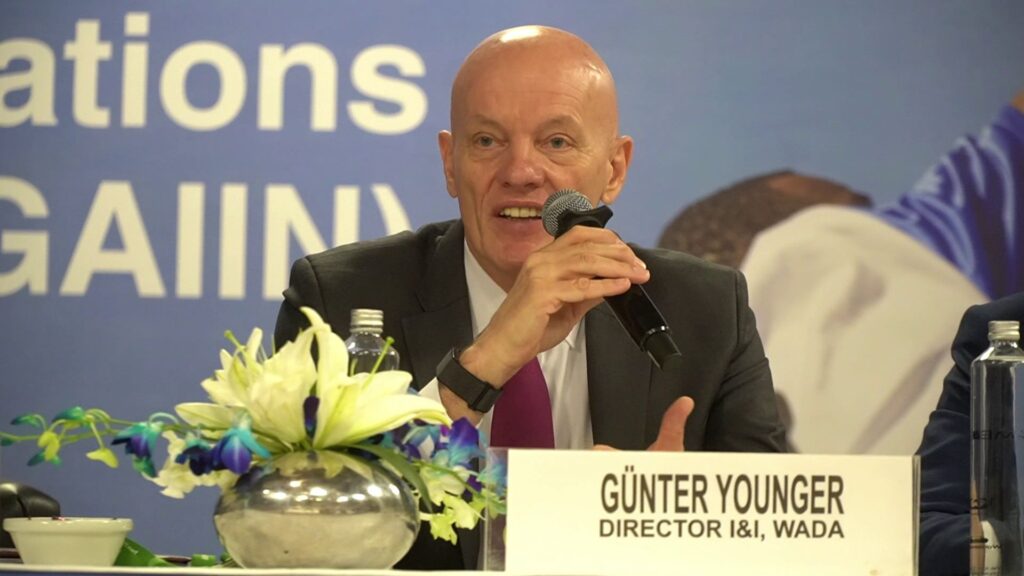
A day-long conference hosted by the World Anti-Doping Agency in India brought together global experts, law enforcement, and anti-doping officials to address the growing complexity of doping. The focus was clear: doping is no longer just an athlete issue — it is an organised, global network that requires intelligence-led action and stronger legal frameworks.
On the sidelines of the conference, we spoke to WADA’s Director of Intelligence & Investigations, Gunter Younger, about India’s role, the push for criminalisation, and why athletes remain the most vulnerable link.
Q: How important is India in the global fight against doping?
Gunter Younger:
“India is a very important partner — not just because of its size, but because of production. You are the ‘pharmacy of the world.’
Most of it is legal, but a small percentage is misused and exported globally. If we can identify and stop those networks in India, we can reduce the global impact. That’s why our top-down strategy relies heavily on India.”
Q: Why are athletes punished more easily than coaches or support staff?
Gunter Younger:
“That’s been a long-standing issue.
For athletes, it’s straightforward — a positive test leads to a case. But proving a coach or doctor’s involvement is much harder. You need clear legal evidence that they supplied the substance.
Athletes are often the weakest link. If they speak up, they risk losing their careers.
That’s why we need a different approach. If doping is criminalised — something India is considering — law enforcement can target coaches, doctors, and networks with stronger tools. The aim is to go after the system and better protect athletes.”
Q: Why do doping cases continue to rise globally?
Gunter Younger:
“It depends on the situation. For some athletes, especially in poorer regions, it’s about financial security. For others, it’s about performance and success.
But beyond that, there’s a financial ecosystem. Some coaches take a percentage of earnings. If one athlete is caught, another replaces them.
And then there’s organised crime. These groups are not interested in medals — they’re interested in profit.
That’s where we need to intervene — by targeting those who make money out of athletes’ health.”
In one line:
WADA’s message is clear — the fight against doping must move beyond athletes and focus on dismantling the networks that enable it.