By Sushant Singh
The National Anti-Doping Agency (NADA) has updated its Provisional Suspensions and Sanctions List, with the latest version dated 8 September 2026.
The updated list includes eight athletes from athletics, among them Prakruthi Roopa Rao, the 2026 National Inter-State Championships bronze medallist in the women’s 200m.
Prakruthi Roopa Rao Provisionally Suspended
Karnataka’s Prakruthi Roopa Rao has been provisionally suspended by NADA in connection with an Anti-Doping Rule Violation involving Stanozolol and Drostanolone.
Prakruthi won bronze in the women’s 200m at the National Inter-State Senior Athletics Championships, clocking 23.58 seconds.
Her time was inside the Asian Games qualifying mark of 23.70 seconds.
The other athletics athletes named in the updated list include Baljit Kaur, the women’s 400m winner at Indian Series 9 Final, and Jujhar Singh, the men’s 3000m steeplechase winner at Indian Series 2 Final.
Athletics Athletes on NADA’s Updated List
| Athlete |
Sport |
Prohibited Substance(s) |
| Ashu Ashu |
Athletics |
Mephentermine |
| Kaushal Kumar |
Athletics |
Mephentermine |
| Jujhar Singh |
Athletics |
EPO (Erythropoietin) |
| Bhagat Singh |
Athletics |
Mephentermine; Morphine |
| Baljit Kaur |
Athletics |
Metenolone; Oxandrolone |
| Nabeel Sahi MP |
Athletics |
Stanozolol; Drostanolone |
| Ravi Ravi |
Athletics |
Mephentermine; Meldonium |
| Prakruthi Roopa |
Athletics |
Stanozolol; Drostanolone |
Vidhi Accepts Three-Year Ban
As per the sanctions list, Vidhi, a trainee at NIS Patiala who was named in India’s U23 Asian Athletics Championships squad but later missed the competition following an Anti-Doping Rule Violation, has accepted the sanction.
Vidhi has received a three-year period of ineligibility, with one year of relief, according to the sanctions list.
Sachin Poswal Handed Four-Year Ineligibility
Sachin Poswal, against whom the Central Bureau of Investigation (CBI) has reportedly registered a case, has also been included in the sanctions list.
It is alleged that Poswa deceived the Athletics Federation of India (AFI) by generating multiple Unique Identification Numbers (UIDs) using fake or forged Aadhaar cards and false credentials.
He has been given a four-year period of ineligibility from 26 December 2028 to 25 December 2032, following the conclusion of an original four-year period of ineligibility that was in force from 31 January 2024.
Seema Punia Handed Two-Year Ban
Seema Punia, a Commonwealth Games and Asian Games discus medallist, has been handed a two-year ban after testing positive for a prohibited substance that she said was used during fertility treatment.
Punia disclosed that she had undergone IVF treatment, but had not completed the required Therapeutic Use Exemption (TUE) paperwork.
Coach Rakesh Kumar Handed Lifetime Ban
Among the cases, athletics coach Rakesh Kumar, reportedly from Bihar, has been handed a lifetime ban by NADA.
According to the sanction, Kumar was found to have violated Article 2.8, which concerns the administration or attempted administration of a prohibited substance or prohibited method to an athlete by an athlete’s support personnel.
The case is significant because it marks a rare and notable instance of an athletics coach receiving a lifetime ban for administering a prohibited substance to an athlete.

By Sports Desk
You can spend four grueling years perfecting your block start, fine-tuning your javelin release angle, or timing your final kick to the millisecond.
But when you step off the plane in Japan for the 2026 Asian Games in Aichi-Nagoya, there are a few non-track skills worth mastering.
Think of the subtle bow, taking off your shoes without hesitation, and resisting the urge to celebrate a personal best at full volume on a commuter train.
For the 79-member Indian athletics squad heading to the Paloma Mizuho Stadium in Nagoya, understanding Japanese etiquette is more than a cultural formality. The athletics team is the largest single sports contingent representing India at these Games.
Knowing how to navigate everyday life outside the Athletes’ Village can be just as important as preparing for competition.
And remember: while gold medals will be awarded for the 3000m steeplechase and 4x400m relay, there is no podium for the deepest bow.
When in Japan, Bow
Bowing, or ojigi, is one of the most recognizable aspects of daily life in Japan.
Athletes will encounter it everywhere. That includes greeting team liaisons, thanking bus drivers, and acknowledging race marshals.
For visitors, a simple and respectful bend from the waist at about a 15-to-30-degree angle is standard practice. Keep your back straight.
Men can keep their hands naturally at their sides, while women can fold them lightly in front.
There is no need to overcomplicate it or turn a simple greeting into an Olympic gymnastics routine. A warm, quiet nod with a polite bow goes a long way.
Shoes Off Means Shoes Off
One of the easiest mistakes for international athletes is walking into a venue or traditional space with their footwear on when custom requires otherwise.
In Japan, some indoor spaces require visitors to remove street shoes. These include traditional ryokan accommodations and dining spaces, along with certain changing areas, training facilities, and medical pods.
These areas are usually marked by a raised floor at the entryway, known as a genkan. Guest slippers are often available there.
The golden rule for every sprinter, thrower, and jumper in the Indian contingent is simple: look down first.
If you see a raised step or a rack of alternative footwear, your shoes come off.
Your spikes belong strictly on the synthetic track of the Mizuho Stadium—not on tatami mats or indoor wooden floors.
Keep It Down: The Art of Public Quiet
Public spaces in Japan, particularly public transit systems such as Nagoya’s Meijo Subway line, follow a collective standard of quiet.
Loud phone calls, blasting music through unsealed headphones, or shouting across train cars can cause discomfort to fellow passengers.
For an athlete who has just shattered a national record or secured a spot in the finals, an outburst of emotion is understandable.
However, doing so at full volume inside a packed subway train alongside local commuters can disturb those around you.
Save the roar for the home straight. Keep team discussions subdued until you return to the hotel or squad quarters.
Queue. And Wait Your Turn.
Whether you are lining up at the dining hall, waiting for transport shuttles, or grabbing a pre-race coffee, orderly queuing, or narabu, is deeply embedded in Japanese society.
Lines are straight. Gaps are respected. Cutting in is virtually non-existent.
Athletes should expect to wait their turn patiently. Avoid pushing, crowding the doors, or attempting creative interpretations of line-forming.
Standing in line quietly is regarded as a sign of respect for those around you.
Forget the Tip
In India and many Western nations, tipping service staff is standard.
In Japan, it is unnecessary and can cause confusion.
Good, attentive service is viewed as a basic standard of professional duty rather than something requiring extra financial compensation.
If a hotel staff member, shuttle driver, or restaurant server goes above and beyond, trying to leave extra cash can create an awkward situation.
A polite “Arigatou gozaimasu” (Thank you very much) with a slight bow is all the appreciation needed.
The Ambassador’s Responsibility
The Asian Games are about elite athletic competition, chasing podium finishes, and breaking records.
But an international sporting spectacle of this scale is also a major exercise in cultural diplomacy.
When Indian athletes step out of the call room, they walk through airports, ride trains, eat in communal spaces, and interact with thousands of local volunteers and fans.
In those moments, every member of the squad serves as an ambassador for Indian sport.
The essential etiquette checklist is simple:
- Bow politely when greeted.
- Take off your shoes when stepping onto raised indoor entrances.
- Keep public transit conversations quiet.
- Queue patiently in single file.
- Leave the tip behind.
When in doubt, take a second, look around, and mirror the local custom.
Winning an Asian Games medal takes years of dedication and relentless training. Avoiding an unnecessary cultural misstep takes only a moment of awareness.

Africa will finally get its moment on athletics’ biggest stage.
Nairobi has been awarded the 2029 World Athletics Championships, marking the first time the senior global outdoor championships will be staged on African soil. The landmark decision goes beyond choosing a host city. It represents a major step in athletics’ push to become a truly global sport and gives Kenya, one of the world’s great running nations, the chance to showcase its passion for track and field to a worldwide audience.
The World Athletics Council voted in Budapest to award the 2029 championships to Nairobi and the 2031 edition to Munich. They were selected from four bids, with London and Rome also competing to host the championships.
Nairobi Makes Athletics History
World Athletics President Seb Coe described the decisions as part of the sport’s broader mission to expand its global footprint.
“With this Council decision today, we continue to fulfil our mission of growing athletics worldwide,” Coe said, pointing to a sequence of championships across Asia, Africa and Europe.
He said Nairobi and Munich had presented “two compelling propositions” and offered “very different but equally exciting opportunities” for the sport.
For Nairobi, the announcement is particularly significant.
Kenya has long been synonymous with distance running. The country has produced generations of Olympic and world champions, but it has never hosted the senior World Athletics Championships.
That will change in 2029, when the world’s best athletes descend on the Kenyan capital.
Kasarani Stadium Gets Major Upgrade
Nairobi’s bid for the 2025 World Championships ultimately lost out to Tokyo, with infrastructure regarded as one of the weaknesses of the Kenyan proposal.
Since then, however, the city’s prospects have strengthened considerably.
The 48,000-capacity Kasarani Stadium is undergoing a major structural renovation ahead of the 2027 Africa Cup of Nations, which Kenya will co-host with Tanzania and Uganda.
The upgraded venue is expected to provide a stronger foundation for Nairobi’s first senior World Championships.
The city also has recent experience of hosting major international athletics events. Kasarani staged the 2017 World Athletics Under-18 Championships, which attracted packed crowds, as well as the 2021 World Athletics Under-20 Championships.
Kenya Has a Passionate Athletics Audience
Perhaps most importantly, Nairobi already has an audience deeply invested in the sport.
World Athletics fan research found that 68% of Kenyans surveyed rated their interest in track and field as high. The global average was 39%.
That made Kenya the most athletics-interested market measured in the research.
That passion could make Nairobi 2029 unlike any previous World Championships.
A Major Championship Run for Athletics
The Nairobi announcement comes as part of a significant run of major championships for athletics.
Beijing will host the next World Championships from September 10-19, 2027. Track and field will then take centre stage at the Los Angeles Olympics from July 15-30, 2028.
A World Ultimate Championships will also be held in 2028 after the Games, bringing the season to a major global conclusion.
World Athletics is also seeking to establish a clearer rhythm in which the outdoor season finishes with a major championship. Nairobi in 2029 and Munich in 2031 are both scheduled for September.
Munich to Bring World Championships Back to Germany
The choice of Munich provides another compelling story.
Germany will host the World Championships for the first time since Berlin staged the event in 2009. Twenty-two years after that championship, the global athletics community will return to Germany, this time to Munich and its iconic Olympic Stadium.
The venue has already demonstrated its ability to create an atmosphere worthy of a major athletics championship.
During the 2022 European Championships, the stadium attracted an estimated 267,000 track and field fans, providing a powerful indication of the appetite for athletics in the city.
Asia, Africa and Europe in Focus
Together, Nairobi and Munich give World Athletics two very different hosts, but also two cities with strong sporting identities.
Nairobi offers the historic first: Africa finally hosting the senior World Championships, in a country where athletics is embedded in the national sporting culture.
Munich offers a return to a proven European market and a stadium steeped in Olympic history.
The decisions also underline the changing geography of global athletics.
Beijing, Nairobi and Munich will host the next three editions of the World Championships, taking the event to Asia, Africa and Europe.
For a sport that has traditionally relied heavily on a handful of established markets, that geographical spread is significant.
Kenya Finally Gets to Host the Show
For Kenya, however, the significance is even greater.
The country has spent decades producing athletes who have conquered the biggest stadiums in the world.
In 2029, the world’s biggest athletics championship will finally come to them.
Africa is no longer simply producing the stars of athletics.
It is getting to host the show.
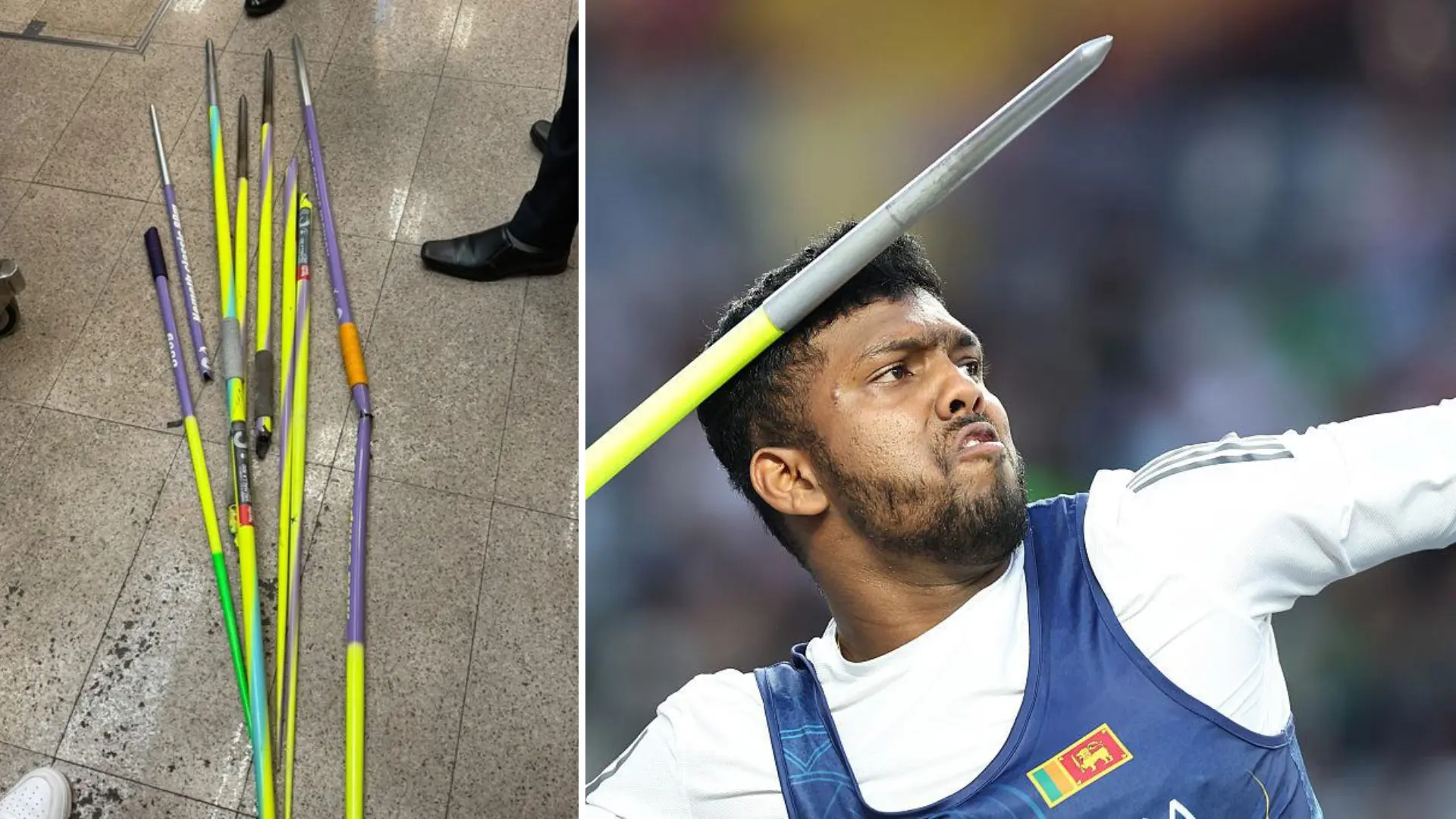
Sri Lankan javelin star Rumesh Pathirage has suffered a frustrating setback at the worst possible time, with all three of his competition javelins damaged during air travel after he returned from Budapest as a newly crowned world champion.
Pathirage had just produced another sensational performance at the inaugural World Athletics Ultimate Championship in Budapest on September 13. The 23-year-old threw 91.09 metres on his final attempt to win the men’s javelin title.
Instead of returning to Colombo with everything intact after one of the biggest victories of his career, Pathirage discovered that the javelins he relies on had been damaged during the journey.
For an athlete competing at the highest level, the loss is far from insignificant.
All Three Competition Javelins Damaged
Pathirage had used the three javelins for more than 90 throws.
“All three javelins I used for over 90 throws have been damaged. It might have been a mistake by the airline, but that’s how it is. It’s not a big issue. I’ll move on,” Pathirage was quoted as saying by Sri Lankan news outlet NewsWire.
His calm response does not hide the frustration of the incident.
Elite javelin throwers develop familiarity with their equipment through hundreds of throws. They learn exactly how each javelin behaves in their hands, during the approach and in flight.
Pathirage now faces the task of replacing the damaged equipment. He may also need to adapt to new javelins with the 2026 Asian Games in Aichi-Nagoya rapidly becoming the central target of his season.
Pathirage’s Remarkable 2026 Season
If his extraordinary 2026 campaign has shown anything, it is that Pathirage can overcome obstacles.
The Sri Lankan has enjoyed a spectacular breakout season. He has repeatedly surpassed the 90-metre barrier, with his latest effort in Budapest becoming his third throw beyond 90 metres in 2026.
The manner of his latest performance was equally impressive.
With the competition reaching its decisive stage, Pathirage saved his biggest effort for his final attempt. His 91.09m throw secured the World Athletics Ultimate Championship title and delivered another statement from one of the fastest-rising names in global javelin.
Asian Games Javelin Competition Awaits
For Sri Lanka, Pathirage’s emergence is a major sporting story.
For the rest of Asia, it is a warning.
The 23-year-old is no longer simply a promising young thrower hoping to make an impression at a major championship. His performances in 2026 have established him as a serious medal contender and one of the athletes to watch at the Asian Games in Aichi-Nagoya.
The men’s javelin competition at the 2026 Asian Games will provide an important test of Pathirage’s growing reputation.
With multiple 90-metre throws behind him and a major international championship victory now on his résumé, expectations will be high when he arrives in Japan.
The damaged javelins create an unwelcome complication. Pathirage will need to find suitable replacements and build confidence in them so that his equipment does not become a factor when he steps onto the runway at Aichi-Nagoya.
Pathirage Ready to Move Forward
Yet his reaction tells its own story.
There was no lengthy complaint and no attempt to make excuses. His message was simple: it happened, and he will move on.
That mentality could prove just as important as his extraordinary throwing ability.
At only 23, Pathirage is already producing distances that put him firmly among the elite. His 91.09m performance in Budapest has added another chapter to a season that has seen him break the 90-metre barrier three times and claim one of the biggest titles available to him.
Now comes the next challenge: the Asian Games Nagoya javelin competition and the opportunity to turn his remarkable form into continental gold.
The irony is difficult to miss. Pathirage returned from Budapest with a world title, a 91.09m throw and confirmation that he belongs among the sport’s elite — only for his trusted javelins to emerge from the flight damaged.
The airline mishap may have broken his equipment, but it has not broken his momentum.
With the Asian Games in Aichi-Nagoya firmly in his sights, Rumesh Pathirage will hope his next javelins can survive the journey — because the 23-year-old himself looks more than ready for the biggest throw of his season.
The 400m hurdles is no longer just a gruelling test of endurance. It has become a stadium headliner.
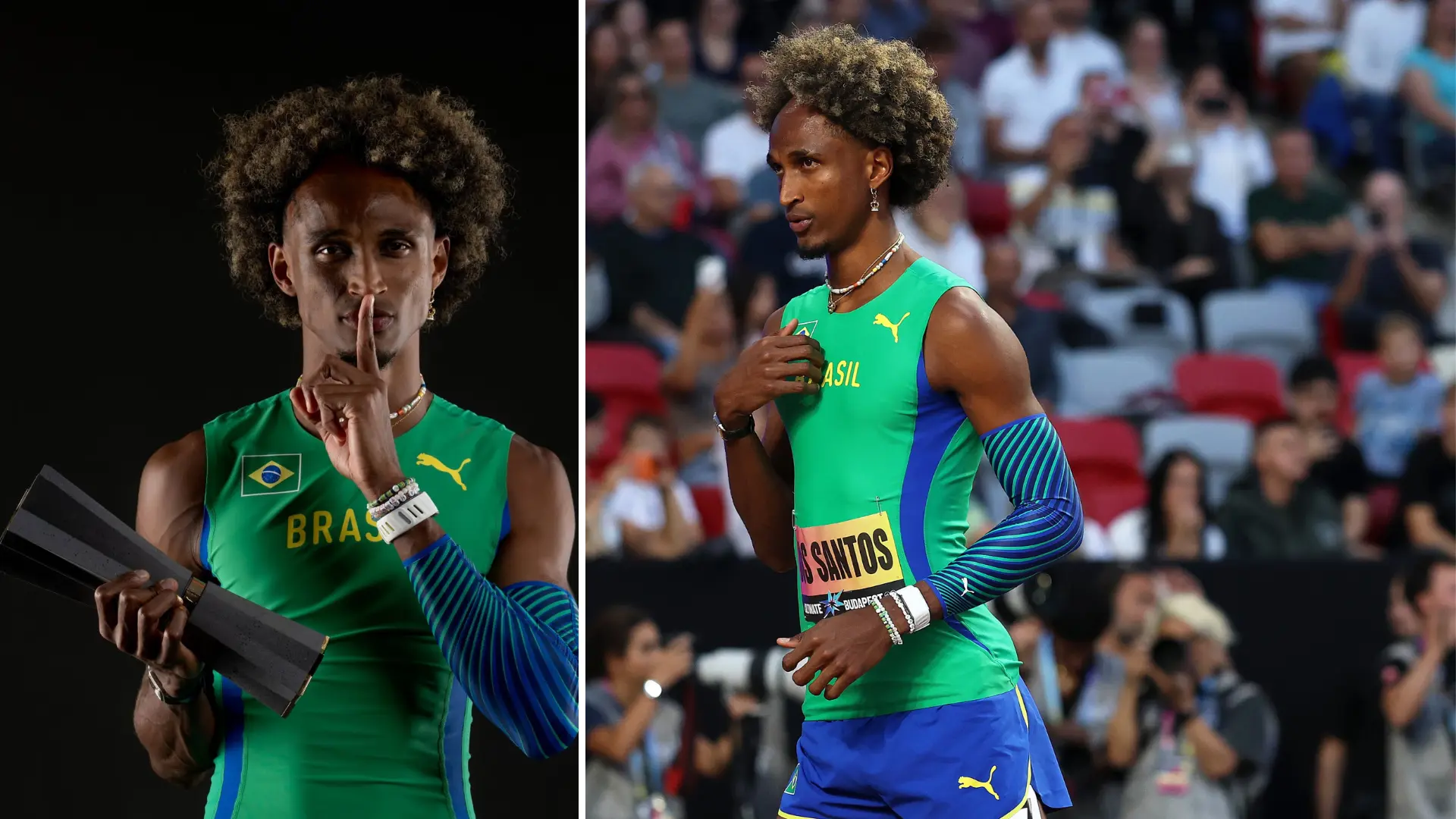
Generational talent has given the event a rebellious, rock-and-roll rhythm, fuelled by fierce rivalries, electric pacing and athletes who attack the brutal ten-hurdle gauntlet like centre stage. At the heart of this renaissance stands Alison dos Santos, a runner who brings pure adrenaline and swagger to every stride.
That swagger reached its peak on Sunday at the World Athletics Ultimate Championship Budapest 26. Dos Santos delivered a sensational performance to claim the ultimate title in 45.98 seconds.
Dos Santos Wins Historic 400m Hurdles Clash
The race delivered everything track and field fans expected. It featured the three fastest 400m hurdlers in history.
Dos Santos faced USA’s world and Olympic champion Rai Benjamin and Norway’s former world record-holder Karsten Warholm in a heavyweight clash that matched its enormous pre-race hype.
The trio exploded from the gun and moved almost together over the opening barriers.
By the third hurdle, Dos Santos and Benjamin had pulled away from the rest. That set up a fierce two-way battle down the backstretch.
Racing shoulder to shoulder through lanes seven and six, they charged into the home straight locked together.
Dos Santos Finds Another Gear
Then came the decisive moment.
Dos Santos showed the power and late-race mechanics that have defined his remarkable 2026 campaign. He found another gear and gained a crucial stride on Benjamin heading into the final hurdle.
He cleared it cleanly and used the final barrier as a launchpad for a powerful closing surge. The Brazilian crossed the line comfortably ahead of his American rival.
Benjamin took silver in 46.40 seconds. The result was even more impressive because it came during his fourth gruelling race in three days.
His demanding schedule included the 400m final and hurdles semifinals.
Warholm finished third in 46.78 seconds. Germany’s Emil Agyekum followed in fourth with 47.10, breaking the national record.
World Record Adds to Dos Santos’ Historic Season
For Dos Santos, the victory caps a stellar year.
He had already broken the world record with a 45.80-second run in Zurich just weeks earlier. Only that performance and Warholm’s legendary 45.94 from the Tokyo Olympics remain ahead of his Budapest mark on the all-time list.
Dos Santos also arrived in Budapest fresh from winning the Diamond League title in Brussels.
He admitted that the external hype added to the mental battle of competing under championship pressure.
“I opened the app and saw I had something like a 95% chance of winning. I thought, wow, that is pretty high, so I just wanted to go out there and run as fast as I could,” he said. “At a championship, it is different. Running fast is important, but winning is more important.”
Benjamin Praises a Historic Era
Benjamin acknowledged that the heavy weekend workload had taken its toll.
Yet the silver medallist also recognised the significance of the era he is helping to create alongside Dos Santos and Warholm.
“What we are doing is so important and so impressive that people sometimes take it for granted,” Benjamin reflected. “Karsten led the way to the world record, Alison followed up on it, and this was an amazing performance from all three of us today.”
With three exceptional competitors trading world records and pushing one another towards extraordinary limits, the 400m hurdles has become one of athletics’ biggest spectacles.
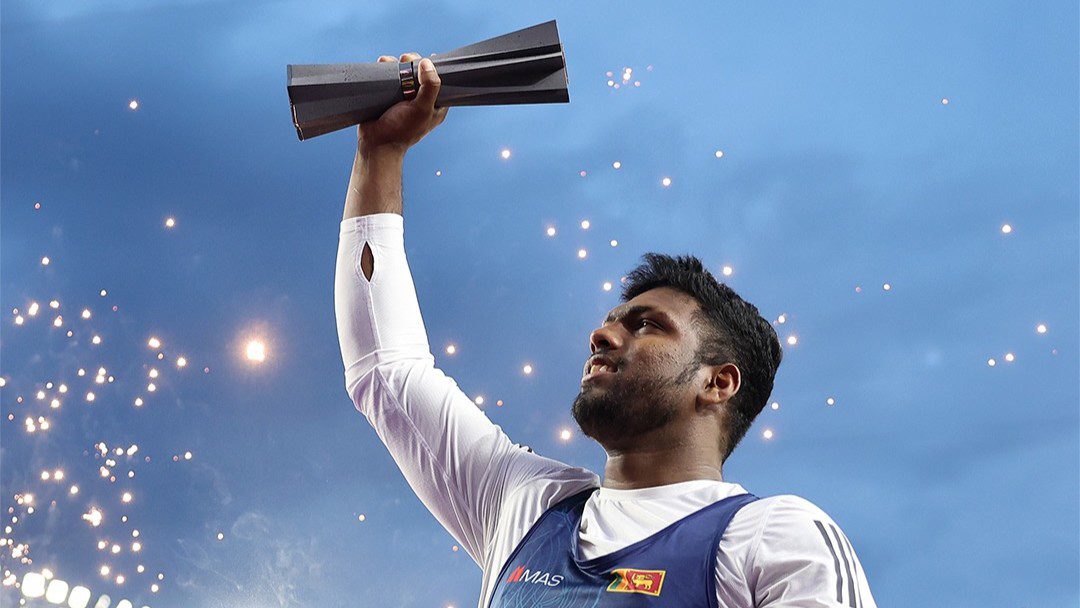
Rumesh Pathirage has sent Sri Lanka into raptures after capping his stunning breakthrough season with victory in the men’s javelin at the World Athletics Ultimate Championship in Budapest.
The dominant Sri Lankan has enjoyed a phenomenal year, winning 11 of his 12 competitions. His season highlights include a world-leading 92.62m in Rome, a 92.07m victory in Zurich, and the Diamond League title.
Pathirage Overcomes Slow Start
The pre-competition favourite made an inauspicious start in Budapest.
Pathirage opened with a modest 75.89m, while European champion Julian Weber immediately seized the early lead with an 84.09m throw.
Germany’s advantage did not last long.
Two-time world champion Anderson Peters of Grenada produced an 86.18m effort in the second round. Weber responded with 85.89m to remain second, while Pathirage began to find his rhythm with 85.69m.
Sri Lankan Takes Control
Pathirage seized control in the third round.
He launched the javelin to 87.11m to move into the lead. Olympic champion Arshad Nadeem also produced a season’s best of 81.49m in the same round.
However, Nadeem remained fifth and was eliminated before the fourth and final round.
Pathirage then produced his biggest throw of the competition.
He opened the final round with a thunderous 91.09m, becoming the first athlete to record a 90-metre throw on Hungarian soil.
Peters closed his series with 82.63m, while Weber managed 78.75m. Pathirage’s victory was therefore sealed.
Pathirage Sets His Sights on Olympic Gold
The Sri Lankan star made his ambitions clear after securing the Ultimate Championship trophy.
“This was my one and only goal – to bring the trophy back to Sri Lanka,” Pathirage said. “I faced a lot of challenges today but I was still hoping to win and I’m proud I did it. I was never thinking about the prize money and I don’t have any idea yet how I will spend it. Sri Lankan athletes have won two Olympic medals so far and my next goal is to bring the Olympic gold medal home.”
With another major title secured, Pathirage now turns his attention to the upcoming Asian Games.
His extraordinary 2026 season has established him as one of the biggest forces in global javelin, and he will look to carry that momentum into the next stage of his career.
The much-anticipated men’s 1500m at the inaugural World Ultimate Championship lived up to its billing, delivering a tactical thriller on the same track where Josh Kerr claimed his breakout global crown three years ago.
Kerr mastered a fast early tempo set by Germany’s Robert Farken and a later surge from America’s Yared Nuguse. The British star stayed buried in the pack before unleashing his trademark devastating finish.
The 28-year-old clocked 3:29.35, lowering his own Hungarian all-comers’ record by 0.03 seconds. He held off Australia’s Cam Myers to secure another global title.
Kerr Produces a Devastating Finish
The race opened at a swift pace before Nuguse injected another surge with 500m remaining.
He led the field through 1200m in 2:49.91, forcing the pace as the contenders began to position themselves for the finish.
Kerr remained patient in the pack.
With 300m to go, he smoothly moved onto Nuguse’s shoulder. The Briton had timed his move perfectly and was now in position to unleash his finishing speed.
Kerr covered the final 200m in a blistering 26.02 seconds.
Myers stayed close throughout the homestretch and gave everything in pursuit. However, he could not match Kerr’s final burst.
Kerr crossed the line first in 3:29.35, followed by Myers in 3:29.68.
America’s Hobbs Kessler finished third in 3:30.74, ahead of Olympic champion Cole Hocker, who also clocked 3:30.74.
Kerr Praises the New Competition
Kerr revealed that his limited racing this season helped him arrive in Budapest fresh.
“I didn’t race a lot this season so I kind of came here fresh and ready to go,” said Kerr. “Cameron is an awesome athlete, he was pushing a lot but I managed to look at the screen and see what the gap was.”
The British star also offered strong support for the new event.
“This sport has moved on in the past couple of years, and I’m impressed where it is now. Anything that can move the sport in the right direction and do good for athletes, I support.”
Myers Has No Regrets
Despite finishing second, Myers was delighted with his performance.
“I ran the perfect race,” he said. “I thought with 200m to go that I was going to win and that is an exciting feeling. Josh was just too strong today and that shows why he is a world record-holder.”
The victory adds another prestigious title to Kerr’s growing resume. It complements his 2023 outdoor world crown and his two world indoor 3000m titles.
Marco Arop looked set to reclaim glory on the same track where he won the 2023 world title. But Djamel Sedjati had other plans.
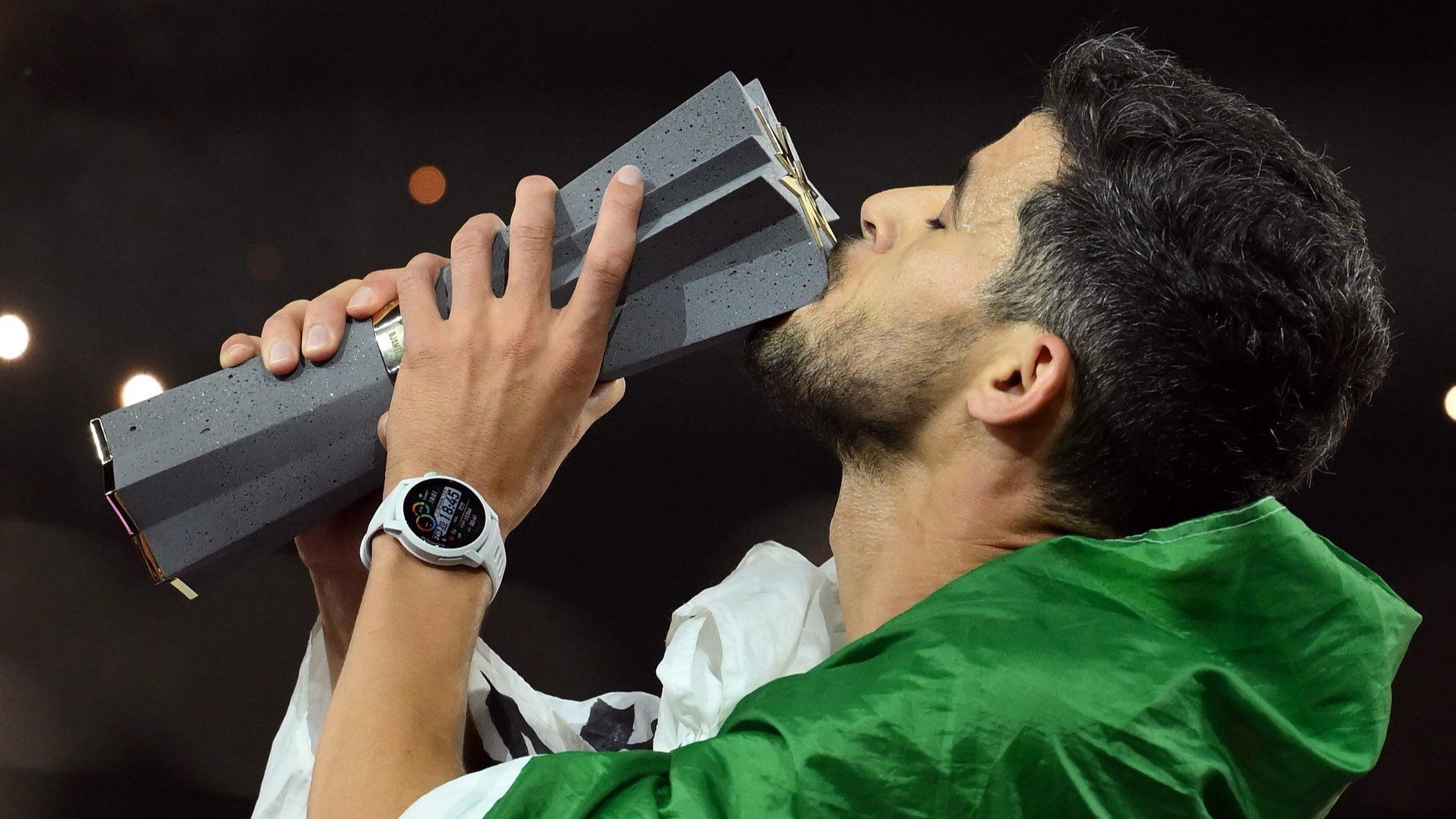
The Algerian produced one of the finest 800m performances ever at the World Athletics Ultimate Championship Budapest 26, surging past Arop in the closing stages to win the men’s 800m final in 1:41.91.
Arop led with 200 metres remaining but could not reproduce his previous triumph in Budapest. The result again highlighted the Canadian’s need to sharpen his finishing kick.
Sedjati Times His Attack Perfectly
Sedjati executed his tactical plan to perfection.
Arop pushed a rapid opening lap of 49.67, with world and Olympic champion Emmanuel Wanyonyi close behind. Sedjati remained patient and stayed within striking distance.
As Arop’s momentum began to fade on the final straight, Sedjati made his move.
With just 25 metres remaining, the Algerian surged past the leader and powered to victory in 1:41.91.
Arop held on for second in 1:42.28, while Wanyonyi finished third in 1:42.44.
Seven Athletes Break 1:43
The depth of the race was extraordinary.
All of the top seven finishers dipped under 1:43.
USA’s Brandon Miller finished fourth in 1:42.54. Italy’s Francesco Pernici followed in fifth with a national record of 1:42.67.
The victory marked a career-defining breakthrough for the 27-year-old Sedjati.
He secured his first global title after previously winning world silver medals in 2022 and 2025, along with an Olympic bronze in 2024.
Sedjati Celebrates First Global Title
Sedjati was delighted after finally converting his major championship experience into gold.
“That was very tactical but also very fast, and I am really happy to have won this race today,” Sedjati reflected. “This is the first title for me so I’m incredibly happy and grateful to everyone who supported me.”
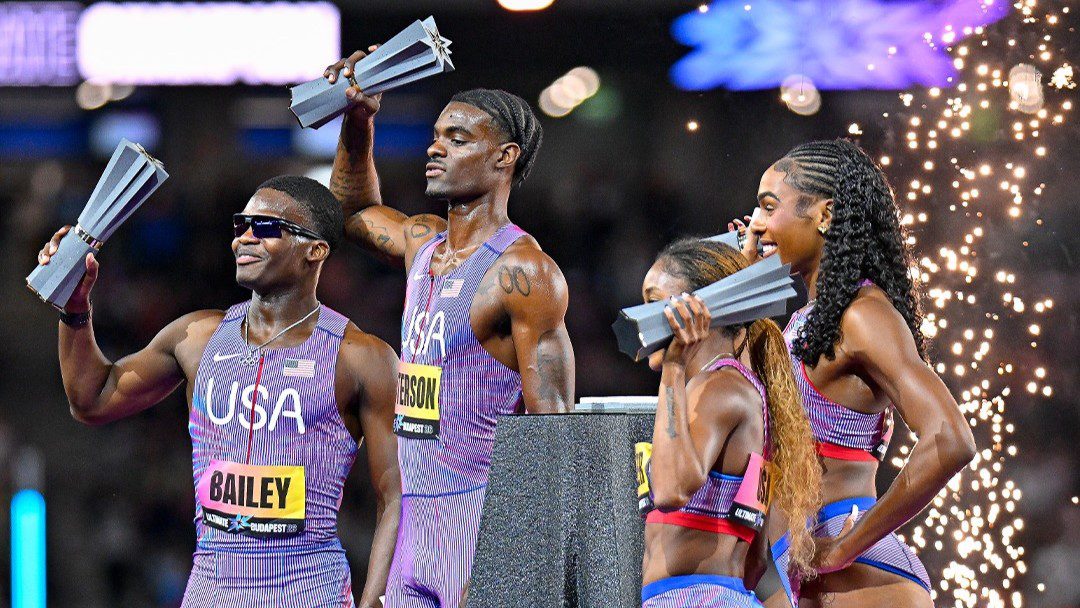
Looking beyond the USA as winners in the mixed 4x400m at the World Athletics Ultimate Championship Budapest 26 was simply a fool’s errand.
It would have taken an absolute miracle for the powerhouse nation to lose this relay. In the end, pure class prevailed as the red, white and blue ran away with the title.
As the reigning world champions and world record-holders, the victory felt entirely fitting. A minor slip-up at the 2024 Olympics briefly halted their momentum, but the United States has otherwise dominated the event in recent years.
The Americans have won world titles in 2023 and 2025, triumphed at this year’s World Relays, and set a staggering four world records.
USA Storms to Victory in Budapest
Returning to the same venue where they won their 2023 world title, the US quartet crossed the line in 3:08.32.
The performance also shaved nearly half a second off the Hungarian all-comers’ record they established three years earlier.
Chris Bailey set the tone from the opening leg. He surged ahead with a blistering 44.73 split.
Alexis Holmes kept the USA at the front. However, a fierce 49.37 split from the Netherlands’ Lieke Klaver kept the Dutch team within striking distance.
Jacory Patterson then extended the American advantage on the third leg before handing the baton to Aaliyah Butler.
Great Britain Fight Back for Silver
Behind the leaders, Great Britain & NI moved into medal contention on the anchor leg.
Charlotte Henrich hunted down the Netherlands and overtook Myrte van der Schoot with roughly 200 metres remaining. That move secured silver for Great Britain.
At the front, however, Butler remained untouchable.
Her steady 49.47 final leg sealed the USA’s victory in 3:08.32.
Great Britain finished second in 3:09.40, just 0.17 seconds ahead of the bronze-winning Dutch squad.
Standout Splits Across the Field
Several individual performances also stood out further down the results.
Jamaica’s Stacey Ann Williams produced a rapid 48.72 split, helping her team finish sixth.
Hungary’s Attila Molnar also impressed with a blistering 43.90 split, guiding the hosts to eighth place.
Holmes, who previously anchored the US team to gold at the same Budapest stadium in 2023, praised the group’s chemistry after another dominant performance.
“The atmosphere with this team was so good,” reflected Holmes. “Whenever the USA puts a team together, they put together a group they trust, people with the character to go out there and make it happen, and that is what we had today.”
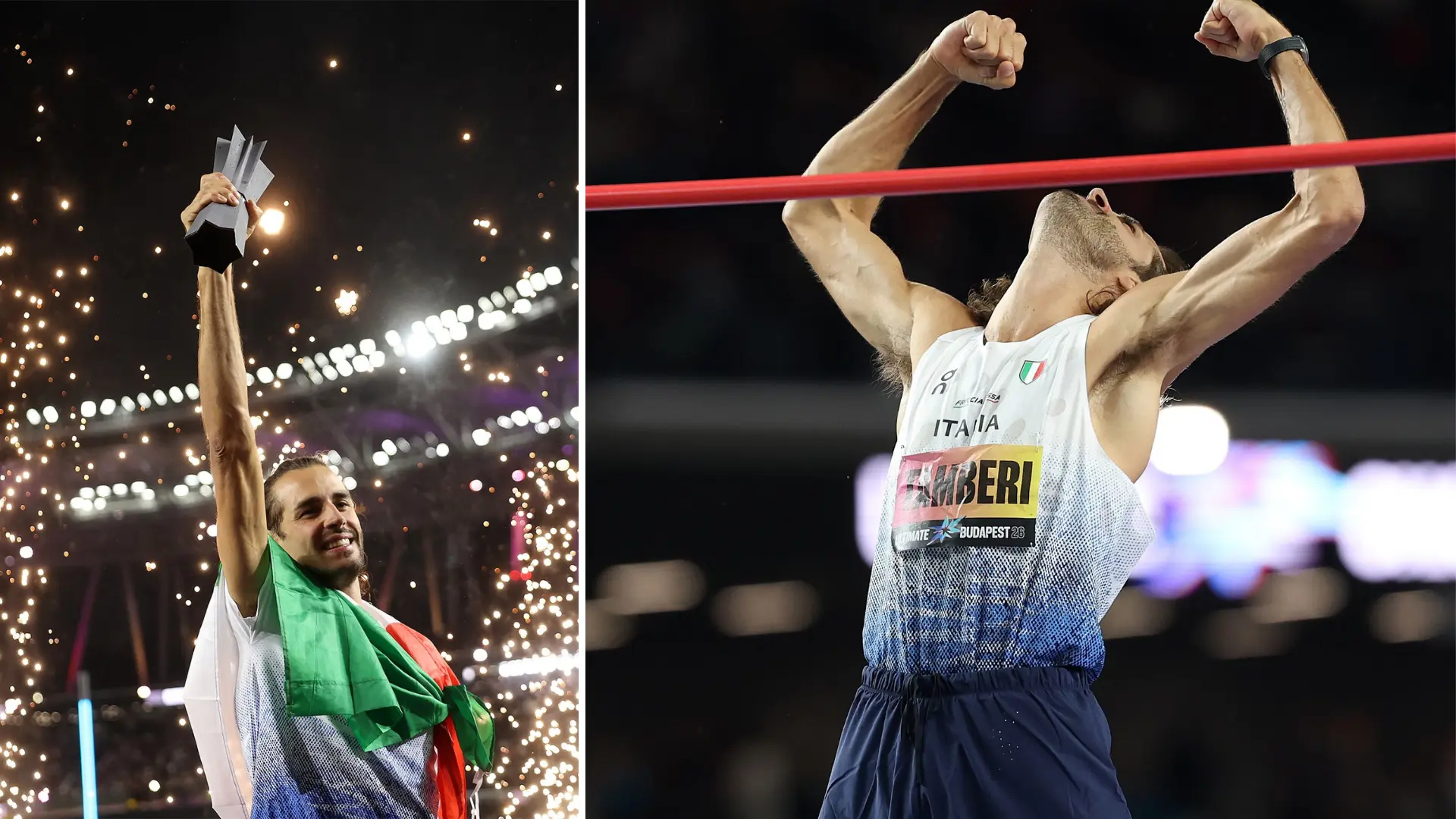
Gianmarco Tamberi has never needed an introduction, but his latest masterpiece in Budapest delivered a powerful reminder that high jump’s ultimate showman is far from finished.
With “showtime babe” inked onto his inner forearm, the Italian eccentric delivered a Hollywood-worthy performance on Sunday. He cleared a world-leading 2.37m to win the high jump title at the World Athletics Ultimate Championship.
The clearance marked Tamberi’s best in more than two years. It also signalled a roaring return to form for the 34-year-old, suggesting he still has plenty of soaring left in the seasons ahead.
Tamberi Turns Budapest Into His Stage
Returning to the Hungarian capital, where he won his brilliant 2023 world title, Tamberi once again made the competition his personal stage.
USA’s JuVaughn Harrison cleared 2.30m for silver. Mexico’s Erick Portillo took bronze on countback at 2.26m.
But the night belonged to Tamberi and his trademark mix of theatrical energy and fierce competitive grit.
He opened smoothly at 2.22m and 2.26m, clearing both heights on his first attempts. A brief hiccup came at 2.30m before Tamberi tightened his tactical grip on the competition.
As the bar rose, so did the theatrics.
Before attempting 2.33m, Tamberi famously quieted the stadium and flashed his inscribed forearm towards the crowd. He then sailed over the bar on his first attempt.
At 2.35m, the music returned. A rhythmic stadium clap followed and helped propel him cleanly over once again.
Tamberi Seals the Ultimate High Jump Crown
Tamberi produced another clutch clearance at 2.37m, clearing it on his second attempt.
Harrison bowed out at 2.39m, leaving Tamberi with the title secured.
The Italian then took aim at 2.41m. He made three ambitious attempts but could not clear the height.
That did little to dampen a magical night.
“It was already predicted – showtime, you know!” Tamberi beamed during his trackside interview, pointing directly to the ink on his arm. “It’s not thanks to me; it’s thanks to the people who are there. My friends, my family – all the people here who support me. You were crazy, guys. You pushed me over my limits.”
A Powerful Comeback for Tamberi
The victory carries enormous significance for an athlete who has spent recent years battling injuries and doubt.
Tamberi opened his season modestly in July before winning his fourth European title in August. He also admitted that returning to the top required overcoming major psychological hurdles.
“I started the season probably 14th in the world rankings, so this really was a comeback,” Tamberi reflected. “My career was very tough because, if I look at the ups and downs, I cannot even say which one was the most difficult to come back from. After I was not able to get to the final in Tokyo last year, people started to say that it’s my time to retire – it was difficult to hear and to struggle against all these feelings. Finally, I’m here with 2.37m. Now I can say to everyone: ‘Never stop believing in your dreams, never put a limit on yourself’.”
By the time Tamberi completed his three attempts at 2.41m, he had achieved far more than a medal.
He reclaimed his territory, silenced the retirement chatter and reminded the high jump world that when the showman is healthy, he remains a force to watch.