

By Sambit Pradhan
The Housing Breakdown: Diaspora Backup Plans and Midnight Scrambles
-
Vanishing Credentials: Female rowers Poonam, Aleena Anto, and Anshika Bharati arrived with valid accreditation, yet were erased from the host registration system.
-
Administrative Co-ed Assignment: In a startling oversight, gymnast Pranati Nayak—India’s sole gymnastics entry—and her coach Ashok Mishra were assigned to the same room aboard the Costa Serena cruise ship.
-
The Missing Letter: Separate accommodations for Mishra were eventually negotiated at 1:30 a.m., only for hotel staff to deny him access for another 45 minutes because a single letter was missing from his name in the system. He finally gained access to his room after 2:00 a.m.
-
Restricted Access: Pistol shooting head coach Samaresh Jung was issued accreditation that inexplicably barred him from entering the primary competition arena and field of play.
Transportation Gridlock and Two-Hour Commutes
Ceremonial Gaffes
The Cost of Adaptation
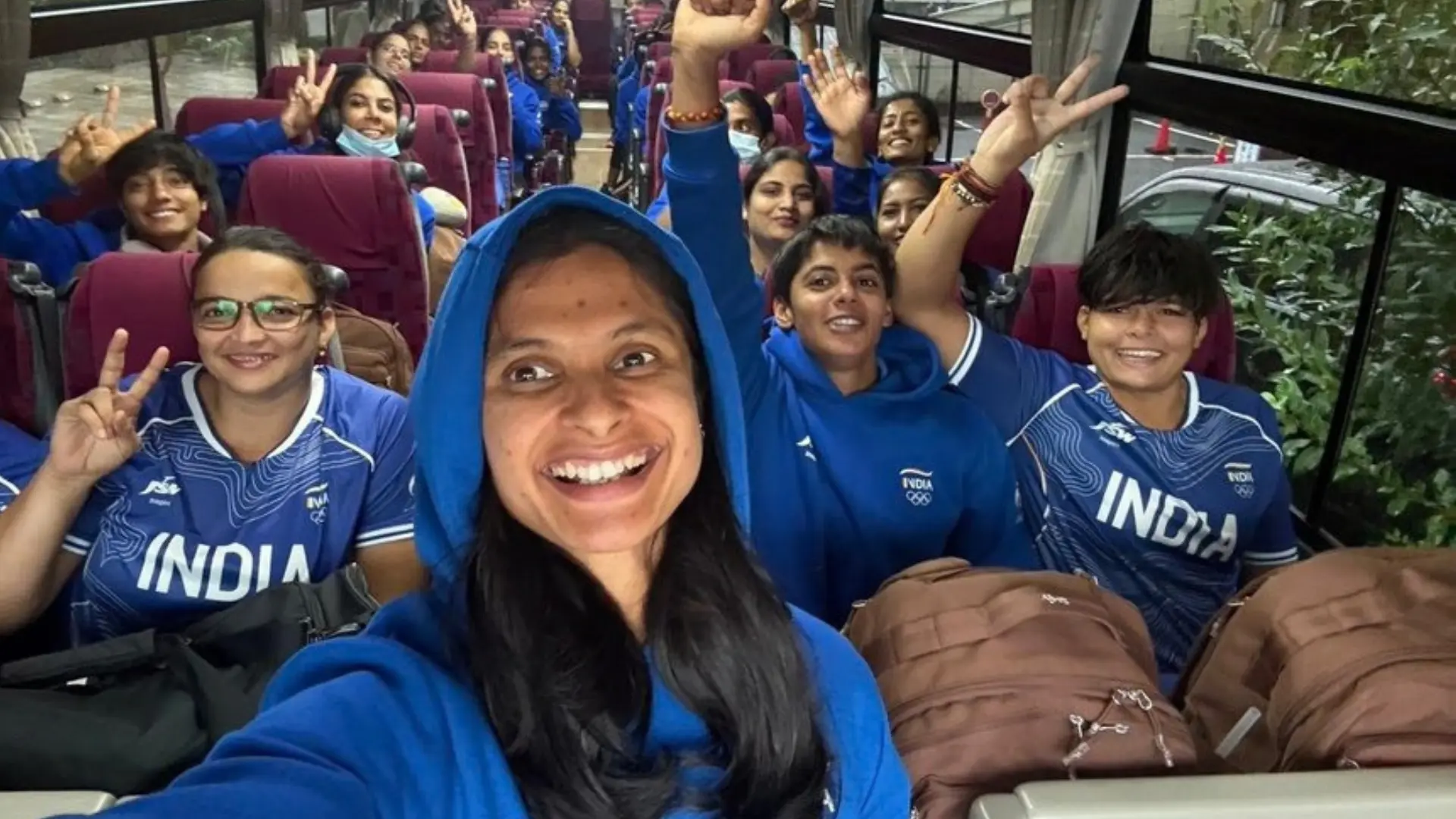
Eritrean distance runner Dawit Seare produced a stunning late surge to deny Olympic champion Jakob Ingebrigtsen and claim the men’s 5km title at the World Athletics Road Running Championships in Copenhagen.
For a few seconds, it appeared Jakob Ingebrigtsen had done what he so often does — timed his finishing move perfectly.
It was not enough.
Eritrea’s Dawit Seare responded in the closing metres to overtake the Norwegian and win the men’s 5km gold at the World Athletics Road Running Championships in Copenhagen on Saturday.
Seare clocked a national record of 12:56, while Ingebrigtsen finished second in 12:59, also a Norwegian record. Another Eritrean, 19-year-old Saymon Amanuel, completed a remarkable podium for the country with a personal best of 13:00.
The race was decided in a furious final stretch.
Seare moved into the lead with roughly a kilometre remaining after Ethiopia’s Mezgebu Sime had briefly forced the pace. Ingebrigtsen, who had spent much of the race tucked into the leading group, gradually moved through the field and eventually found himself in second.
With around 30 seconds of running left, the Norwegian made his move.
Ingebrigtsen edged past Seare and briefly looked to have secured another major championship victory. But Seare immediately responded, drawing level before pulling away in the final metres to complete one of the biggest wins of his career.
The victory continues a rapid rise for the 21-year-old Eritrean.
Seare won the African 5000m title earlier this year and had already shown his potential at the inaugural World Road Running Championships in Riga in 2023, where he finished fourth. Three years later, he has moved from just outside the podium to the top step of the world stage.
His 12:56 was not only a championship-winning performance but also an Eritrean national record.
For Ingebrigtsen, the silver came on his 26th birthday. The Norwegian arrived in Copenhagen having won the European 5000m title in August and the 5000m at the World Athletics Ultimate Championship in Budapest just eight days earlier. Copenhagen was his second-ever road 5km race.
The result also highlighted the depth of Eritrea’s distance-running programme. Amanuel, only 19, ran 13:00 for bronze, becoming the second Eritrean on the podium.
Australia’s Ky Robinson finished fourth in 13:04, setting an area record, while Uganda’s Keneth Kiprop also ran 13:04 for fifth. Ethiopia’s Addisu Yihune was sixth in 13:07, with Sime seventh in 13:08.
France’s Jimmy Gressier, the European-record holder at 5km, finished 14th in 13:17 after helping set the early pace.
The women’s 5km title went to Ethiopia’s Likina Amebaw, who won in 14:41, ahead of Kenya’s Caroline Makandi Gitonga in 14:48 and Australia’s Rose Davies in 14:50.
But the headline from Copenhagen belonged to Seare.
The favourite had made his move. The Eritrean had one response left.
It was enough for world gold.

The Aichi-Nagoya Asian Games 2026 officially opened in Nagoya on Saturday, September 19. For India, the ceremony marked the start of a fortnight of competition, with athletics set to take centre stage from September 23.
The opening ceremony at the Nagoya City Mizuho Park Athletic Stadium formally marked the start of the 20th Asian Games. Competition in several sports had already begun before the ceremony.
The Games run until October 4. Athletes from 45 countries and regions are competing across 43 sports.
Aichi-Nagoya Asian Games 2026 officially open
For Japan, Aichi-Nagoya 2026 is the country’s third Asian Games. Tokyo hosted the Games in 1958, followed by Hiroshima in 1994.
The Games carry the slogan “Imagine One Asia”. The opening ceremony followed the theme “Harmonic Heart Beat”.
The theme reflects the organisers’ emphasis on connection and unity through sport.
The ceremony followed a challenging build-up for Aichi-Nagoya 2026. Organisers decided against constructing a conventional athletes’ village.
Instead, the organisers are accommodating athletes in hotels, temporary facilities and a cruise ship. Questions were subsequently raised over accommodation, transport and other Games arrangements.
India’s flag-bearers at opening ceremony
India had its own last-minute drama before the ceremony.
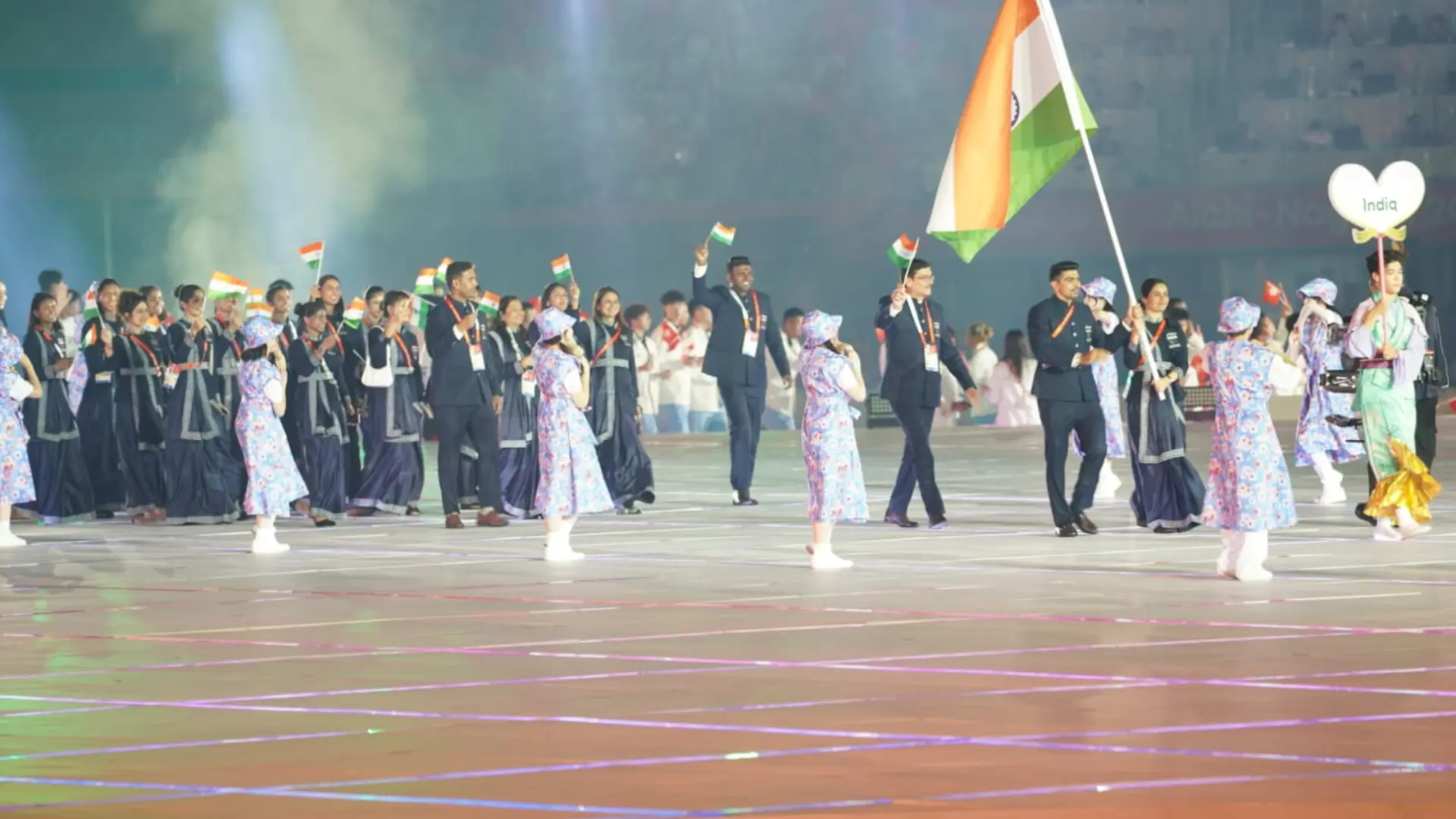
Manu Bhaker and Pawan Sehrawat led the Indian contingent as flag-bearers.
Sehrawat replaced shot-putter Tajinderpal Singh Toor, who had originally been selected alongside Bhaker. Toor could not take part in the ceremony because of an issue involving his official ceremonial kit.
India athletics campaign begins on September 23
For Indian athletics, the opening ceremony is only the starting point.
The Indian athletics team will begin its Aichi-Nagoya Asian Games campaign on September 23. Competition will continue through September 29.
Athletes will compete at the Nagoya City Mizuho Park Athletic Stadium, while race walkers will compete on its designated course.
The Indian athletics contingent features athletes across the full range of track and field events.
The programme includes sprinting, middle- and long-distance running, hurdles, jumps, throws, combined events and race walking.
Avinash Sable will be among the prominent Indian athletes in action. Tejaswin Shankar, Vishal T K, Vithya Ramraj and Unnathi Aiyappa Bolland are also part of India’s athletics programme.
Neeraj Chopra absence adds attention
The absence of Neeraj Chopra will be one of the major talking points around athletics at the Asian Games 2026.
Chopra, who won the men’s javelin gold at the 2018 and 2023 Asian Games, is not competing in Nagoya.
His absence places greater attention on the rest of the Indian athletics team. Athletes will look to convert recent performances into medals on the continental stage.
For some, the Asian Games will be about medals. For others, the focus will be on finals, personal bests, qualification marks or establishing themselves as the next generation of Indian athletics.
Athletics takes centre stage from September 23
The opening ceremony offered the customary spectacle of flags, music, performances and thousands of athletes gathered under one roof.
But athletics is still four days away.
The real test begins on September 23.
The starter will be called to the line. The bar will go up. The throws will begin. The race walkers will settle into their rhythm.
For the Indian athletics team, Aichi-Nagoya 2026 will now move from ceremony to competition.
They have no country to march behind. No national flag to carry. But on Saturday in Nagoya, two young athletes will walk into the Asian Games carrying something far heavier — the stories of people forced to leave home, and the dream of finding a place in the world through sport.
For the first time in Asian Games history, a refugee team will take part in the continental sporting showpiece. The Olympic Council of Asia (OCA) Refugee Team, known as the Asian Refugee Team (ART) during competition, comprises two Syrian athletes competing in taekwondo at Aichi-Nagoya 2026.
Twenty-four-year-old Mahmoud Al Jasem Al Mohammad Al Hussein will compete in the men’s 80kg Kyorugi, while 18-year-old Talah Al Hassan Al Hinide will compete in the women’s -49kg Kyorugi.
Both athletes live in the Azraq refugee camp in Jordan, where their sporting journeys have continued despite lives being disrupted by displacement.
For them, Nagoya represents a remarkable distance travelled — geographically, but also personally.
The team will have a distinct identity throughout the Games. For protocol events, including the Opening Ceremony, it will be referred to as the OCA Refugee Team. During competition, the athletes will compete as the Asian Refugee Team.
They will not march under a national flag.
Instead, the OCA flag will represent them. And should either athlete win gold, the OCA flag will be raised and the OCA anthem played during the medal ceremony.
It is an arrangement that makes the symbolism impossible to miss.
Talah, just 18, has spoken about arriving at Azraq carrying painful memories and dreams that seemed increasingly distant. Taekwondo became a way to rebuild confidence and create a new identity beyond the word “refugee”.
Her journey from a refugee camp to an Asian Games arena is therefore about more than a sporting result.
It is also about visibility.
For decades, refugees have often been defined by what they have lost — their homes, communities, possessions and, in many cases, their sense of belonging. In Nagoya, two athletes will be defined, at least for a few weeks, by what they can do.
The Asian Games organisers have included the OCA Refugee Team alongside the 45 participating countries and regions at Aichi-Nagoya 2026.
The delegation may consist of only two athletes. But its presence changes the picture.
When Mahmoud and Talah walk into the stadium, they will not be representing Syria or any other country. They will represent a group of athletes for whom simply reaching an international sporting stage has required overcoming circumstances most competitors never have to confront.
There will be medals to win and bouts to fight.
But before any of that happens, there is the moment itself: two refugees walking into an Asian Games arena, without a country behind them, but with the world watching.
For the first time, the Asian Games has made room for them.
And sometimes, having a place to stand is where the journey begins.
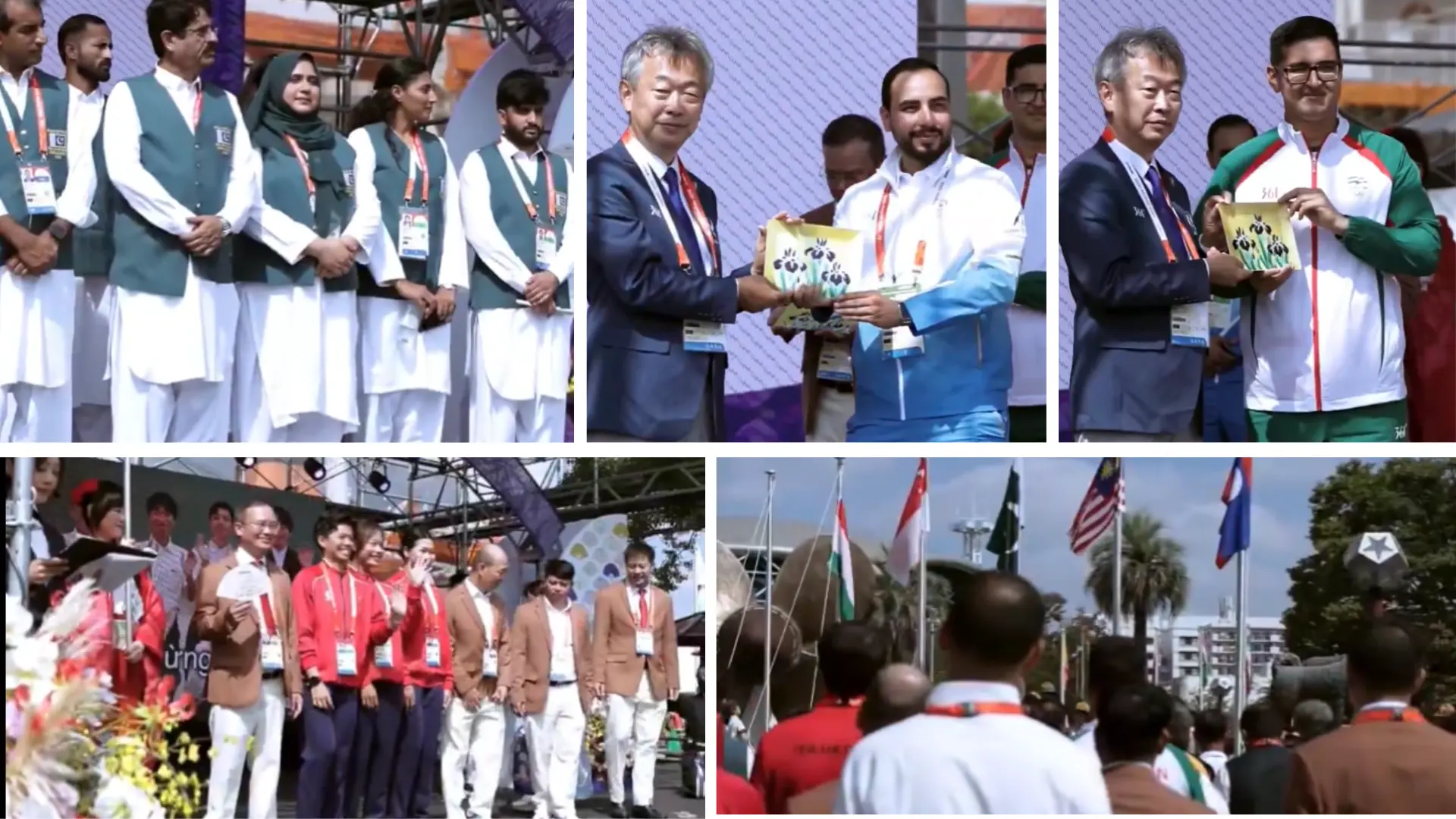
India has resolved its accommodation problem at the Aichi-Nagoya Asian Games, Chef de Mission Sahdev Yadav said. The issue affected 30 to 35 Indian athletes.
The Indian delegation booked additional hotel rooms after some athletes were removed from the accommodation list provided by the organisers.
“Everyone has got accommodation now,” Yadav told the media in Nagoya on Friday, a day before the opening ceremony of the Aichi-Nagoya Asian Games.
India books additional hotel rooms
The problem emerged after the Indian contingent arrived in Japan. Yadav said India had stayed within the number of rooms for which it had been invoiced.
“We stuck to the number of players they had invoiced. But they removed some names, so we booked hotels for them,” Yadav said.
The issue affected around 30 to 35 athletes. Members of India’s badminton and shooting contingents were among those affected.
India acted quickly to address the problem. Yadav said the delegation had already booked 18 additional rooms.
Another 10 rooms were being arranged.
The immediate question of where the affected athletes would stay now has a clear answer.
They have rooms.
Aichi-Nagoya faces wider accommodation challenges
The accommodation issue adds another complication to the Games build-up.
Aichi-Nagoya does not have a conventional Athletes’ Village. Instead, the organisers have spread participants across hotels, temporary accommodation and the Costa Serena cruise ship.
The cruise ship is being used to house thousands of athletes and officials.
The Olympic Council of Asia has defended the decision not to build a traditional village. It has argued that a large facility for a short sporting event could leave the host with an expensive legacy problem after the Games.
The OCA has also pointed to the scale of the event.
More than 11,000 athletes from 45 countries and regions are expected to compete across 43 sports. The total number of athletes and officials is around 17,000.
Accommodation model draws attention
The alternative accommodation model has already attracted attention.
There have been complaints about cramped rooms and beds that are too short.
Japan’s own delegation has sought alternative accommodation after reports that some male and female athletes were assigned shared rooms.
The Costa Serena cruise ship has also become part of the Games’ logistical puzzle.
For India, accommodation has not been the only logistical concern.
Accreditation and transport create more challenges
Yadav said the accreditation process has taken longer than expected. The delay has particularly affected athletes staying on the cruise ship.
The Indian delegation has therefore made additional arrangements for cars and hotels.
These arrangements will help athletes move between accommodation and venues without unnecessary delays.
Food and travel distances have also caused concerns.
Indian athletes have spoken about limited food options. Meanwhile, shooting contingents have faced journeys of 50 to 60 kilometres between hotels and competition venues.
Yadav acknowledged that there had been “some mismanagement”. However, he stressed that the priority was to fix the problems rather than dwell on them.
India settles athletes before opening ceremony
India now enters the eve of the opening ceremony with the immediate accommodation issue resolved.
The delegation has booked additional rooms and arranged transport alternatives. Athletes are also being settled.
However, logistical issues have dominated the conversation around these Asian Games before the opening ceremony.
Rooms. Transport. Accreditation. Food.
Weather has also added another concern.
Nagoya was hit by record rainfall last week. The weather forced hundreds of athletes and staff to briefly evacuate their accommodation.
Now there is the possibility of a typhoon adding another complication.
None of this means the Games are in danger of failing. Competition has already begun, venues are functioning and organisers have contingency plans.
With the opening ceremony only a day away, Nagoya has already highlighted the complexity of hosting a multi-sport event.
Getting thousands of athletes to the starting line can be almost as complicated as getting them across it.
For India, at least, the room problem is now off the list.
The athletes can concentrate on the medals.

Nagoya has had little time to catch its breath.
Just over a week after torrential rain caused flooding, disrupted transport and briefly forced hundreds of Asian Games athletes and officials to leave their accommodation, the Japanese city is preparing for another weather challenge.
With the Asian Games 2026 officially opening on Saturday, organisers are closely monitoring Tropical Storm Dujuan, which was moving towards central Japan this week. Forecasts indicated that the system could approach the Aichi-Nagoya region around September 21, although its exact path remained uncertain.
The potential storm adds another logistical challenge for organisers after severe flooding hit Nagoya on September 8.
Nagoya Faced Record Rain Earlier This Month
The Japan Meteorological Agency recorded 219.5mm of rain in Nagoya on September 8, making it the city’s third-highest September daily rainfall on record.
The rain was particularly intense. Nagoya recorded 104.5mm in one hour, according to JMA data.
The downpour overwhelmed parts of the city’s drainage and transport networks.
A Level 5 special flood warning was issued for the Shonai River, while authorities urged residents in vulnerable areas to move to safety.
Roads flooded, cars struggled through standing water and subway and bus services faced temporary suspensions. About 3,500 residents reportedly sought refuge at evacuation centres.
Asian Games Athletes Also Forced to Evacuate
The Asian Games were also caught in the downpour.
Around 400 athletes and staff staying in temporary accommodation near Nagoya Port were briefly evacuated to higher ground.
They were able to return after the evacuation order was lifted roughly two hours later.
The accommodation system itself has become an important part of the Games story.
Unlike many major multi-sport events, Aichi-Nagoya 2026 does not have a conventional Athletes’ Village.
Participants are instead spread across hotels, temporary accommodation and the Costa Serena cruise ship, which is being used to house thousands of Games participants.
Heavy Rain Disrupted Games Operations
The heavy rain also reached some competition venues and disrupted movement around the city.
Transport interruptions created further difficulties, while some competitions experienced delays or postponements because of the severe weather.
For athletes already dealing with accommodation and transport arrangements, another disruption could add further pressure.
Tropical Storm Dujuan Now Being Monitored
And now comes Dujuan.
As of Thursday, the storm was off Japan’s Pacific coast and moving towards central Japan. It had maximum sustained winds of around 90kph, with gusts reaching 126kph.
Forecasts remained uncertain, and organisers were monitoring the system closely as the opening ceremony approached.
The latest storm guidance also showed that Dujuan’s projected track could bring the system closer to Japan around September 20-21, although forecast tracks can change.
Nagoya Prepares for the Games
For the thousands of athletes, officials, journalists and volunteers arriving in Nagoya, the situation is not necessarily one of alarm.
The city is functioning, several sports have already begun, and conditions were much calmer on Thursday. However, after last week’s flooding, weather has become another variable in an already complex Games.
Organisers must now balance competition schedules, athlete movement, accommodation and transport while keeping an eye on the changing weather.
Nagoya is preparing to host Asia’s biggest sporting gathering.
For now, it is also keeping a close eye on the sky.

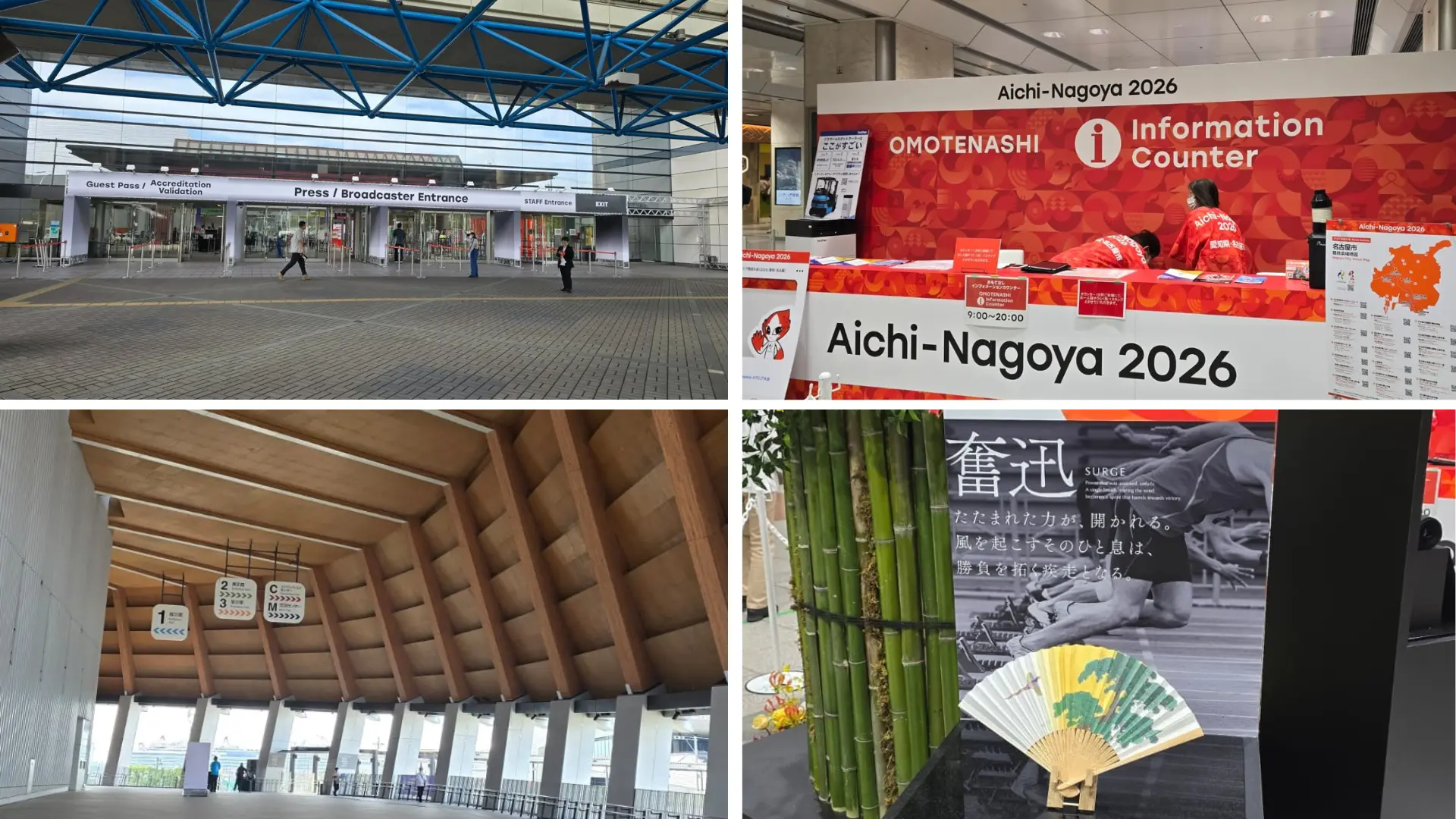
While the global track and field community begins looking ahead to regional showdowns such as the Asian Games following a gruelling summer, the combined events circuit is preparing for one final spectacular curtain call.
After the emotional and physical demands of an Olympic year, the world’s elite multi-event athletes are returning for one last major test. The historic 50th-anniversary edition of Décastar takes centre stage in Talence on Friday and Saturday as the season finale of the World Athletics Combined Events Tour Gold.
The meeting brings together a field featuring Olympic and world champions across the heptathlon and decathlon.
Nafissatou Thiam Headlines Women’s Heptathlon
Belgium’s legendary Nafissatou Thiam headlines the women’s competition as she prepares for her first full heptathlon of the season.
After selective event testing in Ratingen and a high jump appearance at the Wanda Diamond League Final in Brussels, the three-time Olympic champion is ready to build on her brilliant 6880-point performance that secured gold in Paris.
Thiam, however, will face strong competition.
Her compatriot Noor Vidts, the reigning two-time world indoor pentathlon champion, will line up after winning Olympic bronze alongside Thiam in Paris.
The field also includes athletes who have broken the 6300-point barrier this year.
They include Germany’s Vanessa Grimm, Lithuania’s Beatričė Juškevičiūtė, and USA’s Erin Marsh.
Great Britain’s Niamh Emerson will continue her inspiring comeback from injury. She will compete alongside compatriot Ellen Barber, Sweden’s Lovisa Karlsson, and Germany’s Anna-Elisabeth Ehlers.
Markus Rooth Returns for Men’s Decathlon
In the men’s competition, Norway’s Markus Rooth makes his eagerly anticipated return.
Rooth will contest his first decathlon since his stunning gold-medal triumph at the Paris Olympics. The 24-year-old scored 8796 points to claim the Olympic title.
He now returns to Talence for the first time since 2022.
Rooth will be joined by the past two Olympic champions, including Canadian record-holder Damian Warner.
The 2021 Olympic gold medallist is competing in his third decathlon of the season. Warner, who has won four World Championship medals, scored 8497 points in Götzis and secured silver at the Commonwealth Games.
Olympic Champions Lead Deep Decathlon Field
The battle for the top step of the podium promises to be fiercely contested.
Warner’s compatriot Pierce LePage and Rooth’s compatriot Sander Skotheim, the 2025 world indoor heptathlon champion, will also compete.
The deep field features Dutch standout Sven Roosen, who finished fourth at the Olympics and fifth in Götzis.
A resurgent Jeff Tesselaar will also line up, alongside Estonia’s Karel Tilga and France’s Makenson Gletty.
The United States will be represented by Harrison Williams, Hakim McMorris, and Devon Williams.
With Olympic champions, world medallists and emerging multi-event stars assembled in Talence, the 50th anniversary of Décastar promises a fitting finale to the World Athletics Combined Events Tour Gold season.

Ethiopian marathon runner Ruti Aga, one of the leading names on the global women’s marathon circuit in the late 2010s, has been provisionally suspended by the Athletics Integrity Unit (AIU) after an adverse analytical finding for methylprednisolone.
Aga is also facing a separate tampering charge. The AIU’s notice means she is provisionally barred from competition while the case proceeds. It does not, by itself, establish a final anti-doping rule violation.
Ruti Aga Faces AIU Anti-Doping Case
Methylprednisolone is a corticosteroid used medically for conditions involving inflammation, allergic reactions and immune-system disorders.
Its presence in an athlete’s sample can trigger an anti-doping case depending on the circumstances. These include the substance’s route and timing of administration.
The case also includes a tampering allegation, making it more than a straightforward positive test.
The details of the allegations and Aga’s response will be addressed through the relevant anti-doping process. Reuters reported that the Ethiopian Athletics Federation had been contacted for comment.
Aga’s Marathon Career
Aga, 32, has built an impressive career over the marathon distance.
Her current World Athletics profile lists a personal best of 2:18:09, set in Dubai in October 2023 and matched in January 2024. She is also listed as a former World U20 silver medallist and African U20 champion.
Her breakthrough at the highest level came well before that personal best.
In 2016, Aga finished third at the Berlin Marathon. A year later, she returned to the German capital and improved dramatically, running 2:20:41 for second place.
Her 2018 season was even stronger.
Aga finished second at the Tokyo Marathon in 2:21:19 before producing a spectacular 2:18:34 at Berlin.
That performance placed her among the fastest women in marathon history at the time. World Athletics described her as having moved to sixth on the world all-time list following that Berlin performance.
The Berlin race was particularly significant.
Aga finished behind compatriot Gladys Cherono, with Tirunesh Dibaba third, as three women broke 2:19.
Aga’s 2:18:34 remained her personal best until she improved it to 2:18:09 in 2023.
Tokyo Marathon Victory
At the 2019 Tokyo Marathon, Aga finally secured her first World Marathon Majors victory.
She entered the race as one of the fastest women in the field. The conditions were difficult, with cold rain making the roads wet.
A large lead group remained together through halfway.
After 35 kilometres, Aga began to increase the pace. She gradually separated herself from the other contenders and won in 2:20:40, more than 20 seconds clear of fellow Ethiopian Helen Tola.
Shure Demise finished third, completing an Ethiopian sweep of the women’s podium.
It was the first marathon victory of Aga’s career and completed an Ethiopian double in Tokyo, with Birhanu Legese winning the men’s race.
World Athletics ranked Aga among the world’s leading marathoners going into that race.
The Tokyo victory was also significant because Aga had finished runner-up there the previous year.
Her 2018 performance, combined with her Berlin results, had established her as one of the most consistent contenders in the World Marathon Majors.
Aga’s World Marathon Majors Podium Record
Aga’s major-marathon record includes six podium finishes:
| Year | Race | Result |
|---|---|---|
| 2016 | Berlin Marathon | Third |
| 2017 | Berlin Marathon | Second |
| 2018 | Tokyo Marathon | Second |
| 2018 | Berlin Marathon | Second |
| 2019 | Tokyo Marathon | First |
| 2019 | New York City Marathon | Third |
That record places the current anti-doping case against the backdrop of a substantial international marathon career.
From World Junior Track Success to Elite Marathoner
Aga also has a strong background on the track.
She won silver in the women’s 5000 metres at the 2012 World Junior Championships in Barcelona and became African junior champion over the same distance in 2013.
Her early career therefore began on the track before she established herself as an elite road racer.
Her progression into the marathon was rapid.
By 2017, she had already run 2:20:41 in Berlin. By the following year, she had broken 2:19.
Her 2:18:34 in Berlin in 2018 demonstrated that she was capable of competing at the very front of the international marathon field.
What Happens Next?
The latest development puts one of Ethiopia’s prominent marathon names from that era into an anti-doping process that will now have to run its course.
For now, the distinction is important: Aga has been provisionally suspended and faces allegations.
The provisional suspension does not itself establish a final anti-doping violation.
The eventual outcome will depend on the proceedings and evidence considered under the applicable anti-doping rules.

The Indian athletics contingent’s preparations for the Asian Games 2026 in Japan have begun with some logistical teething problems, with accommodation, food and transport emerging as concerns for athletes based around Nagoya and Tsukuba.
A report published by the Times of India on Wednesday said members of the Indian athletics contingent faced difficulties after arriving in Japan. These included a lengthy wait for hotel check-in, breakfast arrangements and transportation to the training facility.
However, conversations by NNIS with several members of the Indian athletics contingent suggest that while there have been problems, athletes said the issues were being handled and that the situation remained manageable.
The picture emerging is therefore more nuanced than the initial headlines.
What Did the Times of India Report?
According to the Times of India, the Indian athletics contingent arrived in Japan on Sunday and faced a wait of more than four hours before completing hotel check-in.
The report said the men’s and women’s teams, along with coaches, were staying in three different hotels. The hotels are located more than four kilometres from the University of Tsukuba training facility.
The report also said members of the men’s contingent were informed that breakfast had not been arranged at their hotel on Monday morning. Some athletes reportedly went out to find food themselves.
Transport was another concern raised in the report. Sources told TOI that a designated bus did not arrive for a training session on Monday evening.
The athletes are in the Tsukuba area as part of their final preparations before the Asian Games competition.
Athletes Tell NNIS: Problems Exist, But They Are Manageable
NNIS spoke to several members of the contingent about the situation on the ground.
One athlete acknowledged that there had been teething problems, particularly around food and transport.
“There have been problems like fruits are not being provided, we have to go out and buy our own fruits,” the athlete told NNIS.
However, the athlete also said that the Indian restaurant being used for lunch and dinner was “good and manageable.”
The bigger challenge, according to the athlete, has been the frequency of transport to the training ground.
The training facility is around 3–4 km from the hotel, but limited bus trips mean athletes have had to organise their training and meal schedules around the available transport.
“The frequency of the bus trips is very less, so we have to schedule our training and eating time accordingly to the bus timings,” the athlete said.
For elite athletes in the final phase of preparation, even relatively short distances can become significant when travel schedules have to fit around training, recovery and meals.
Athletics Chief Coach Rejects Wider Concerns
Radhakrishnan Nair, the Athletics Chief Coach, strongly pushed back against the suggestion that the Indian athletics contingent was facing a wider logistical crisis.
His response was blunt:
“All nonsense.”
Nair acknowledged that there had been an issue at one of the hotels where the male athletes are staying. However, he said there was no issue with transport for training.
He also pointed to Athletics Federation of India social media posts from Monday and Tuesday showing athletes at training.
On food, Nair said breakfast was included at the hotel, while lunch and dinner were being provided at an Indian restaurant.
According to Nair, the restaurant serves rice, chapatti, dal, chicken, mutton, fish, two vegetarian dishes, fruits and milk.
His account therefore differs in some respects from the concerns reported by TOI and the athlete who spoke to NNIS.
Why Athlete Accommodation and Logistics Matter
The issue of Nagoya athlete accommodation is particularly important because athletes competing at the Asian Games need a predictable daily routine.
For track and field athletes, preparation involves much more than simply reaching the stadium. Training sessions, meals, hydration, recovery, sleep and travel all have to work together.
A short distance on a map can also become more complicated when multiple teams are staying at different hotels and transport operates according to fixed schedules.
The Indian athletics contingent is now in the final stretch of its preparations. With competition approaching, the priority for athletes will be to establish a stable routine and focus on performance.
A Bumpy Start, But Not the Whole Story
The reports from Japan point to genuine logistical issues during the opening days of the Indian athletics contingent’s stay.
At the same time, feedback received by NNIS from several members of the contingent suggests that the problems should be viewed as teething issues rather than the complete picture of the athletes’ experience.
There are different accounts on some specifics, particularly breakfast, transport and the availability of food. Those differences are worth noting.
What is clear is that the Indian athletics team has arrived in Japan, training is underway and athletes are working towards the Asian Games 2026.
For the athletes, the logistical details matter.
But once they step onto the track, into the throwing circle or onto the runway, the focus will shift from hotel buses and meal schedules to the competition itself.
The Asian Games are almost here.
And Indian athletics is getting ready.