

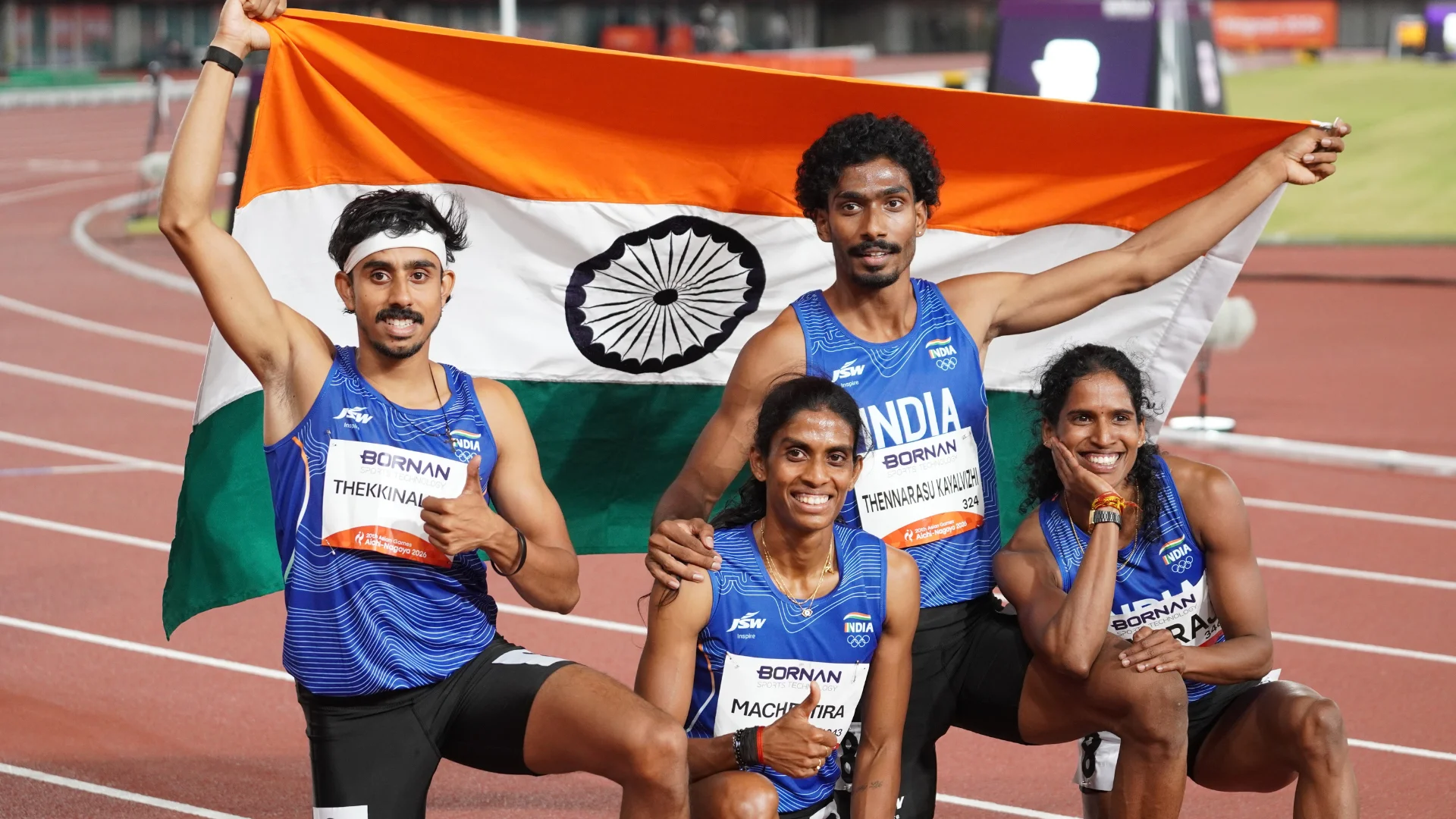
India won silver in the mixed 4x400m relay at the 2026 Asian Games, clocking 3:14.46 and edging Vietnam by just 0.08 seconds in a thrilling finish.
The medal followed a crucial tactical decision by the Indian team management, which made two changes between the heats and the final to strengthen the combination for the medal race.
India Qualifies in 3:16.23
India began the competition with Manu T.S., M.R. Poovamma, Jay Kumar and Kiran in Heat 2.
The quartet finished second in the heat in 3:16.23, securing qualification for the final.
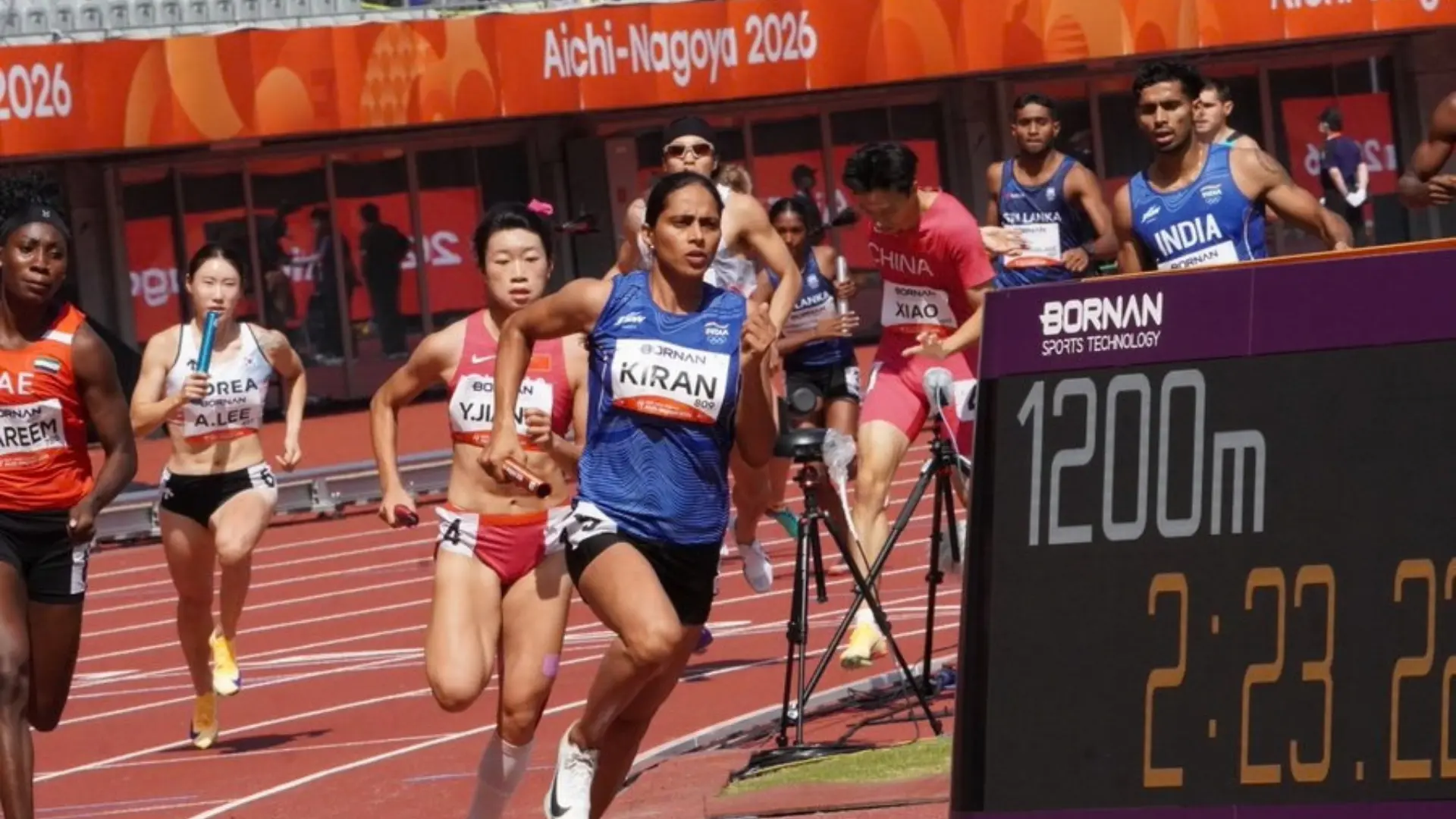
India had already shown its potential during the qualifying race. The team was leading at both the 800m and 1200m marks, with Jay Kumar producing a 45.60-second split and Kiran clocking 53.01 seconds on the anchor leg.
Those performances helped India reach the final, but the team management opted for two changes before the medal race.
Vishal T.K. and Vithya Ramraj Come In
Vishal T K and Vithya Ramraj were brought into the final line-up, replacing Jay Kumar and Kiran.
The changes added proven strength to the Indian combination.
Vishal, India’s only sub-45-second quartermiler, brought his speed to the men’s leg. Vithya was brought in for the women’s leg, adding her experience and strength over the closing stages of the race.
The final quartet was therefore:
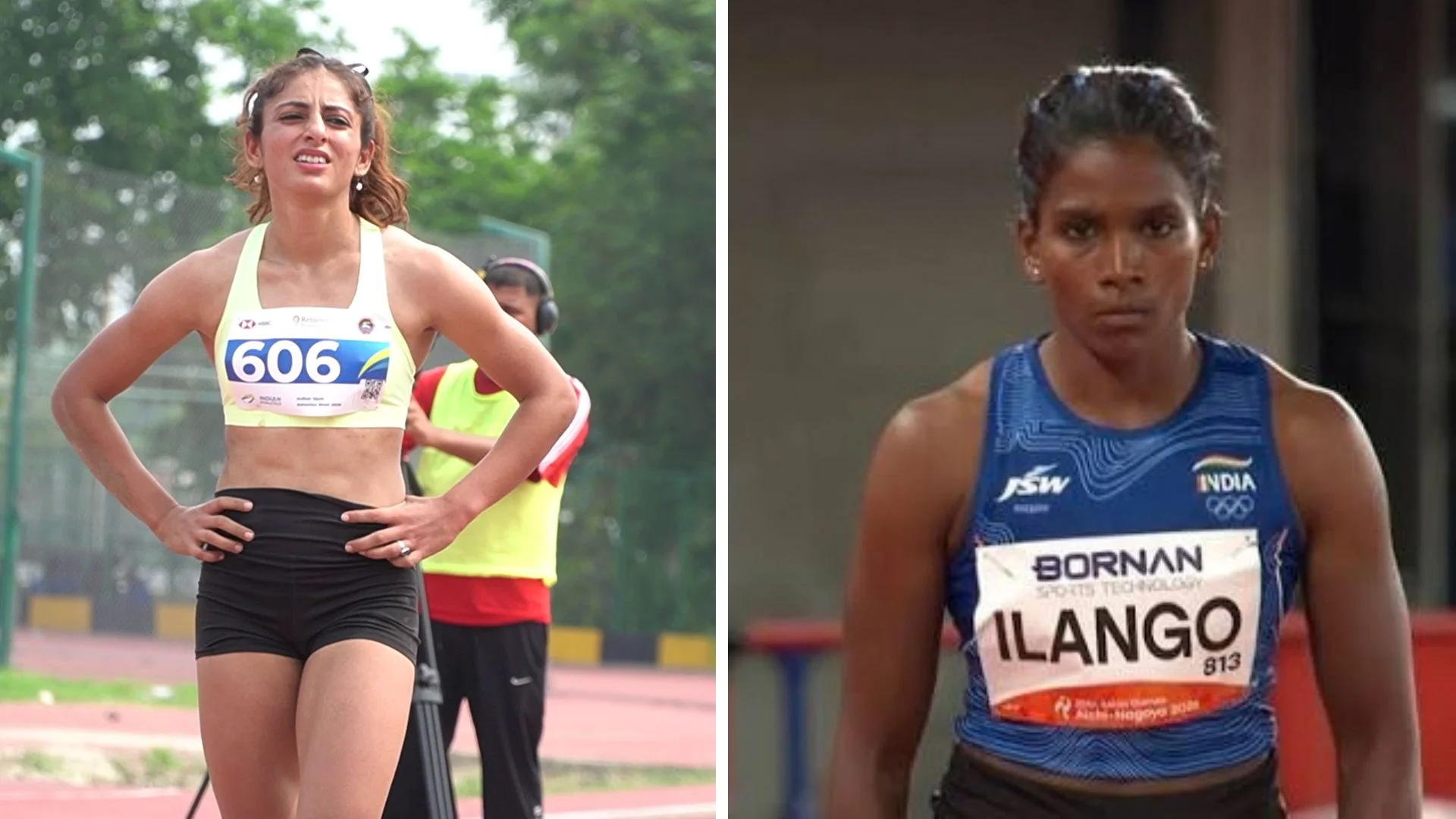
M.R. Poovamma – Vishal T.K. – Vithya Ramraj – Manu T.S.
India Produces a Major Improvement
The new combination delivered a much faster performance when the medals were at stake.
India crossed the line in 3:14.46, improving by almost two seconds from its heat time.
Vietnam pushed India all the way to the finish, but the Indian quartet held on to take silver, finishing just 0.08 seconds ahead.
The narrow margin made the final stages particularly dramatic, with the medal ultimately decided by just eight hundredths of a second.
Two Changes Make the Difference
India’s performance highlighted the depth available in its 400m squad.
The athletes who ran in the heats played an important role in getting India into the final, but the changes allowed the team to bring Vishal T.K. and Vithya Ramraj into the medal race.
For Vishal, the final provided another opportunity to showcase the form that has made him India’s leading sub-45-second 400m runner.
For Vithya, moving into the final line-up allowed her to bring her experience and strength to a high-pressure Asian Games race.
The mixed relay format also gave India the opportunity to assess its qualifying performance before making adjustments for the final.
Those changes paid off.
India improved from 3:16.23 in the heats to 3:14.46 in the final, producing its best performance when the medals were on the line.
And the final margin summed up the race perfectly: India and Vietnam were separated by just 0.08 seconds.
Two changes. One major improvement. One Asian Games silver. 🇮🇳🥈
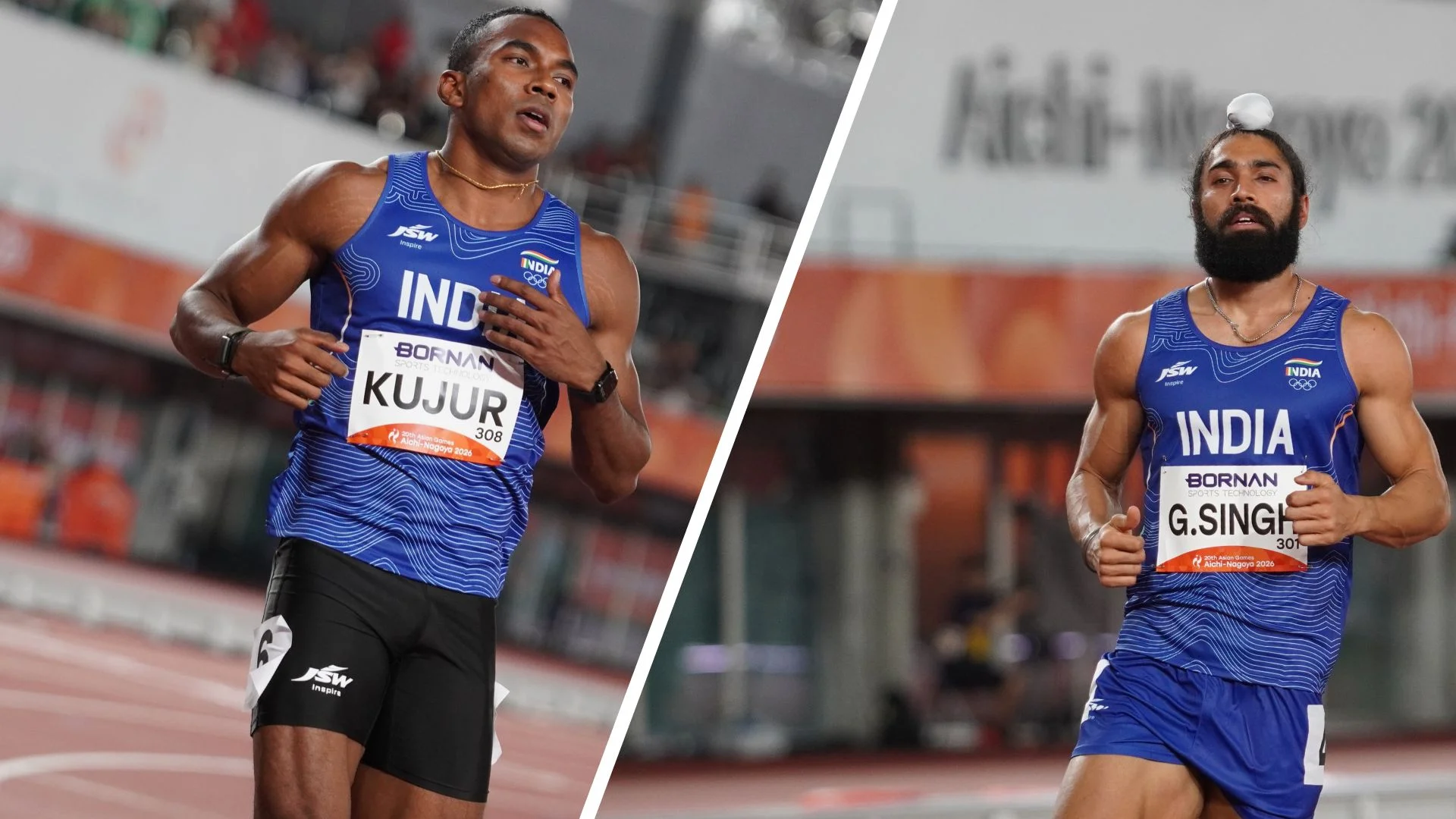
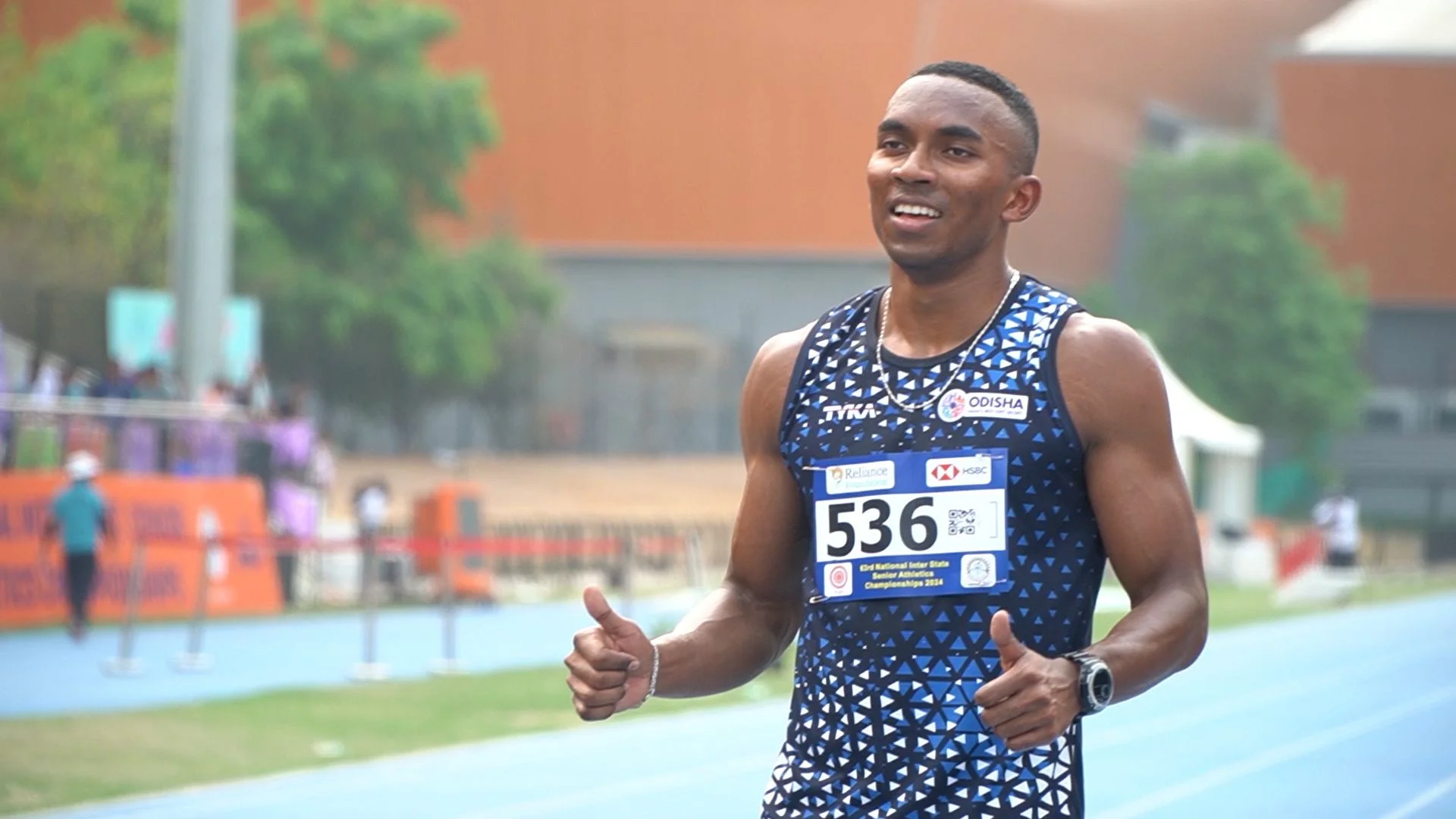
Kujur clocked 10.36 seconds to finish third in Heat 1, while Gurindervir stopped the clock at 10.38 seconds to finish second in Heat 4. Both advanced to the semifinals, keeping India’s hopes alive in one of the most eagerly anticipated athletics events of the Games.
For Kujur, the heat was less about chasing a spectacular time and more about getting the job done.
Speaking exclusively to NNIS Sports, the 200m national record holder described the qualifying race as easy and immediately shifted his focus to the next round.
His target is clear: 10.01 seconds in the semifinal.
That ambition reflects the confidence Kujur has carried through a season in which he has repeatedly established himself among India’s fastest sprinters. He clocked 10.14 seconds earlier this year, the fastest 100m time by an Indian on foreign soil, while also continuing to hold the national record in the 200m.
The semifinal, however, will demand considerably more. Thailand’s Puripol Boonson produced a stunning 9.95 seconds to win Kujur’s heat, with China’s Zeng Keli finishing second in 10.22.
Kujur has repeatedly spoken about enjoying the increased competition in the 100m this season, particularly his battles with Gurindervir. After winning both the 100m and 200m at the Indian Athletics Final Series in New Delhi earlier this month, he said the repeated competition had made him enjoy the 100m even more.
Gurindervir, meanwhile, looked equally comfortable in his opening-round assignment.
The Punjab sprinter finished second in Heat 4 in 10.38 seconds, behind Oman’s Malham Al Balushi, who ran 10.29.
For Gurindervir, the opening round was an opportunity to settle into the atmosphere of his first Asian Games 100m campaign after a demanding season.
“I was enjoying myself,” Gurindervir said after qualifying, making it clear that he was embracing the occasion rather than allowing the pressure of the Asian Games to overwhelm him.
The national record holder has been preparing for this moment for a long time. Earlier this year, he became the first Indian to break 10.10 seconds in the 100m, clocking a national-record 10.09 seconds at the Federation Cup in Ranchi.
That mark has placed him firmly among Asia’s leading sprinters, but the Asian Games field is loaded with quality. Japan’s Yuki Koike has a 9.98-second personal best, Shuhei Tada has run 10.01, while Thailand’s Boonson has already gone below 10 seconds this season.
Gurindervir, however, has insisted that the Indian pair belong in the conversation.
The focus now shifts to the semifinals, where the intensity will rise sharply and every hundredth of a second could matter.
For Kujur, the target is already set: 10.01.
For Gurindervir, it is about enjoying the moment while finally showing what months of preparation can produce on the biggest Asian stage.
Two Indians. One semifinal. And a serious shot at making the 100m final.
Tactical Mastery in the Early Legs
-
Manu T.S. (Lead-Off): Started cleanly, keeping India well within touching distance of the frontrunners to execute a seamless first exchange.
-
M.R. Poovamma (Second Leg): Bringing experienced track craft to the quartet, the veteran runner made a decisive move along the backstretch to take the lead by the 800-meter mark.
-
Jay Kumar (Third Leg): Maintained India’s advantage with a measured 400m, holding off chasing teams through the final bend to hand over the baton ahead at 1200 meters.
-
Kiran Pahal (Anchor Leg): Anchored the team home under pressure, securing second place in the heat after being narrowly edged out by China at the finish line.
The Finalist Lineup & Tactical Considerations
Tonight’s Medal Showdown
-
Event: Mixed 4x400m Relay Final
-
Time: 22:15 JST / 18:45 IST
-
India’s Qualification: 4th Overall (3:16.23)
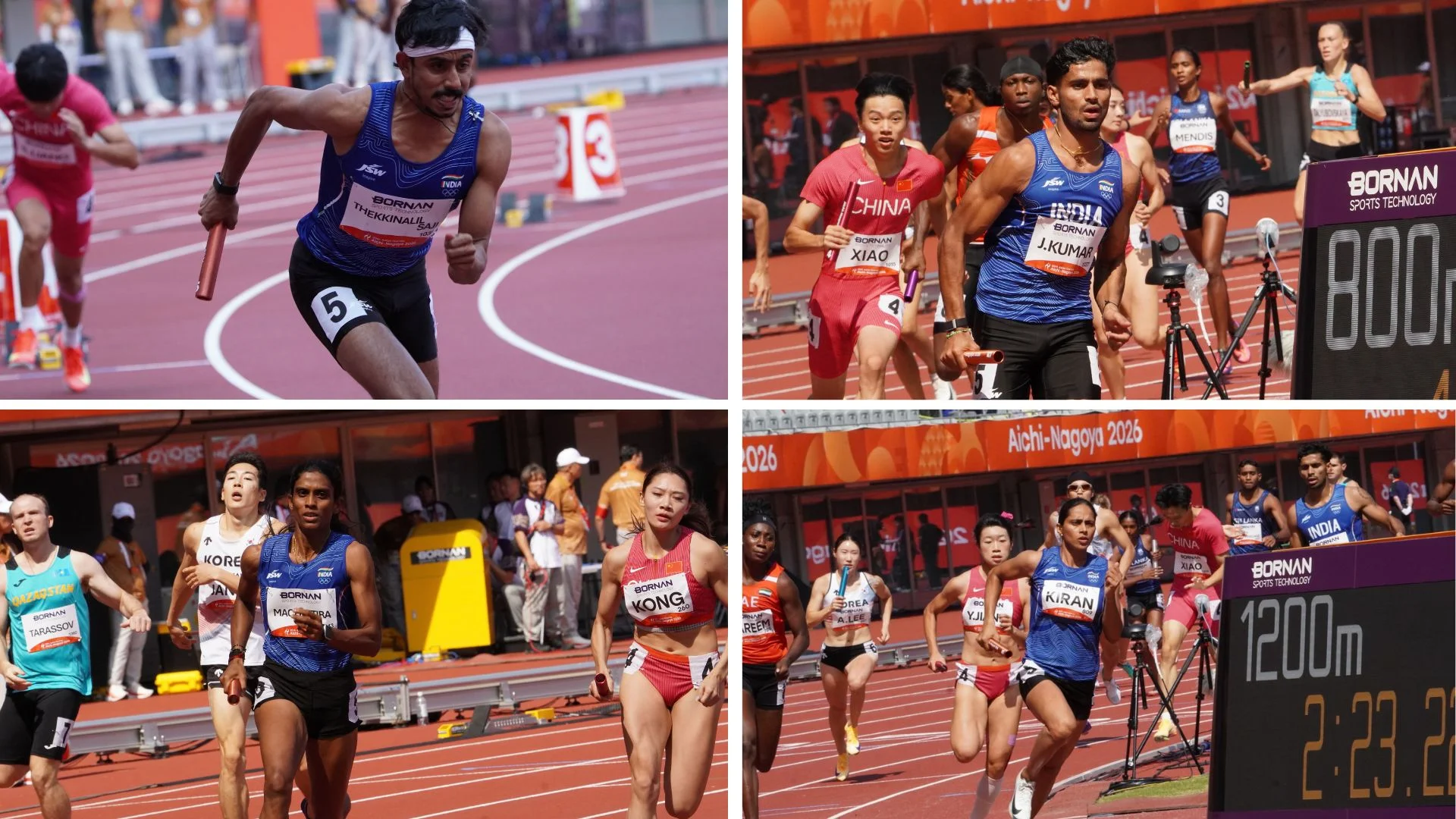
India qualified for the mixed 4x400m relay final at the Asian Games 2026 after finishing second in its heat with a time of 3:16.23.
The Indian quartet of Manu T S, Poovamma, Jay Kumar and Kiran Pahal finished fourth overall in the qualification standings. Bahrain topped the qualifiers with 3:15.73, setting the fastest time heading into the final.
India Through to the Final
India’s 3:16.23 secured its place in the final and kept the team in contention for a medal.
The Indian quartet will return to action tonight, with the final providing another opportunity to improve on its qualifying performance.
Teams can make changes to their line-ups before the final, with each team permitted to replace up to two athletes. India could therefore make adjustments to its combination for the medal race.
Bahrain Leads Qualifying
Bahrain’s 3:15.73 was the fastest time recorded in qualification, putting the team at the top of the standings.
India’s 3:16.23 was the fourth-fastest overall, leaving the Indian team within striking distance of the leading teams heading into the final.
With the medal positions to be decided tonight, the Indian quartet will look to produce a faster performance when it returns to the track.
India Targets a Strong Final
The final will give India a chance to improve its qualifying time and challenge for a podium finish.
The Indian team will need to maintain its momentum across all four legs as the race unfolds, with the final 400m set to determine the medal positions.
India is through to the mixed 4x400m relay final and will race tonight for a place on the podium.
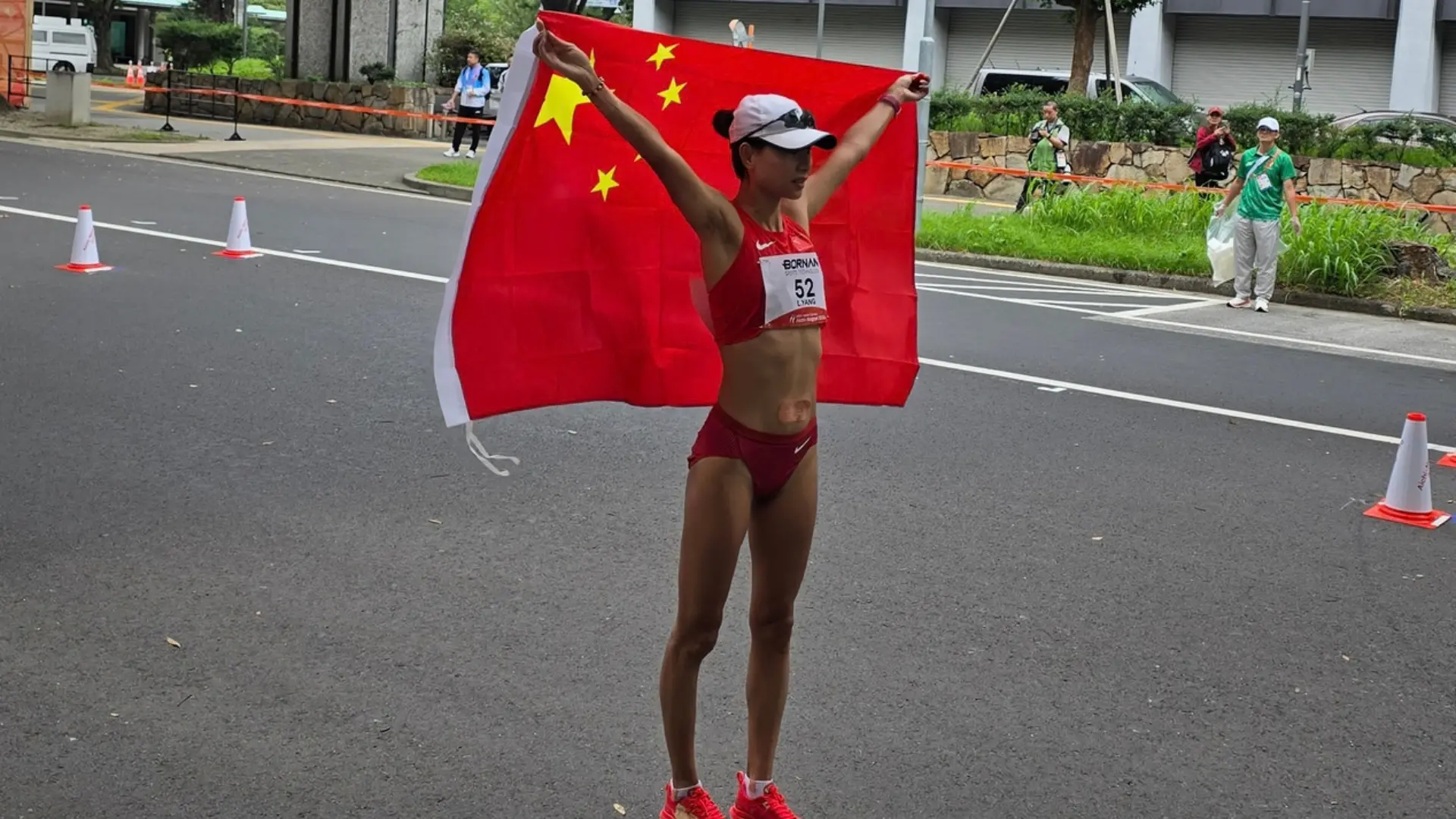
China’s athletics team delivered a powerful statement on the opening day of competition at the Asian Games, sweeping both the men’s and women’s half marathon walk events in commanding fashion. With twin gold medals secured through tactical brilliance and sheer resilience, China has laid down an unmistakable marker as the track and field events prepare to get underway tomorrow.
The tone for the competition was set early by Shengji Shi, who captured China’s very first athletics gold of the Games in the men’s half marathon race walk. Battling overcast skies and a light drizzle, Shi paced the race well. By the halfway mark, he had built a commanding lead that he never relinquished, crossing the finish line in an impressive 1:23:32.
Reflecting on his victory, Shi noted that sticking strictly to his pre-race strategy was the key to handling the tricky conditions. His dominant performance left the rest of the field trailing, with Japan’s world record holder Toshikazu Yamanishi taking silver over four minutes behind in 1:28:01, while South Korea’s 35-year-old veteran Byeong-kwang Choe claimed bronze in 1:28:35 during his final championship appearance.
The women’s half marathon event provided an equally thrilling showcase of Chinese supremacy. Yang Liujing put on a stellar performance to secure gold with a time of 1:33:40. Drawing on her specialization in the gruelling 20km category, the 28-year-old athlete successfully navigated the damp morning conditions that eventually gave way to sunshine.
Kazakhstan’s Morozova Kristina fought hard to claim the silver medal in 1:35:25, staying tightly locked on the tempo set by the leaders. China’s Jiang Yunyan rounded out the podium to take bronze with a razor-thin finishing time of 1:35:26, just 0.01 seconds behind Kristina, after overcoming a costly two-minute penalty that kept her from the top step of the podium.
Together, these performances underline a dominant opening chapter for China’s endurance squad. While tactical racing and podium placement took precedence over record-breaking times on a damp, challenging course, the psychological advantage of capturing both opening gold medals cannot be overstated.
As the dust settles on the race walk course, momentum is firmly with the Chinese delegation. With these results inspiring the broader team, the stage is now perfectly set for the full track and field program to kick off tomorrow. Fans can expect heightened anticipation and fierce competition as the rest of Asia’s elite athletes look to respond to China’s early dominance.
With the 20th Asian Games now under way, the Aichi-Nagoya Asian Games Organising Committee (AINAGOC) has responded to mounting reports about accommodation and catering problems affecting delegations.
In a statement issued on September 22, AINAGOC said it was aware that some delegations had posted messages expressing confusion after boarding the cruise ship on September 16.
The organisers rejected reports that delays were caused by their failure to submit accommodation information. According to AINAGOC, the “primary reason for the boarding delays and confusion” was the time required to resolve “incomplete documentation submitted by some delegations.”
The committee said it was working with Costa Cruises and JTB Corporation, which has been contracted to operate the cruise ship, and would continue working with service providers to ensure the smooth reception of athlete delegations.
AINAGOC also responded to criticism of food and beverages served at the Techball venue, saying that the items “were not provided by the AINAGOC.”
The organisers said meal systems had been established at accommodation facilities with sports, competition schedules and training requirements in mind. They also said they were addressing individual requests concerning food allergies and religious or cultural dietary restrictions.
The statement ended with a commitment to “listen sincerely to the voices of the delegations”, make “necessary improvements” and ensure that teams can participate in the Games “with peace of mind.”
But for India, the accommodation story had already moved beyond social-media complaints and into the daily experience of athletes and officials.
Indian athletes arriving in Nagoya faced a series of logistical problems in the opening days of the Games. On September 16, Indian athletes aboard the cruise ship reportedly waited for hours without being allocated rooms. The New Indian Express reported that some rowers were left without food while waiting and that some athletes were eventually asked to share accommodation. Shooters were moved to another hotel after the accommodation originally allocated to them was taken by others.
The accommodation issue was subsequently acknowledged by Indian officials. Around 30–35 Indian athletes were reported to have been affected, with additional hotel rooms eventually arranged.
For athletes, however, the problems were not limited to having a bed at the end of the day.
The Indian shooting contingent, for example, has had to deal with a venue that is a considerable distance from its accommodation, making transport and travel time an additional part of the competition equation. Other members of the contingent have faced check-in complications and changes to their accommodation arrangements.
The wider problem at these Games is that there is no conventional Athletes’ Village. Delegations are spread across hotels, temporary accommodation and, in some cases, a cruise ship. That arrangement was designed as an alternative to building a traditional village, but the complexity of moving thousands of athletes between different locations has created its own logistical challenges. Reuters reported that more than 17,000 athletes and officials are being accommodated through this system.
AINAGOC’s latest statement therefore comes at an awkward moment. The organisers insist that systems are in place and that some of the reports circulating about the causes of the problems are incorrect. But athletes from several countries have already experienced delays, confusion and disruption.
For India, the immediate concern is simple: once the Games begin, every hour spent dealing with accommodation, food or transport is an hour that athletes would rather spend recovering, training or preparing to compete.
The Asian Games are ultimately judged by what happens on the field. But getting athletes to that field rested, fed and ready is part of the competition infrastructure too.
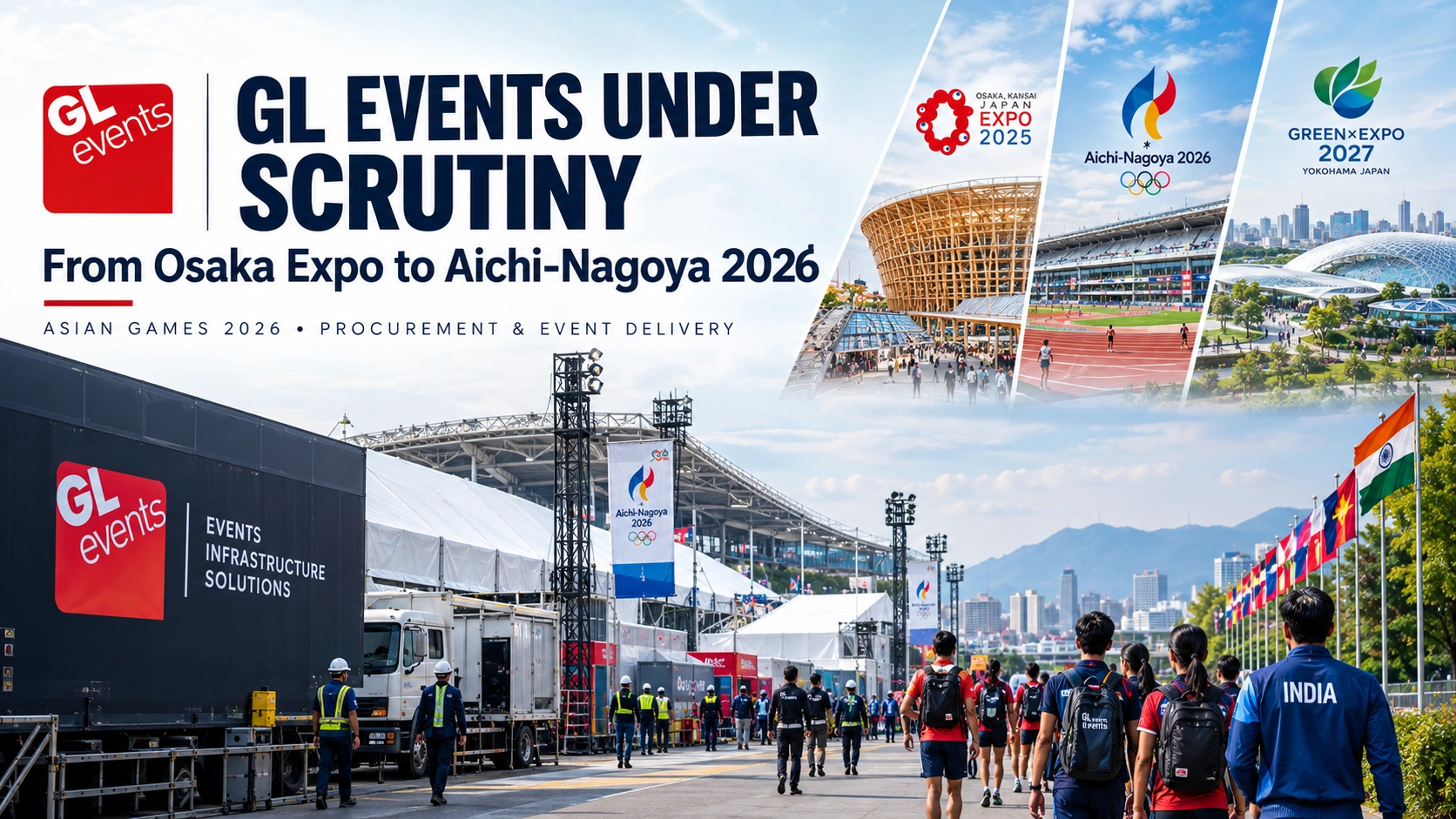
GL events Japan, the Japanese arm of French event-services giant GL events, was a contractor for several overseas pavilions at Expo 2025 Osaka-Kansai. Subcontractors subsequently complained of unpaid construction bills, with some taking legal action. Reports have described disputes involving multiple pavilions, while the Osaka authorities and Expo organisers have largely treated the payment disputes as matters between private parties.
And yet GL events did not disappear from Japan’s major-event ecosystem.
It became an official Prestige Partner of the Aichi-Nagoya 2026 Asian and Asian Para Games. More importantly, this is not merely a logo-on-the-wall sponsorship. GL events was selected as the Event Delivery Entity responsible for a huge part of the operational infrastructure of the Games.
Its responsibilities include temporary structures, power, lighting and sound, venue management, press operations, spectator services, medal ceremonies, food and beverage, cleaning, waste management and logistics.
The reported value of the Asian Games contract is ¥63 billion — roughly ₹3,700 crore at current exchange rates. Aichi prefectural officials themselves confirmed that the figure of ¥63 billion had been reported and described the required expenses as being around that level.
The remarkable part is that the Osaka Expo controversy was already known before the Asian Games contract was being implemented.
In July 2025, Aichi Governor Hideaki Omura was questioned about reports of more than ¥300 million in unpaid Expo construction costs involving GL events. He acknowledged that there had been payment-related disputes involving several pavilions and said the organisers were checking the facts.
By August, the governor said the Asian Games organising committee had received an explanation from GL events. He also acknowledged that GL would necessarily have to subcontract work to a large number of companies for the Games and said measures were being sought to ensure those companies could undertake the work with confidence.
There is an even more revealing detail in the selection process.
According to the Aichi Prefectural Assembly, GL events Japan was selected as a candidate for a negotiated contract because its parent company, GL events SA, was already a Prestige Partner of the two Games. The contract was subsequently approved by the organising committee’s board.
So this is not simply a case of the same company winning two unrelated jobs.
The company involved in a major unpaid-contractor controversy at Osaka was already positioned as a prestige partner of the Aichi-Nagoya Games — and its Japanese subsidiary subsequently received the enormous event-delivery assignment.
And the story does not end there.
GL events Japan has also been selected as one of the 10 certified GX House suppliers for GREEN×EXPO 2027, the international horticultural exposition in Yokohama. The official Expo association’s own material lists GL events Japan among those suppliers.
That means one company appears repeatedly in the infrastructure of three enormous Japanese public events:
OSAKA EXPO → AICHI-NAGOYA ASIAN GAMES → YOKOHAMA GREEN×EXPO.
That, by itself, does not prove corruption, improper influence or “vested interests”. There is no evidence established in the sources cited here that would justify making that accusation as fact.
But it absolutely raises a legitimate question:
How does a company facing unresolved disputes over unpaid subcontractor bills at one major Japanese event continue to secure prominent roles in two more?
And perhaps the bigger question is about the procurement system itself.
Was GL events selected because of its demonstrable international event-management experience? Was its existing status as a Prestige Partner a significant factor? What due diligence was conducted after the Osaka disputes emerged? What safeguards were imposed to protect Asian Games subcontractors? And why was the company subsequently acceptable as a supplier for Yokohama’s 2027 exposition?
Those are questions worth answering.
Because when billions of yen in public-event infrastructure are involved, “it is a private contractual dispute” becomes an increasingly unsatisfactory explanation for the public to simply accept.
The issue isn’t merely whether GL events can deliver an Asian Games.
It is whether Japan’s major-event procurement system is sufficiently transparent about who gets these contracts, why they get them, and what happens when things go wrong.
-
Scrapping the dedicated Athletes’ Village: ~¥60 billion / ₹3,300 crore saved (60% of total cuts)
-
Relocating swimming and equestrian venues to Tokyo: ~¥21 billion / ₹1,155 crore saved
-
Slashing temporary competition venue infrastructure: ~¥9 billion / ₹495 crore saved
-
Consolidating hotel networks (cutting 35 facilities): ~¥4 billion / ₹220 crore saved
-
Reducing soccer competition venues: ~¥4 billion / ₹220 crore saved
-
Shortening athlete stay durations: ~¥3 billion / ₹165 crore saved
-
Canceling marathon swimming events entirely: ~¥1 billion / ₹55 crore saved