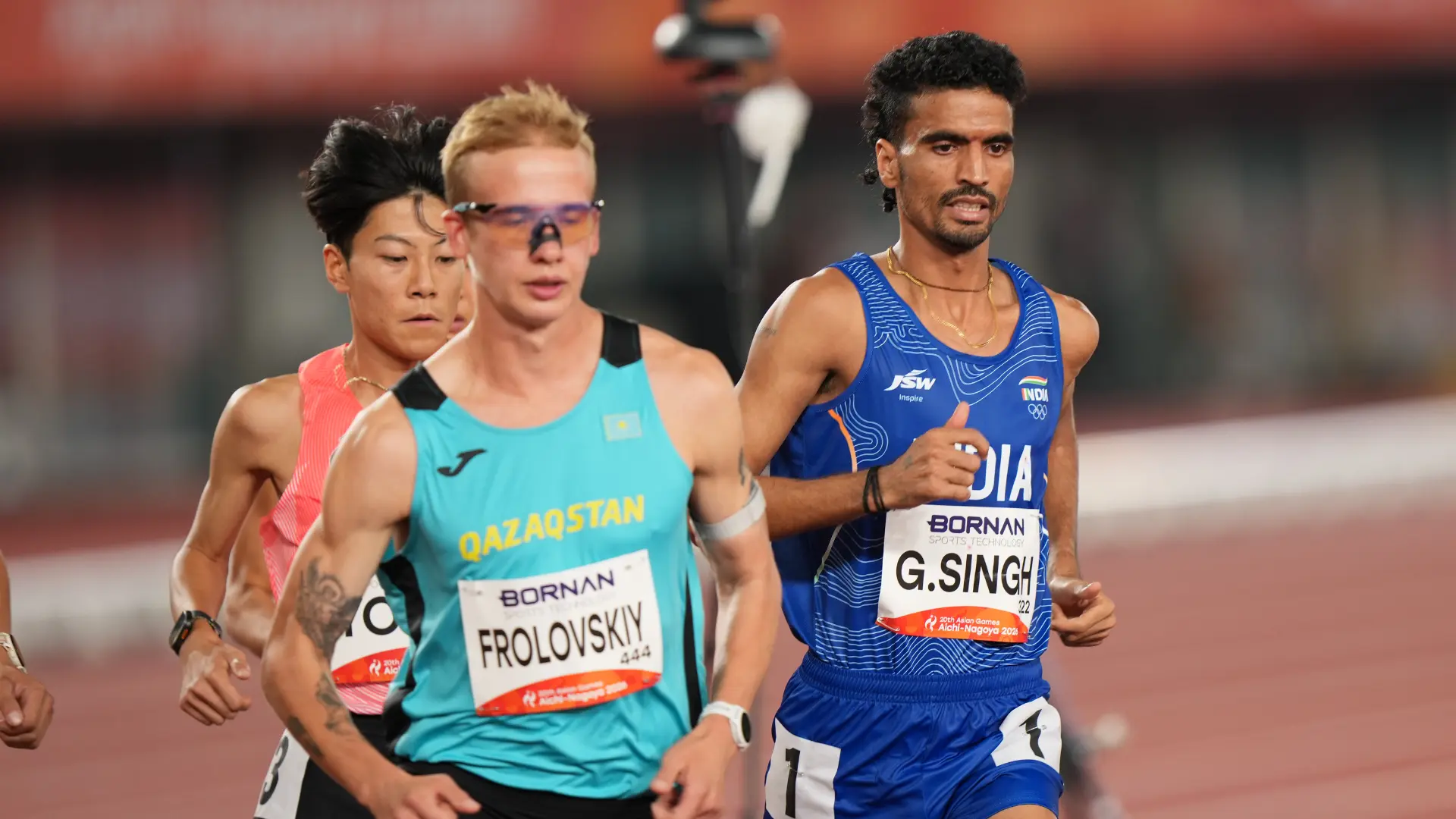

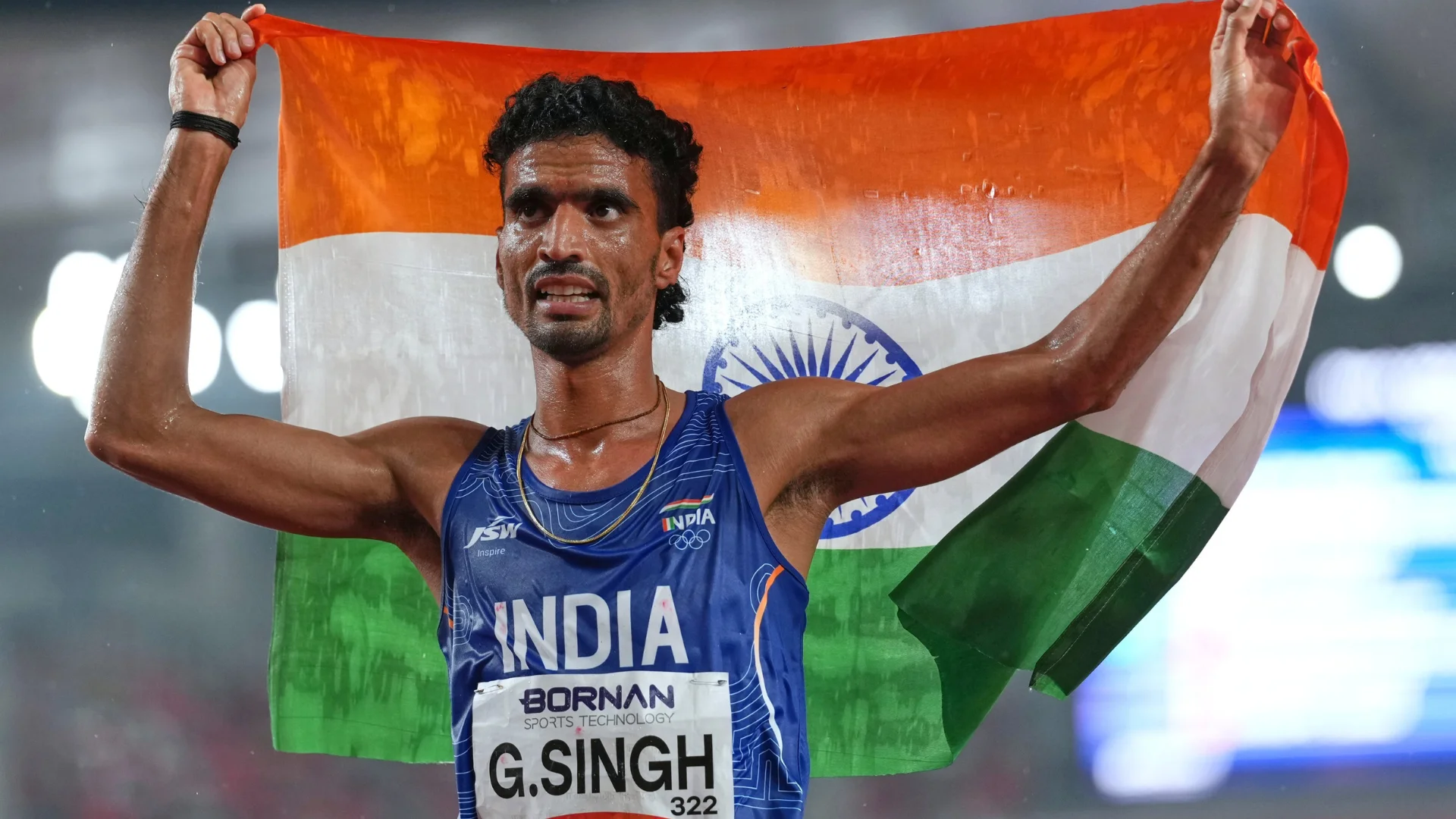
At the Aichi-Nagoya Asian Games 2026, Indian distance runner Gulveer Singh delivered one of the most complete tactical performances in modern Indian track history. Clocking a career-best 3:36.72 to secure the silver medal in the men’s 1500m final, Gulveer missed out on the top step of the podium by a razor-thin 0.37 seconds.
What made the feat remarkable was not merely the raw speed required to force Japanese gold-medallist Kazuto Iizawa into an Asian Games record (3:36.35), but the tactical maturity Gulveer displayed after having already run a grueling, silver-medal-winning 10,000m final just days prior.
Strategic Drafting and Pacing (0–1100m)
In middle-distance racing, championship finals rarely reward early breakaways. Gulveer and his coaching setup executed a precise energy-preservation strategy designed to counter the home advantage of the Japanese duo, Kazuto Iizawa and Nagiya Mori.
Throughout the middle 800 meters, Gulveer committed strictly to an inside-lane position, tucked directly behind Iizawa and Mori. By maintaining this aerodynamic pocket, he effectively reduced wind resistance during the home-straight passes on laps two and three. Aerodynamic drafting in middle-distance events yields significant metabolic savings, reducing oxygen consumption and preserving precious glycogen stores needed for late-stage anaerobic output.
Complementing this positioning was a disciplined split-pacing strategy. Rather than reacting to minor pace accelerations, Gulveer held his splits within a tight, controlled tolerance. Passing the 1100-meter mark without incurring early lactate accumulation allowed his physiological state to shift smoothly from 10k aerobic endurance into peak 1500m speed endurance.
Tactical Masterclass: The Anatomy of Gulveer Singh’s 1500m Silver
At the Aichi-Nagoya Asian Games 2026, Indian distance runner Gulveer Singh delivered one of the most complete tactical performances in modern Indian track history. Clocking a career-best 3:36.72 to secure the silver medal in the men’s 1500m final, Gulveer missed out on the top step of the podium by a razor-thin 0.37 seconds.
What made the feat remarkable was not merely the raw speed required to force Japanese gold-medallist Kazuto Iizawa into an Asian Games record (3:36.35), but the tactical maturity Gulveer displayed after having already run a grueling, silver-medal-winning 10,000m final just days prior.
Strategic Drafting and Pacing (0–1100m)
In middle-distance racing, championship finals rarely reward early breakaways. Gulveer and his coaching setup executed a precise energy-preservation strategy designed to counter the home advantage of the Japanese duo, Kazuto Iizawa and Nagiya Mori.
Throughout the middle 800 meters, Gulveer committed strictly to an inside-lane position, tucked directly behind Iizawa and Mori. By maintaining this aerodynamic pocket, he effectively reduced wind resistance during the home-straight passes on laps two and three. Aerodynamic drafting in middle-distance events yields significant metabolic savings, reducing oxygen consumption and preserving precious glycogen stores needed for late-stage anaerobic output.
Complementing this positioning was a disciplined split-pacing strategy. Rather than reacting to minor pace accelerations, Gulveer held his splits within a tight, controlled tolerance. Passing the 1100-meter mark without incurring early lactate accumulation allowed his physiological state to shift smoothly from 10k aerobic endurance into peak 1500m speed endurance.
The Gold Margin
Gulveer Singh’s 3:36.72 silver stands as a benchmark for Indian distance running. Had his final surge been initiated just 20 to 30 meters earlier on the back straight, he would have been positioned to challenge Iizawa directly for gold. Nevertheless, his double-medal haul in Nagoya confirms his status as one of Asia’s most versatile distance athletes.
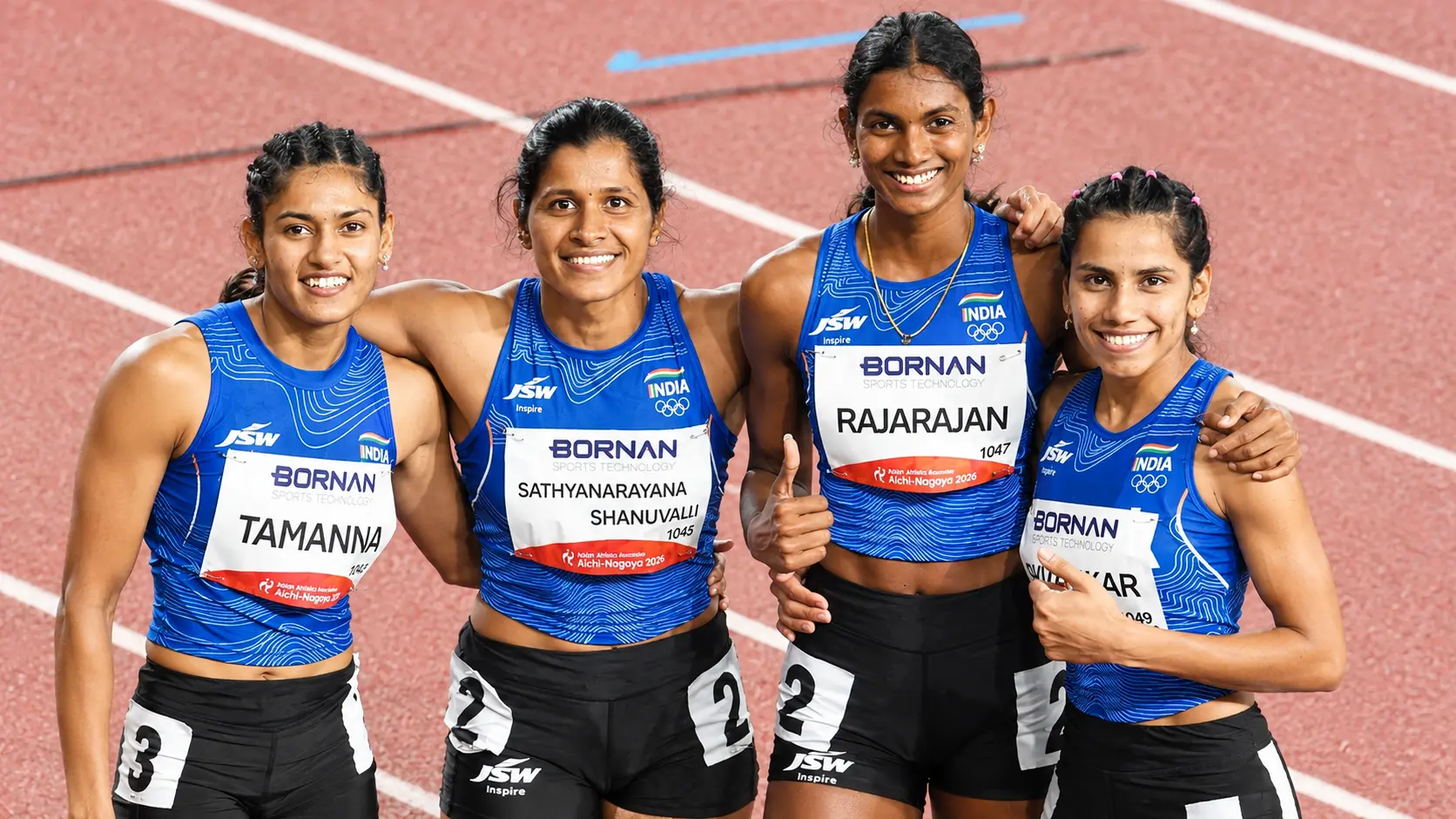
India narrowly missed a podium finish in the women’s 4x100m relay at the Asian Games 2026 in Nagoya, finishing fourth in a Season’s Best (SB) time of 43.57 seconds.
The Indian quartet of Abinaya Rajarajan, Sneha Shanuvali Sathyanarayana, Sudeshna Hanmant Shivankar and Tamanna delivered a strong performance in the final.
They improved on their heat-winning time of 43.65 seconds. However, India finished just 0.05 seconds behind Japan, which secured the bronze medal.
China won gold in 42.96 seconds, while Thailand claimed silver in 43.51 seconds. Japan finished third in 43.52 seconds, followed by India in 43.57 seconds.
India Misses Bronze by Just 0.05 Seconds
The final was decided by extremely narrow margins.
Just 0.09 seconds separated the teams finishing second through fifth, with every hundredth of a second proving crucial over the 400-metre race.
India remained in contention for a medal before crossing the finish line in fourth place.
Women’s 4x100m Relay Final Results
|
Position |
Country |
Time |
|---|---|---|
|
Gold |
China |
42.96s |
|
Silver |
Thailand |
43.51s |
|
Bronze |
Japan |
43.52s |
|
4th |
India |
43.57s (SB) |
Abinaya Rajarajan Leads India’s Sprint Relay Campaign
Abinaya Rajarajan was part of the Indian quartet that made a strong impression in the qualifying round.
India won its heat in 43.65 seconds, securing a place in the final.
Rajarajan has been an important part of India’s sprint relay setup. She had also featured in the mixed 4x100m relay earlier in the competition.
Her experience across both relay formats made her an important member of the Indian team.
Sneha Shanuvali Sathyanarayana Contributes to India’s Season’s Best
Sneha Shanuvali Sathyanarayana was another key member of India’s sprint group in Nagoya.
She was part of the quartet that produced the team’s Season’s Best in the final.
Relay success depends on individual speed and the execution of baton exchanges. India remained competitive throughout the race and stayed within striking distance of the medal positions.
Sudeshna Hanmant Shivankar Adds Experience
Sudeshna Hanmant Shivankar brought further experience to the Indian lineup.
She has been part of India’s sprint relay programme and featured in the quartet that improved its time from the heats.
With the final decided by such narrow margins, every phase of the race was crucial, from the starts and baton exchanges to the final straight.
Tamanna Completes the Indian Quartet
Tamanna completed the Indian quartet and was responsible for the final leg of the relay.
India crossed the finish line in 43.57 seconds, improving on its heat-winning performance.
The improvement showed that the team raised its performance in the final, although the time was not enough to secure a medal.
India Finishes Just Outside the Podium
India’s fourth-place finish came just five hundredths of a second behind Japan.
China’s winning time of 42.96 seconds was comfortably ahead of the rest of the field. However, the battle for the remaining medals was extremely close.
The Indian quartet improved from 43.65 seconds in the heats to 43.57 seconds in the final, producing its fastest performance of the season.
Although the medal remained out of reach, the team finished its Asian Games campaign with a Season’s Best and a competitive performance.
Abinaya Rajarajan, Sneha Shanuvali Sathyanarayana, Sudeshna Hanmant Shivankar and Tamanna finished fourth in 43.57 seconds, just 0.05 seconds away from the podium.
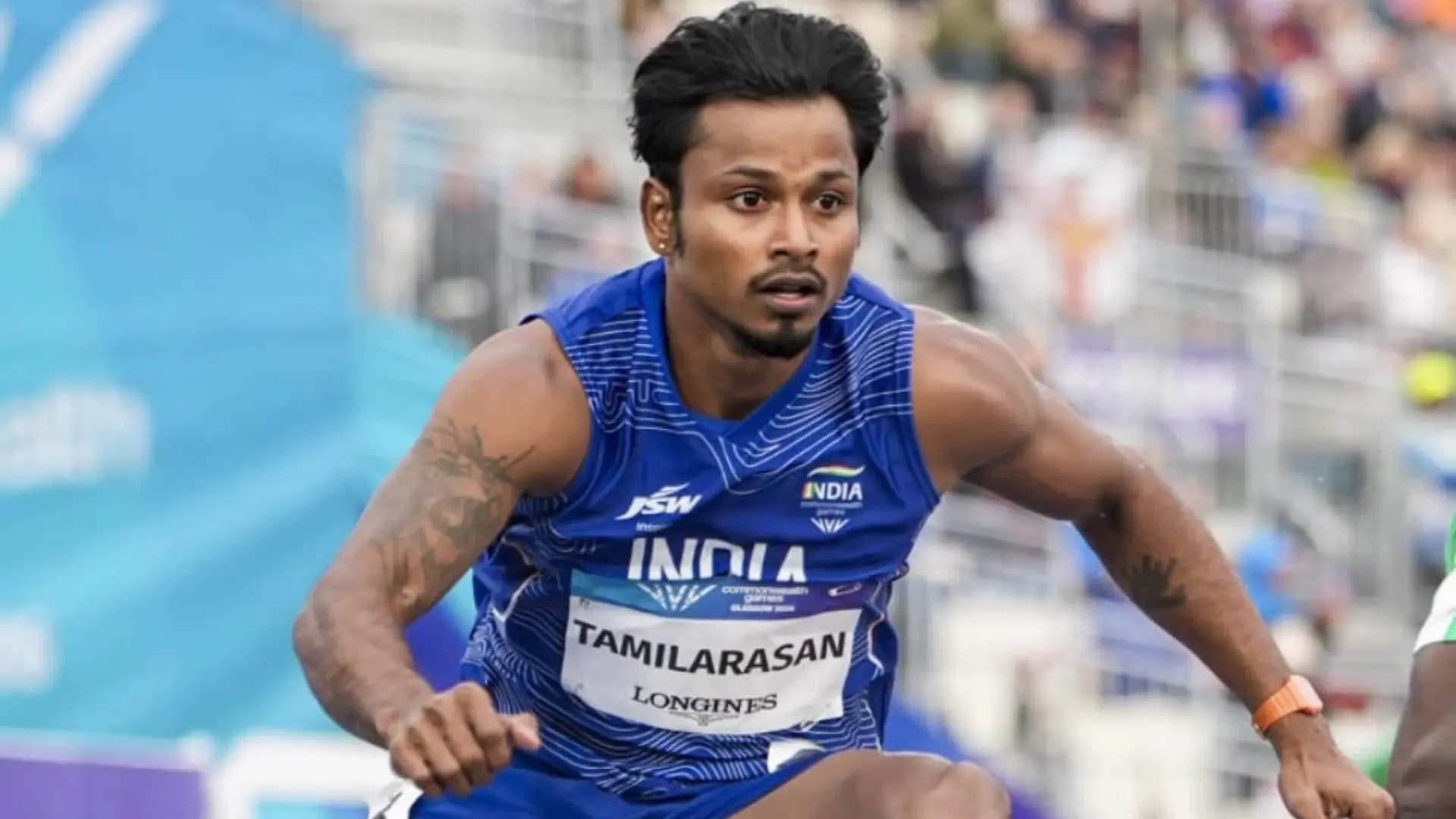
India’s Santhosh Kumar Tamilarasan finished seventh in the men’s 400m hurdles final at the Asian Games 2026 in Nagoya, clocking 49.95 seconds.
The 28-year-old had earned his place in the final after finishing second in his heat in 49.61 seconds, securing automatic qualification.
However, Santhosh could not reproduce his qualifying performance in the final. He battled through the one-lap hurdles race to finish seventh in a strong field.
Bassem Hemeida Wins Gold in 400m Hurdles
Qatar’s Bassem Hemeida won the gold medal in 47.82 seconds.
Japan’s Taiju Goto claimed silver in 47.93 seconds, while Lin Chung-wei of Chinese Taipei completed the podium with bronze in 48.74 seconds.
Men’s 400m Hurdles Final Results
|
Position |
Athlete |
Country |
Time |
|---|---|---|---|
|
1st |
Bassem Hemeida |
Qatar |
47.82s |
|
2nd |
Taiju Goto |
Japan |
47.93s |
|
3rd |
Lin Chung-wei |
Chinese Taipei |
48.74s |
|
7th |
Santhosh Kumar Tamilarasan |
India |
49.95s |
Santhosh Kumar’s Journey to the Asian Games Final
Santhosh’s journey to the final has been built on consistency across individual and relay events.
Born in Sukkudi, Tamil Nadu, he has represented the Indian Army and its elite sports wing. Over the years, he has developed into one of India’s established 400m hurdlers.
He first made his mark at the Asian level at the 2018 Asian Games in Jakarta, finishing fifth in the 400m hurdles in 49.66 seconds.
In 2023, he reached the senior continental podium by winning bronze at the Asian Athletics Championships in Bangkok. He clocked 49.09 seconds in that race.
Contributions to India’s Relay Programme
Santhosh has also played an important role in India’s relay programme.
He represented India in the men’s 4x400m relay at the Paris 2024 Olympics.
In addition, he was part of the Indian team that won gold in the mixed 4x400m relay at the 2026 Asian Athletics Championships.
His experience across both individual and relay events has made him a valuable member of India’s quarter-mile squad.
Personal Best and 2026 Season
The 2026 season has been an important one for Santhosh.
In May, he produced a personal best of 49.06 seconds in the 400m hurdles, highlighting his continued progress.
He also holds a personal best of 46.02 seconds in the individual 400m, demonstrating his ability across both events.
Earlier this year, Santhosh finished joint first at the National Inter-State Senior Athletics Championships in Bhubaneswar with 49.14 seconds. The performance met the Asian Games qualification mark.
Seventh Place Ends Santhosh’s Individual Campaign
In Nagoya, the final was dominated by athletes who broke into the 47- and 48-second range.
Santhosh’s 49.95 seconds earned him seventh place, bringing his individual campaign to a close without a podium finish.
For an athlete who has progressed from junior international competition to the Asian and Olympic stages, the final adds another major international experience to his career.
Santhosh Kumar Tamilarasan finishes seventh in the Asian Games 400m hurdles final, clocking 49.95 seconds.
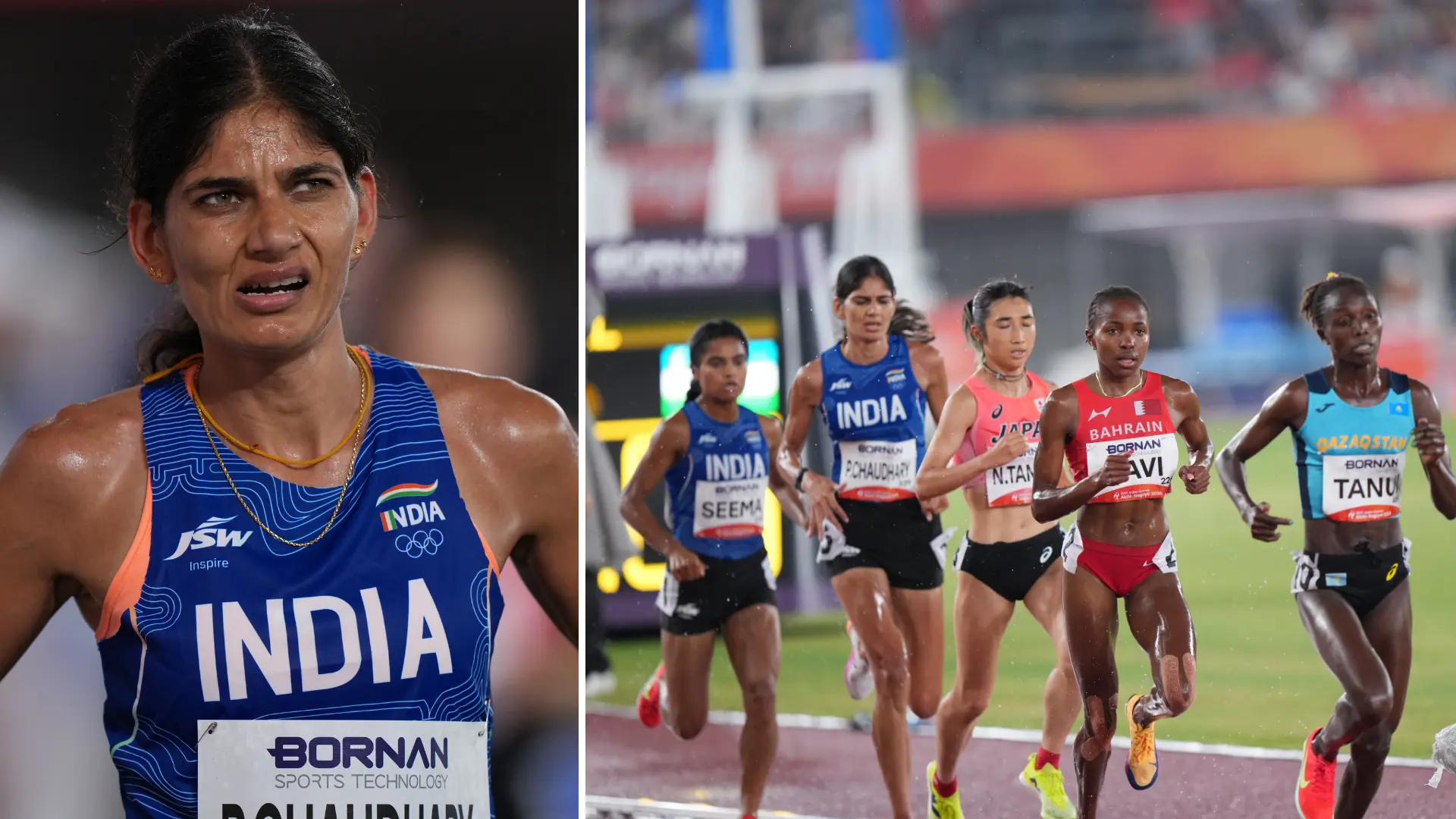
Parul Chaudhary delivered an impressive performance at the Nagoya Asian Games, winning two bronze medals in two different events within 24 hours.
The Indian distance runner first claimed bronze in the women’s 3000m steeplechase, setting a national record of 9:08.67. The following day, she returned to the track and secured another bronze in the women’s 5000m, clocking 15:14.61.
Her double medal achievement required her to compete in two events with very different demands.
Parul Chaudhary Sets National Record in 3000m Steeplechase
Parul began her two-day campaign with a bronze medal in the women’s 3000m steeplechase.
She clocked 9:08.67, setting a new Indian national record while securing a place on the podium.
The event combines distance running with 35 barriers, including seven water jumps. It demands endurance, rhythm and the ability to negotiate obstacles throughout the race.
Parul’s performance made it one of the strongest races of her career.
Second Bronze in the Women’s 5000m
Just one day later, Parul returned to the track for the women’s 5000m final.
She remained in medal contention throughout the race before delivering another determined performance in the closing stages. Her time of 15:14.61 earned her a second bronze medal.
Bahrain’s Winfred Yavi won gold in 15:10.18, while Japan’s Nozomi Tanaka secured silver in 15:11.65.
Parul finished third, just 1.46 seconds behind Tanaka.
Unlike the steeplechase, the 5000m is a continuous track event covering 12½ laps. It requires sustained pace, tactical awareness and the ability to respond to changes in the race.
Two Events, Two Different Challenges
Parul’s double bronze highlights her ability to compete across different distance events.
In the steeplechase, she had to negotiate barriers and water jumps while maintaining her pace. The 5000m, meanwhile, demanded consistent speed and tactical racing over a longer uninterrupted distance.
Her experience in both disciplines helped her deliver two podium finishes in quick succession.
Parul has established herself as one of India’s leading distance runners, competing successfully in the 3000m steeplechase and longer track events.
Her Nagoya performances add two more major championship medals to her record.
Parul Chaudhary’s Asian Games Medal Summary
|
Event |
Medal |
Performance |
|---|---|---|
|
Women’s 3000m Steeplechase |
Bronze |
9:08.67 (NR) |
|
Women’s 5000m |
Bronze |
15:14.61 |
Two Bronzes in Two Days
Parul Chaudhary leaves Nagoya with two Asian Games bronze medals and a new national record.
Her achievement came through two demanding races held on consecutive days. She first reached the podium in the steeplechase before returning the next day to claim another bronze in the 5000m.
Two races, two days, two medals — and a national record along the way.
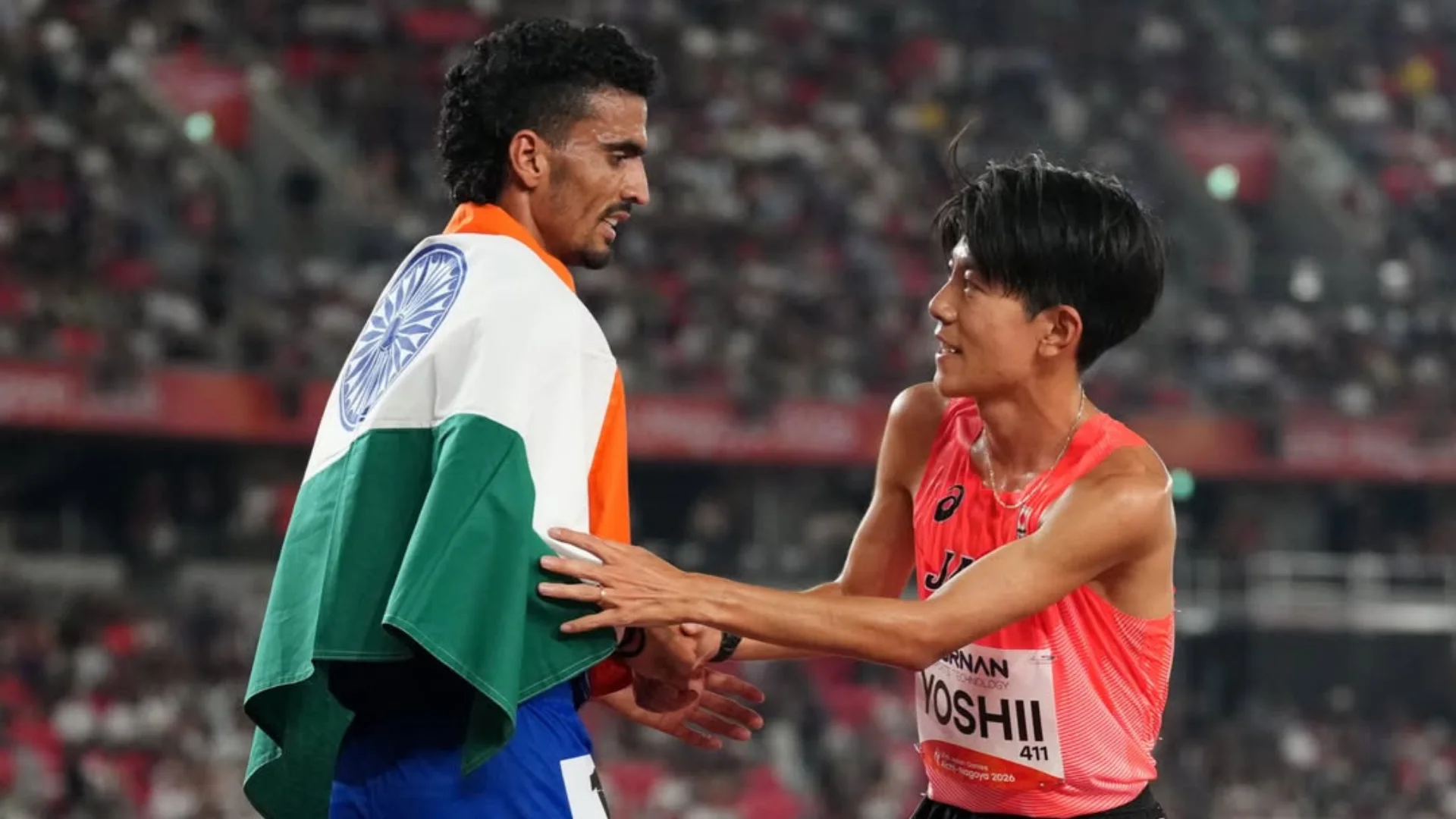
India’s distance-running star Gulveer Singh delivered a remarkable performance at the 2026 Asian Games in Nagoya, winning two silver medals in just three days.
Gulveer first claimed silver in the men’s 10,000m, clocking 28:29.38. Three days later, he returned to the track and secured another silver in the men’s 1500m, setting a personal best of 3:36.72.
The two medals highlighted his versatility across middle- and long-distance running.
Gulveer Singh Wins Silver in 1500m With Personal Best
Gulveer produced another strong performance in the men’s 1500m final. He stayed with the leading group through a tactical race before making his move in the closing stages.
He crossed the finish line in 3:36.72, recording a new personal best and securing silver.
Japan’s Kazuto Iizawa won gold in 3:36.35, setting a new Asian Games record. His compatriot Nagiya Mori claimed bronze in 3:37.92.
Gulveer’s performance was particularly notable because it came just three days after his 10,000m medal.
From 10,000m Silver to Another Podium Finish
Gulveer opened his Asian Games campaign with silver in the men’s 10,000m. He clocked 28:29.38 to secure his first medal in Nagoya.
The 10,000m demands sustained pace and endurance over 25 laps. In contrast, the 1500m requires tactical positioning, acceleration and a strong finishing kick.
Gulveer successfully handled both challenges. He returned to competition after the longer race and produced the fastest 1500m time of his career.
Gulveer Singh’s Rise in Indian Distance Running
Gulveer has steadily established himself as one of India’s leading distance runners.
His performances across multiple events have highlighted his range and progress on the international circuit. At the Nagoya Asian Games, he took that progression further by winning medals in two contrasting disciplines.
Competing in both events within three days also required careful recovery and preparation. His second silver, combined with a personal best, added further significance to his campaign.
Gulveer Singh’s Asian Games 2026 Medal Tally
|
Event |
Medal |
Performance |
|---|---|---|
|
Men’s 10,000m |
Silver |
28:29.38 |
|
Men’s 1500m |
Silver |
3:36.72 (Personal Best) |
Two silver medals. Two different events. Three days.
Gulveer Singh’s campaign in Nagoya showcased his endurance, speed and ability to perform repeatedly at the highest level of Asian athletics.