
|
|
|
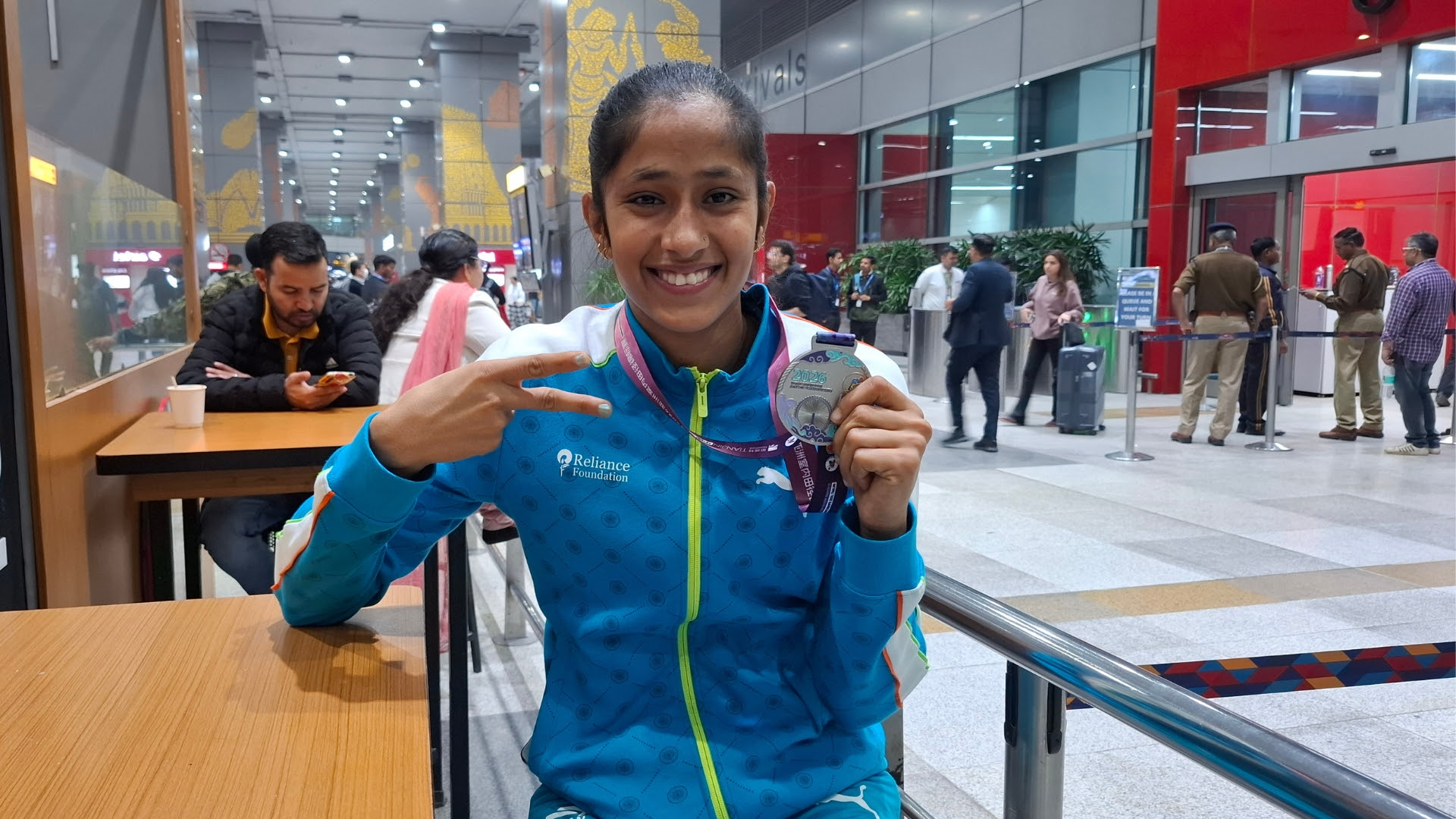
India’s Pooja won silver at the Asian Indoor Athletics Championships 2026, clearing her season-best height of 1.87m. Although on paper this may look easy for her, she had become the Asian champion in May 2025 by clearing her lifetime best of 1.89m.
However, things changed after her Asian Athletics gold. During a routine training hurdle drill, she suffered a Grade-2 ligament tear. At a time when she was in the form of her life, she had to miss the World University Games 2025.
The challenges didn’t stop there. Due to personal reasons, her training was affected, and she shifted her training base from Parta, Haryana, where she trained under her childhood coach, Balwan Parta, to the Anju Bobby George Academy in Bengaluru.
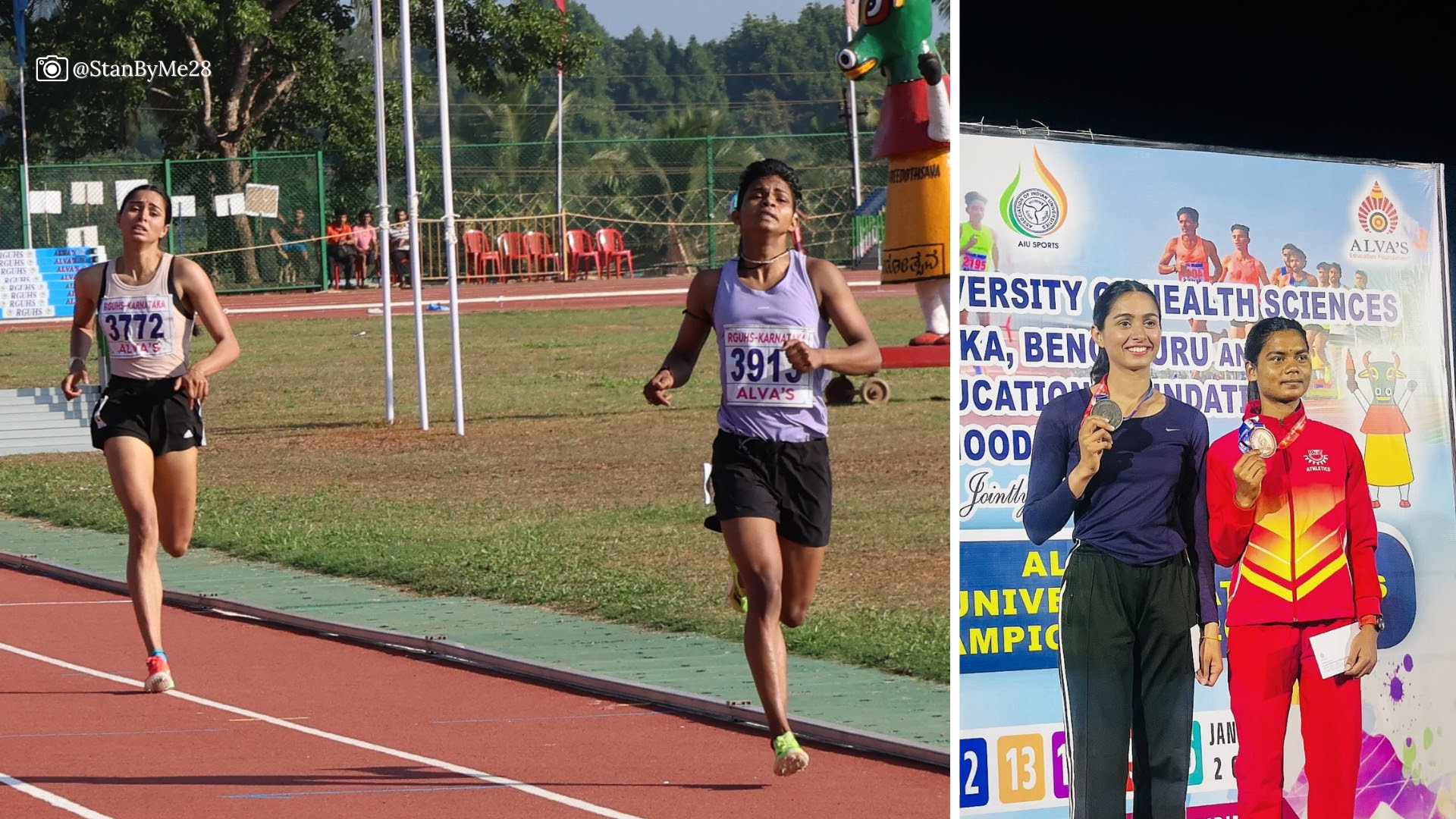
After a long rehabilitation, she filed her entry for the Khelo India University Games, marking her comeback after six months. There, she cleared 1.77m, bettering the meet record. A month later, at the All-India University Games in January 2026, she won gold by clearing 1.85m, again improving her own meet record.
It is worth noting that both competitions were not certified by World Athletics, which means these records are not officially recognised.
AFI selected her for the Asian Indoor contingent, where she went as the reigning Asian outdoor champion and performed accordingly.
At the Asian Indoors, she began with 1.75m and then cleared 1.80m, both in her first attempts. She then struggled at 1.84m but cleared it in her third attempt. She followed it up by clearing 1.87m — her season best and second-best mark of her career — in her first attempt.
While attempting 1.90m, she came agonisingly close, nearly clearing it in her first and third attempts.
With the Asian Games and Commonwealth Games 2026 lined up, this season will be crucial for her. This Asian Indoor silver with a 1.87m clearance will definitely give her confidence for the upcoming championships.
|
|
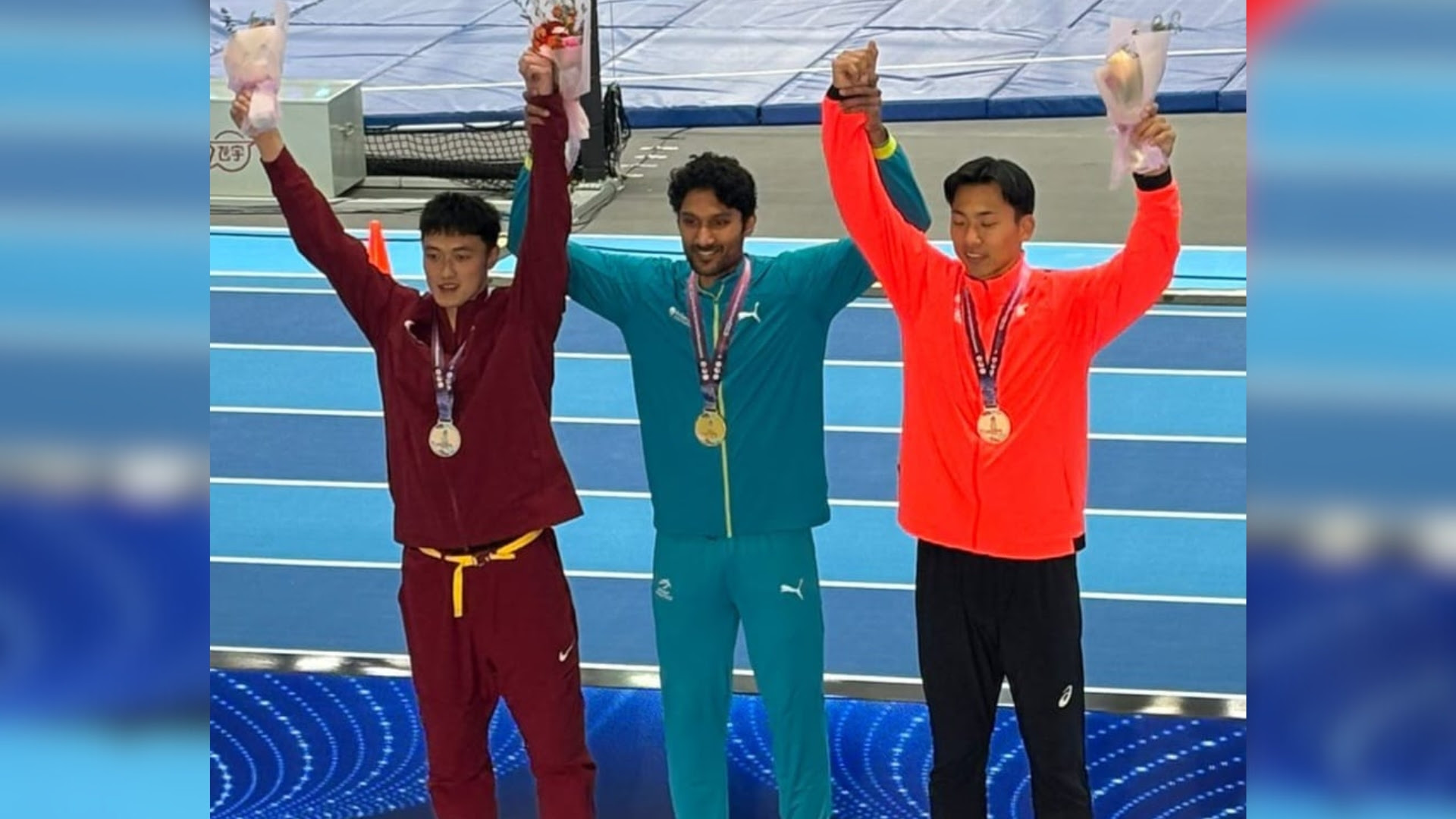
| India ended their campaign at the Asian Indoor Athletics Championships 2026 with five medals: one gold, two silver, and two bronze.
Tejaswin – Gold (Heptathlon) – 5993 pts (NR) Pooja – Silver (High Jump) – 1.87m (SB) Tajinderpal Singh Toor – Silver (Shot Put) – 20.05m Ancy Sojan – Bronze (Long Jump) – 6.21m Aadarsh Ram – Bronze (High Jump) – 2.19m
However, there were several performances that deserve special mention—athletes who gave their all but missed the podium by a whisker.
1) K A Anamika: Kerala’s Anamika is one of the athletes you will be hearing a lot about in the future. She proved her potential by winning gold at the Open Nationals with a lifetime best of 5629 points.
At the Asian Indoors, she represented India in the pentathlon (five-event combined event) and registered lifetime bests in three events: 60m Hurdles – 8.97s Long Jump – 5.75m 800m – 2:21.72
She finished fourth overall with 3923 points.
2) Praveen Chithravel: India’s national record holder in triple jump had a disappointing outing. Praveen entered the competition with the best personal best among all participants—India’s national record of 17.37m, which he also equalled last year at the Federation Cup.
With high expectations, he finished fourth in the men’s triple jump final with a best effort of 16.22m.
3) Yogita: The National Open Athletics Championships and South Asian Games gold medallist finished fourth with her best throw of 15.33m, achieved in her second attempt.
This was her first-ever international competition. Had she matched her personal best of 16.52m, achieved in September last year, she would have at least secured a bronze medal.
4) Abinaya Rajarajan: India’s U20 100m national record holder, Abinaya Rajarajan, clocked a lifetime-best 7.50s in the women’s 60m heats to finish third overall in the heats.
However, she did not feature in the final due to a knee injury sustained during the race, where she fell after finishing. According to NNIS Sports, the injury is not serious, and she is expected to return to competition soon.
5) Shahnawaz Khan: 2025 National Games and Junior Federation Cup gold medallist, Shahnawaz Khan is one of India’s most promising long jumpers. In 2025, he breached the 8m mark for the first time, registering 8.04m while competing against Murali Sreeshankar at India’s Bronze Continental Tour.
At the Asian Indoors, he narrowly missed a medal, finishing fourth with a best jump of 7.70m—just 12cm short of the podium. |
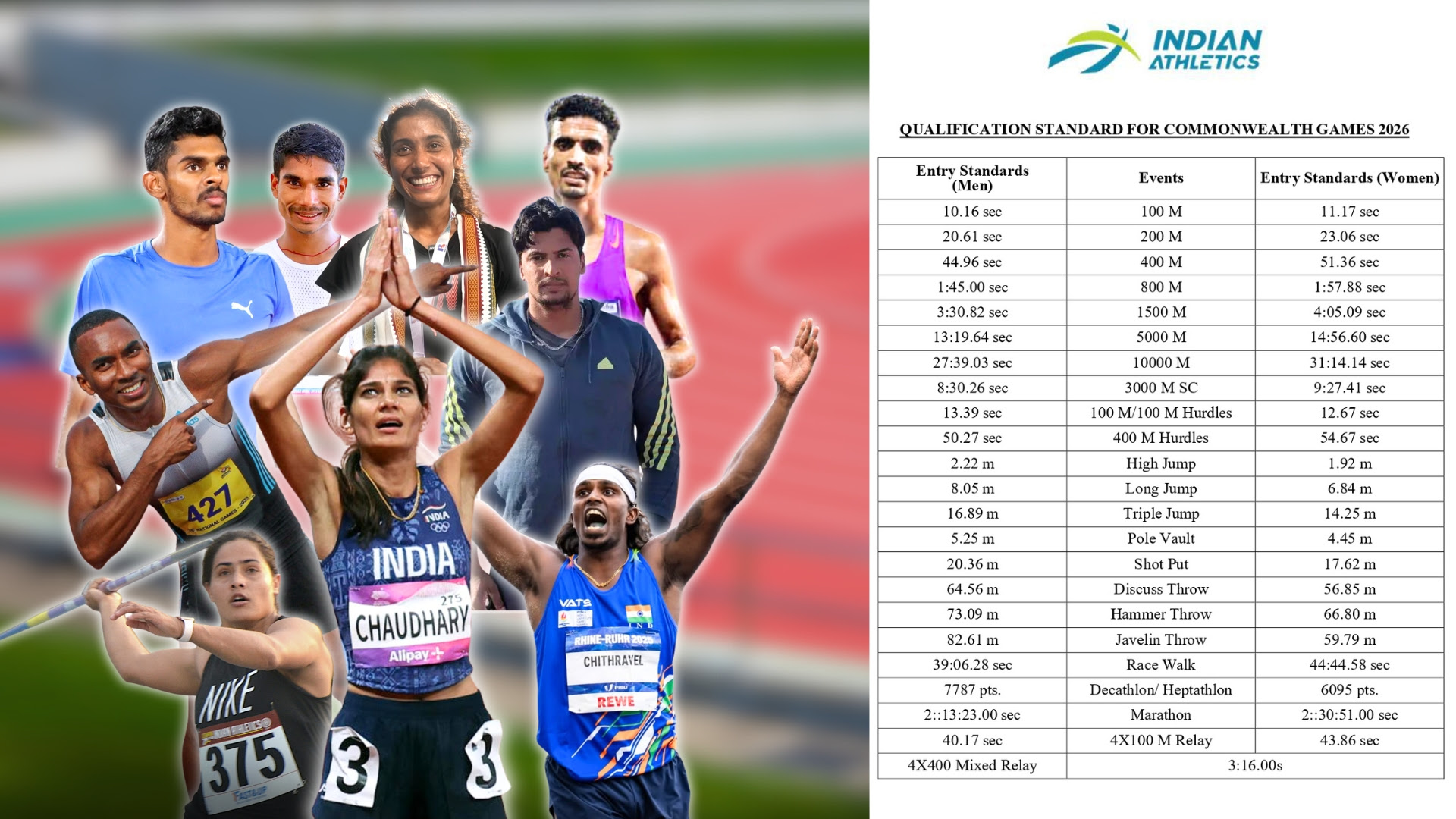
| The Athletics Federation of India revealed the qualifying standards for the 2025 Commonwealth Games on Monday.
While it did come as a distress to the athletics community, just after we posted the qualifying standards, we received calls from many athletes raising concerns, asking whether the standards were too high. Some even questioned if the figures were correct or a mistake at our end.
The main reason for the distress was that in 17 events, athletes have to at least touch the national record mark just to qualify. To be precise, in 15 events, they will have to better the national record, while in two events, women’s 100m and women’s high jump, they will have to equal the national record.
Events like men’s 100m, men’s 400m, women’s 800m, men’s 1500m, women’s 5000m, women’s 10,000m, men’s 110m hurdles, women’s 100m hurdles, women’s 400m hurdles, women’s long jump, women’s triple jump, women’s pole vault, men’s and women’s hammer throw, and the women’s marathon will require performances better than the national record.
Meanwhile, women’s 100m will need Dutee Chand’s 11.17 seconds, and women’s high jump will need Sahana Kumari’s 1.92m to qualify for the Commonwealth Games 2026.
Speaking to the media, Chief Coach Radhakrishnan Nair said the main reason for keeping the qualification standards high is that the federation wants only athletes capable of winning medals at the Commonwealth Games to qualify.
He also added that as per the Commonwealth Games Organising Committee guidelines, the Indian athletics contingent cannot exceed 32 athletes, including a maximum of 16 women.
What is more interesting is that upon further analysis, India’s qualification standards in most events are even better than those of nations like England, New Zealand, and Canada. In some events, they have even exceeded Australia’s qualification marks for the Commonwealth Games 2026.
When NNIS Sports reached out to one coach who did not want to be named, he said:
“This is totally wrong. There is no correlation between the 100m and the 4x100m in both men’s and women’s events. For individual athletes, they have to at least touch the national record, while in relays, it seems pretty easy. This clearly shows the federation does not want individual athletes to qualify but wants the relay teams.”
“The qualification standards of England, Canada, and New Zealand look like they want their athletes to gain exposure, but our federation has made the Commonwealth Games an impossible task. If they show support for athletes at the CWG, then those athletes can dream of competing at the Olympics.”
“The Commonwealth Games should be a priority, not the Asian Games. If we want to be an athletics nation, we should start prioritising the Commonwealth Games. The qualification standards indicate that they have already decided which events they want to send athletes to and which they do not.”
“These standards look biased to me. In many events, you need a national record, but in javelin,n it is only 82.61m. It seems like they want javelin throwers to go but not others,”
“As a federation, your work is to help athletes qualify and perform better, not to stop athletes. This is totally unacceptable,” the coach said in a furious voice.
NNIS Sports also posted a story on its Instagram, asking athletes about their thoughts on the qualification standards. Many reached out to us on the condition that their names should not be revealed.
“If only medal-performance athletes are selected, then how will athletes get exposure?”
“Middle-distance standards are shocking. 1500m at 3:30 compared to the Olympic standard of 3:35.”
“The 400m qualification time is too high for the CWG. Only the 400m seems specifically very high.”
The 29th National Senior Athletics Federation Competition, scheduled to be held from May 22 to 25 in Ranchi, Jharkhand, will act as the final selection trials for the Commonwealth Games 2026, which are scheduled to begin on July 23 in Scotland. |
|