
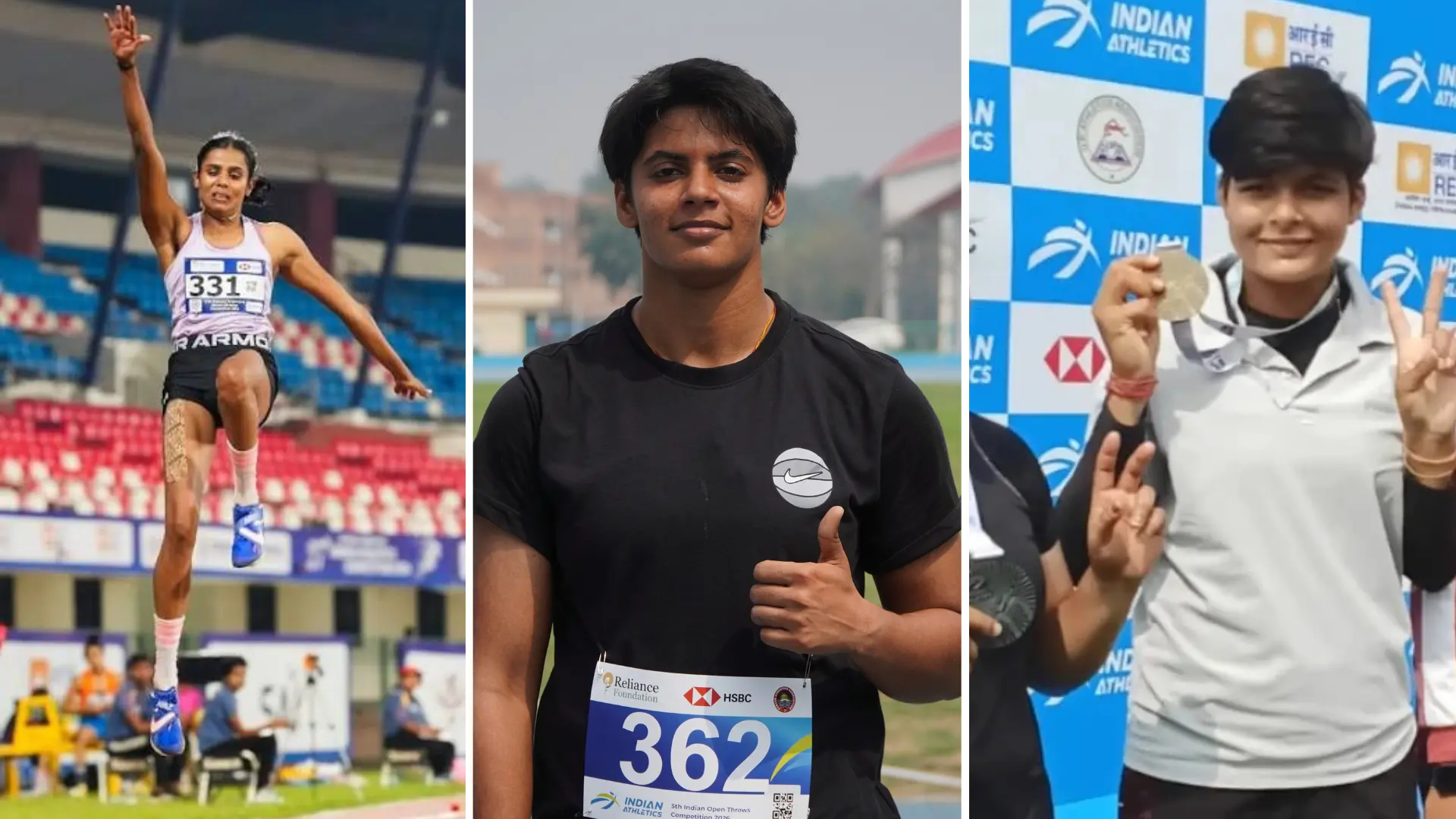
JSW’s Sandra Babu made a winning return to competition, clinching the women’s long jump title at Indian Series-14 in Panchkula with a best jump of 6.23m.
Sandra had been sidelined for around a year after suffering a patellar tendon rupture during her final attempt at the 2025 Inter-State Championships, where she had won gold in the women’s triple jump.
The injury was the same one suffered by Murali Sreeshankar.
She underwent surgery at Aspetar in Qatar, the same hospital where Sreeshankar was treated.
Wednesday marked Sandra’s first competition in a year, and she returned with a victory.
Her series: 6.13, 6.19, X, 6.23, X, X.
Meanwhile, Tanya Chaudhary and national record holder Anushka Yadav claimed another one-two finish in the women’s hammer throw.
Tanya produced a best effort of 61.28m to finish just 25cm ahead of the 18-year-old Anushka, who registered 61.03m. Haqikat Grewal was third with 52.55m.
Anushka had come out on top when the pair met at the National Inter-State Senior Athletics Championships in Bhubaneswar in June, setting the national record with a 67.02m effort. Tanya finished second on that occasion with 61.70m.
In the women’s 800m, Kavitha V continued her winning streak on the Indian Athletics Series circuit, clocking 2:09.49 to finish ahead of Tanvi Malik (2:09.89) and Radha Chaudhary (2:11.07).
It was Kavitha’s second successive victory in the series after she topped the 800m at the previous leg in Warangal last week with a time of 2:08.84.
In the women’s 5000m, Bharti clocked 15:51.49 to finish first, just three days after taking second place at the World Athletics Continental Tour Silver-level meet in Bhubaneswar.
Elsewhere, Nitika Anup Akare topped the women’s pole vault with a 3.90m clearance, while Sebastian V S won the men’s triple jump with a best effort of 16.25m.
Sandeep Singh clocked 10.73s to top the men’s 100m, while Aryan Jagdish Kadam recorded the fastest men’s 200m time of 21.32s.
The Indian Athletics Series will move to Meerut, Uttar Pradesh, for its 15th leg on September 2.
Indian Athletics Series 2026 Panchkula Results
Men’s 100m
1. Sandeep Singh (10.73s)
2. Saurabh Rajesh Naita (10.75s)
3. Pal Dhan Singh (10.79s)
Men’s 200m
1. Aryan Jagdish Kadam (21.32s)
2. Abhin B Devadiga (21.38s)
3. Vetrivelan A (21.40s)
Men’s 400m
1. Vikrant Panchal (46.16s)
2. Muhammed Ajmal V (47.03s)
3. Mohit Kumar (47.27s)
Men’s 800m
1. Akhil K A (1:50.70)
2. Sanket (1:51.16)
3. Shahrukh (1:51.44)
Men’s 1500m
1. Prabhjot Singh (3:46.52)
2. Sumit Kumar (3:47.42)
3. Mehedi Hassan (3:48.37)
Men’s 5000m
1. Mohit Choudhary (14:26.41)
2. Prakashrao Nanasaheb (14:28.59)
3. Aman Kumar (14:28.68)
Men’s High Jump
1. Nikhil Das (2.10m)
2. Mukesh Ashokumar (2.05m)
3. Piyush Singh Panwar (2.05m)
Men’s Long Jump
1. Aman Singh (7.75m)
2. Bhupender Singh (7.62m)
3. Amal T P (7.49m)
Men’s Triple Jump
1. Sebastian V S (16.25m)
2. Dablu Roy (15.36m)
3. Jay Shah (15.35m)
Men’s Pole Vault
1. Rambeer Singh (5.00m)
2. Lakshay (4.90m)
3. Avneesh Kumar (4.90m)
Men’s Shot Put
1. Prabhkirpal Singh (17.01m)
2. Ramchandra Mali (16.60m)
3. Devinder Singh (16.59m)
Men’s Discus Throw
1. Abhimanyu Abhimanyu (57.09m)
2. Nagendra Annappa Na (56.17m)
3. Ujjawal Choudhary (54.98m)
Men’s Hammer Throw
1. Nirbhay Choudhary (66.67m)
2. Mohammad Shahban (64.38m)
3. Nitin Malik (60.48m)
Women’s 200m
1. Madhumita Deb (24.46s)
2. Priya Habbathanahal (24.55s)
3. Binati Behera (24.76s)
Women’s 800m
1. Kavitha V (2:09.49)
2. Tanvi Malik (2:09.89)
3. Radha Chaudhary (2:11.07)
Women’s 1500m
1. Pragati (4:28.56)
2. Ruhi Bohra (4:29.54)
3. Chanchal (4:46.52)
Women’s 5000m
1. Bharti (15:51.49)
2. Yashi Sachan (16:56.05)
3. Babli Verma (16:59.61)
Women’s High Jump
1. Rubina Yadav (1.71m)
2. Jonika Pahal (1.68m)
3. Rimpal Kaur (1.68m)
Women’s Long Jump
1. Sandra Babu (6.23m)
2. Sheeba D (6.19m)
3. Aishwarya B (6.01m)
Women’s Triple Jump
1. Khushabu Verma (12.34m)
2. Rinku Choudhary (12.11m)
3. Nimisha Dayma (12.07m)
Women’s Pole Vault
1. Nitika Anup Akare (3.90m)
2. Sathya Tamilarasan (3.70m)
3. Pavithra Venkatesh (3.60m)
Women’s Shot Put
1. Rekha (15.81m)
2. Yogita (15.38m)
3. Manpreet Kaur (15.19m)
Women’s Discus Throw
1. Sunita (50.23m)
2. Nikita Kumari (48.87m)
3. Anusha Yadav (47.35m)
Women’s Hammer Throw
1. Tanya Chaudhary (61.28m)
2. Anushka Yadav (61.03m)
3. Haqikat Grewal (52.55m)
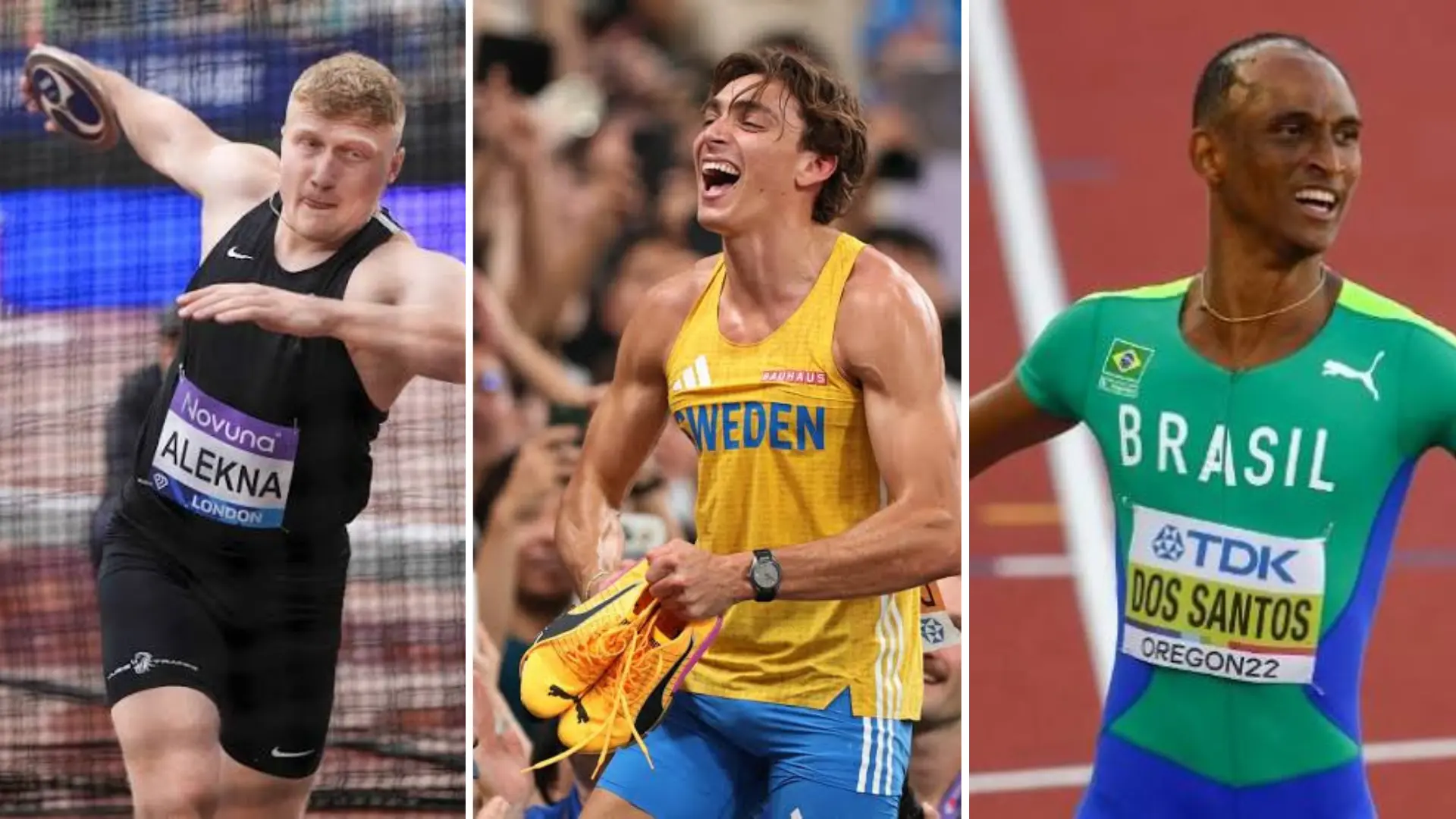
The Kamila Skolimowska Memorial in Silesia delivered an unforgettable weekend of track and field brilliance, headlined by world-class performances from Mykolas Alekna, Mondo Duplantis, Alison dos Santos, and Melissa Jefferson-Wooden. Alekna set a new Diamond League record in the discus with a monstrous 72.58m throw, comfortably defeating global gold medallists Kristjan Čeh and Daniel Ståhl. Meanwhile, pole vault maestro Duplantis cleared 6.20m to capture another victory, providing a thrilling spectacle for fans as he gears up for the inaugural World Athletics Ultimate Championship in Budapest.
The track events featured breathtaking duels, none more anticipated than the women’s 100m clash. World champion Melissa Jefferson-Wooden produced a superb piece of sprinting to edge Olympic champion Julien Alfred, equalling her season’s best of 10.78 seconds to snap Alfred’s unbeaten run. In the men’s 400m hurdles, Alison dos Santos clocked a world-leading 46.43 seconds to defeat world record-holder Karsten Warholm for the fourth time this season. The elite-tier form displayed across these events signals that major contenders are peaking at precisely the right moment. Following her race, Julien Alfred noted, “Melissa is a great athlete and she deserves a lot of respect. I still have Zurich and the Ultimate Championships to come. If I get better there then I can win.”
Despite the overwhelming success, a few high-profile athletes experienced afternoon setbacks or uncharacteristic struggles. Pole vault king Duplantis experienced a surprisingly bumpy route to victory, requiring multiple attempts at his opening three heights before finally finding his rhythm. In the men’s 1500m, two-time Olympic champion Jakob Ingebrigtsen returned to Diamond League competition for the first time since September 2024 following injury, but had to settle for a muted fourth place in 3:31.19 behind Ethan Strand’s blistering kick. Additionally, sprint star Sha’Carri Richardson had to settle for a photo-finish third in 10.96 seconds, finishing well outside her season-best pace.
As the athletes look ahead to the upcoming Ultimate Championships in Budapest, the overall trajectory points toward formidable peak form. Stars like Collen Kebinatshipi, who secured a meeting record of 43.59 in the 400m, and Rai Benjamin – who dropped under 44 seconds for the first time with a 43.83 runner-up finish and hinted at a gruelling 400m and 400m hurdles double in Budapest – prove they are ready to rewrite the record books. With confidence high and historical marks tumbling across the board, the global showcase promises to be an extraordinary finale to the season.
Track and field is entering a thrilling new era. Long defined by the amateur ideal where global icons chased gold medals and historic glory primarily for the love of the sport, the landscape is rapidly shifting toward life-changing financial rewards. When the inaugural World Athletics Ultimate Championship kicks off in Budapest, Hungary, this September, it will bring together a truly exclusive club of the planet’s absolute best performers – not just to fight for prestige, but to claim a historic $10 million prize pot that firmly cements a new professional standard for the sport.
The excitement surrounding this shift is palpable, driven by a blockbuster lineup of exceptional invitations that has added unprecedented star power to an already stacked roster.
Clash of Titans in Budapest
The marquee men’s 1500m final has just become an unmissable, heavyweight showdown. Great Britain’s 2023 world champion Josh Kerr, fresh off a blistering mile world record of 3:42.66 in London, and Norway’s Olympic champion Jakob Ingebrigtsen have both accepted exceptional invitations to join the field.
For Ingebrigtsen, who already holds an automatic entry as the reigning Olympic 5000m champion, Budapest will see him pull off a gruelling and exhilarating double-discipline campaign. Meanwhile, the inclusion of Kerr and Ingebrigtsen elevates an already elite entry list that features reigning 2024 Olympic champion Cole Hocker of the United States and 2025 world champion Isaac Nader of Portugal.
Recognizing that the race could not legitimately be called a definitive gathering of the world’s finest without both rivals on the track, the championship steering board expanded the field to 13 runners, ensuring standard prize money distribution down to the 13th-place finisher.
Champions Returning to Familiar Grounds
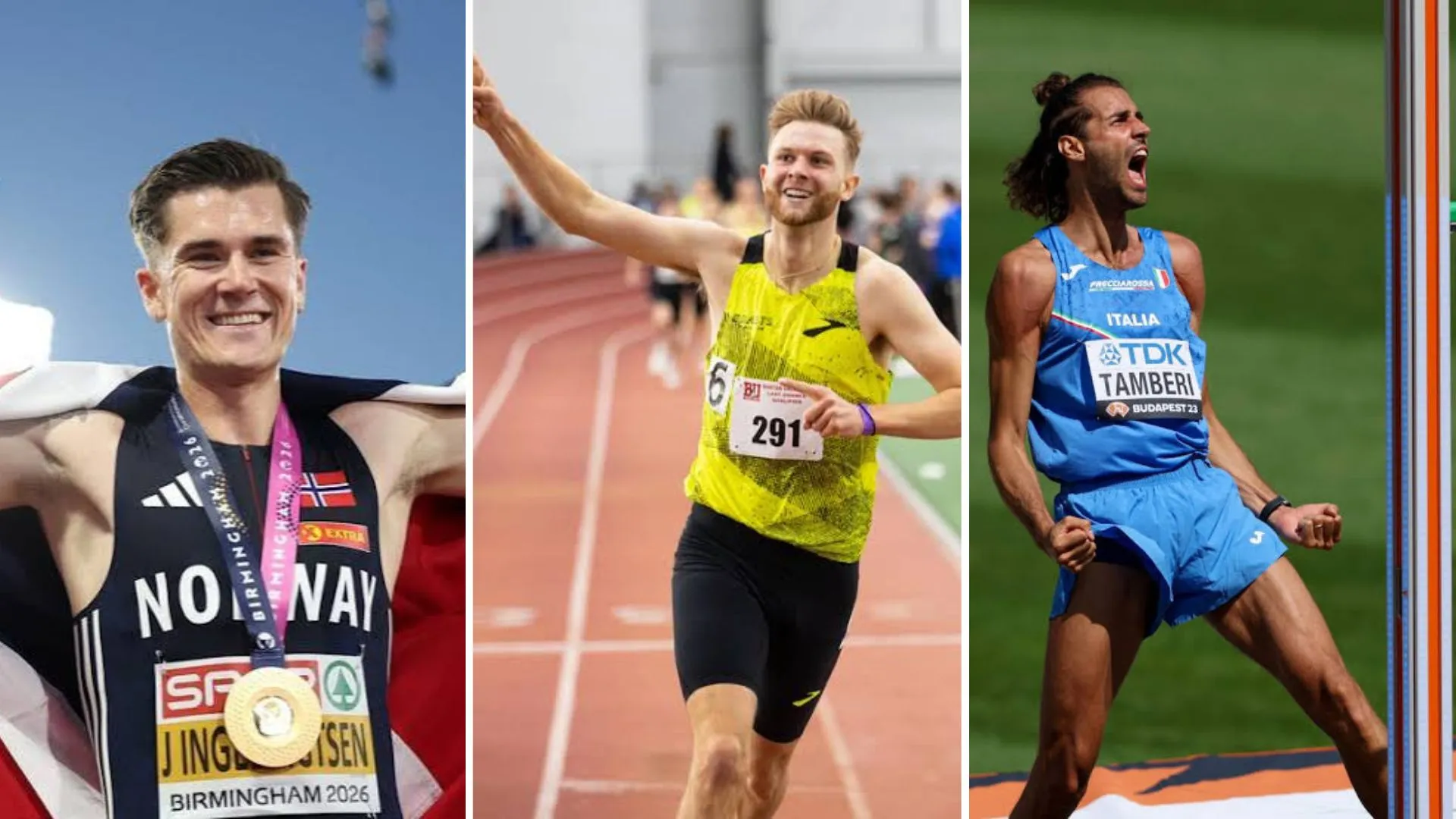
Joining the middle-distance drama is Italian high jump superstar Gianmarco Tamberi. The reigning world and Olympic gold medallist, who recently captured his fourth European Championship title by clearing 2.32m in Birmingham, is eager to return to the site of his emotional 2023 World Championships triumph.
Alongside these global icons, four individual Hungarian athletes and two Hungarian relay teams have received exceptional invitations, backed by guaranteed prize money to thrill the passionate home crowd in Budapest.
A Defining Moment for the Sport
Running from September 11 to 13, the World Athletics Ultimate Championship is designed to permanently settle the debate over supremacy in track and field. By uniting world champions, Olympic titlists, Diamond League winners, and year-end top-ranked athletes under one roof and backing it with a massive financial commitment the sport is turning the page on history. Excellence on the track now carries the lucrative rewards it has long deserved, marking a brilliant new chapter for athletes and fans alike.
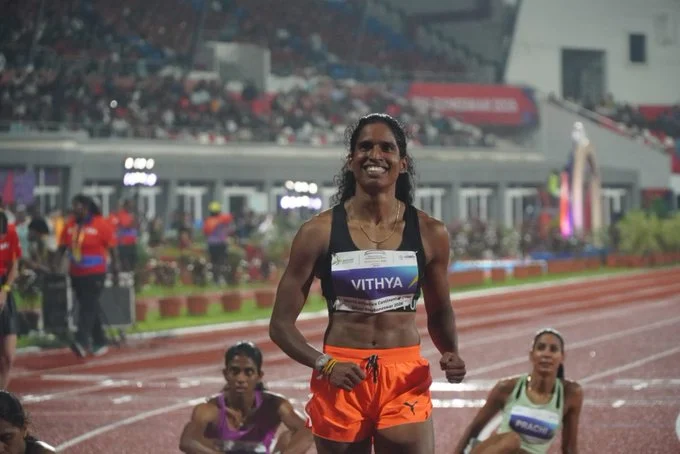
India’s Vithya Ramraj delivered a commanding performance in the women’s 400m final at the World Athletics Continental Tour Silver meet in Bhubaneswar, storming to victory in 51.96s.
Representing Tamil Nadu, Ramraj produced a strong run to comfortably top an all-Indian podium, finishing more than half a second ahead of Prachi of Uttar Pradesh, who claimed silver in 52.57s. Karnataka’s Poovamma Raju Machettira completed the podium with 52.78s.
Women’s 400m — Final
🥇 Vithya Ramraj 🇮🇳 — 51.96s
🥈 Prachi 🇮🇳 — 52.57s
🥉 Poovamma Raju Machettira 🇮🇳 — 52.78s
4️⃣ Kiran Pahal 🇮🇳 — 52.81s
5️⃣ Rashdeep Kaur 🇮🇳 — 53.48s
6️⃣ Lakshima Mendis 🇱🇰 — 54.07s
7️⃣ Ansa Babu 🇮🇳 — 54.27s
❌ Louise Evans 🇬🇧 — DNS
Ramraj’s victory highlighted the depth of India’s women’s 400m programme, with four Indian athletes finishing inside the top four. Kiran Pahal narrowly missed the podium, crossing the line just 0.03 seconds behind Machettira.
The race also saw Sri Lanka’s Lakshima Mendis finish sixth in 54.07s, while Great Britain’s Louise Evans did not start the final.
With Ramraj leading the way in 51.96s, the Bhubaneswar meet once again showcased the strength of India’s home contingent against international competition.
For Ramraj, the gold medal adds another strong performance to her season and underlines her position among India’s leading quarter-milers as the athletics season builds towards the major championships.
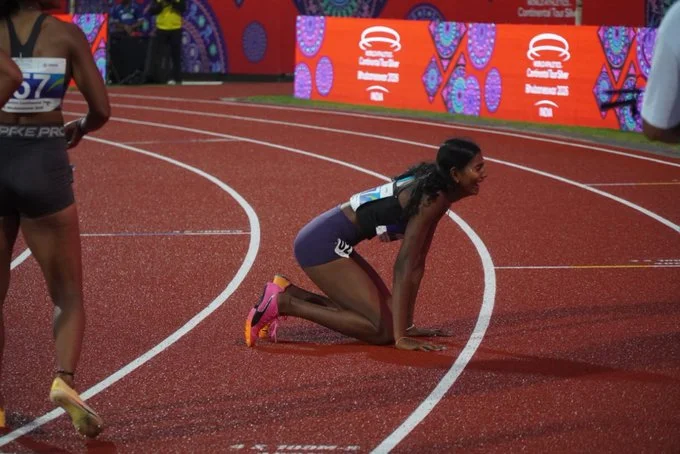
Abinaya Rajarajan produced one of the most emotional performances of the World Athletics Continental Tour Silver meet in Bhubaneswar, reclaiming the Indian U20 women’s 100m national record with a sensational 11.34s.
The 19-year-old sprinter clocked a lifetime best of 11.34s, becoming the fastest Indian U20 woman ever over the distance once again.
But the record was only part of the story.
Abinaya’s performance came after a difficult period in her young career. Having suffered a career-threatening injury, she returned to competition earlier this season with uncertainty surrounding her comeback. Now, just months later, she has produced the biggest performance of her career on one of India’s biggest international athletics stages.
The moment she crossed the finish line, the emotions took over. Abinaya broke down in tears as the significance of what she had achieved sank in — a national record, a personal best and, most importantly, a powerful statement that she was back.
Her 11.34s performance marks a major milestone in Indian women’s sprinting and establishes Abinaya as one of the country’s brightest young sprint talents.
The record also adds another memorable chapter to a remarkable comeback story. After fighting her way back from injury, Abinaya has now returned to the top of the Indian U20 rankings in emphatic fashion.
For a young athlete who had faced the possibility of her career being derailed, reclaiming the national record on home soil made the achievement even more special.
From injury to tears, from uncertainty to a national record — Abinaya Rajarajan is back.
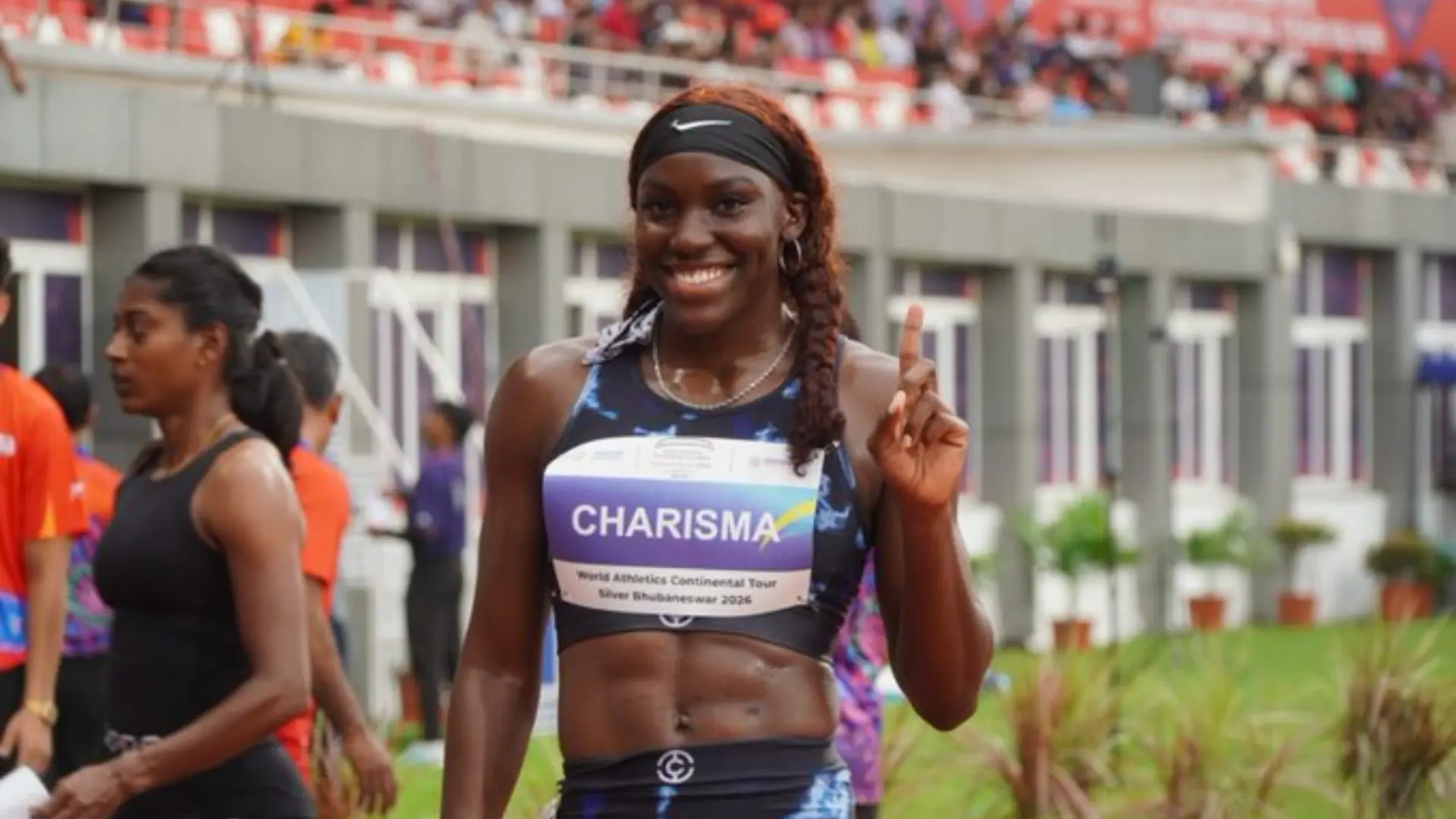
Bahamas’ Charisma Taylor produced the standout performance in the women’s 100m hurdles at the World Athletics Continental Tour Silver meet in Bhubaneswar, storming to victory in 12.96s.
Taylor was the only athlete in the field to break the 13-second barrier, underlining her dominance in the final. Japan’s Yumi Tanaka finished second with 13.04s, while India’s Jyothi Yarraji secured the bronze medal in 13.24s.
Women’s 100m Hurdles — Final
🥇 Charisma Taylor 🇧🇸 — 12.96s
🥈 Yumi Tanaka 🇯🇵 — 13.04s
🥉 Jyothi Yarraji 🇮🇳 — 13.24s
4️⃣ Pragyan Prasanti Sahu 🇮🇳 — 13.43s
5️⃣ C. Anjali 🇮🇳 — 13.44s
6️⃣ Nandhini Kongan 🇮🇳 — 13.63s
7️⃣ Vitoria Alves 🇧🇷 — 13.95s
Taylor’s sub-13 performance was the highlight of the race, as she created a clear gap over the chasing pack to take the title. Tanaka also produced an impressive run, finishing just 0.08 seconds outside Taylor’s winning mark.
Yarraji, meanwhile, continued her strong presence on the international stage by crossing the line in 13.24s to claim third place. The Indian hurdler was followed by compatriots Pragyan Prasanti Sahu and C. Anjali, who finished fourth and fifth respectively.
With four Indian athletes finishing inside the top five, the event also provided valuable international competition for India’s women’s sprint hurdles group on home soil.
The Bhubaneswar meet, India’s first-ever World Athletics Continental Tour Silver-level competition, has brought together a strong international field at Kalinga Stadium, giving Indian athletes an opportunity to compete against established global performers.
South Africa’s Franco Le Roux claimed victory in the men’s 110m hurdles at the World Athletics Continental Tour Silver meet in Bhubaneswar, clocking 13.47s to take the gold medal.
Le Roux produced a strong run to finish ahead of compatriot Antonio Alkana, who secured silver in 13.54s. Brazil’s Eduardo Rodrigues completed the podium with a time of 13.68s.
Men’s 110m Hurdles — Final
🥇 Franco Le Roux 🇿🇦 — 13.47s
🥈 Antonio Alkana 🇿🇦 — 13.54s
🥉 Eduardo Rodrigues 🇧🇷 — 13.68s
4️⃣ M. Krishik 🇮🇳 — 13.77s
India’s M. Krishik, the country’s second-fastest 110m hurdler of all time, finished fourth in 13.77s. Despite missing out on the podium, Krishik was the leading Indian finisher in a competitive international field.
The result underlined the international quality of the first-ever World Athletics Continental Tour Silver-level meet in India, with athletes from multiple countries competing at Kalinga Stadium.
For Le Roux, the 13.47s performance was enough to secure a convincing victory, while Alkana’s 13.54s gave South Africa a one-two finish in the event.
With the Bhubaneswar meet bringing together established international athletes and some of India’s leading performers, the competition provided a valuable opportunity for Indian athletes to test themselves against world-class opposition on home soil.
For Krishik, the fourth-place finish adds another international experience to his season as he continues to establish himself among India’s leading sprint hurdlers.
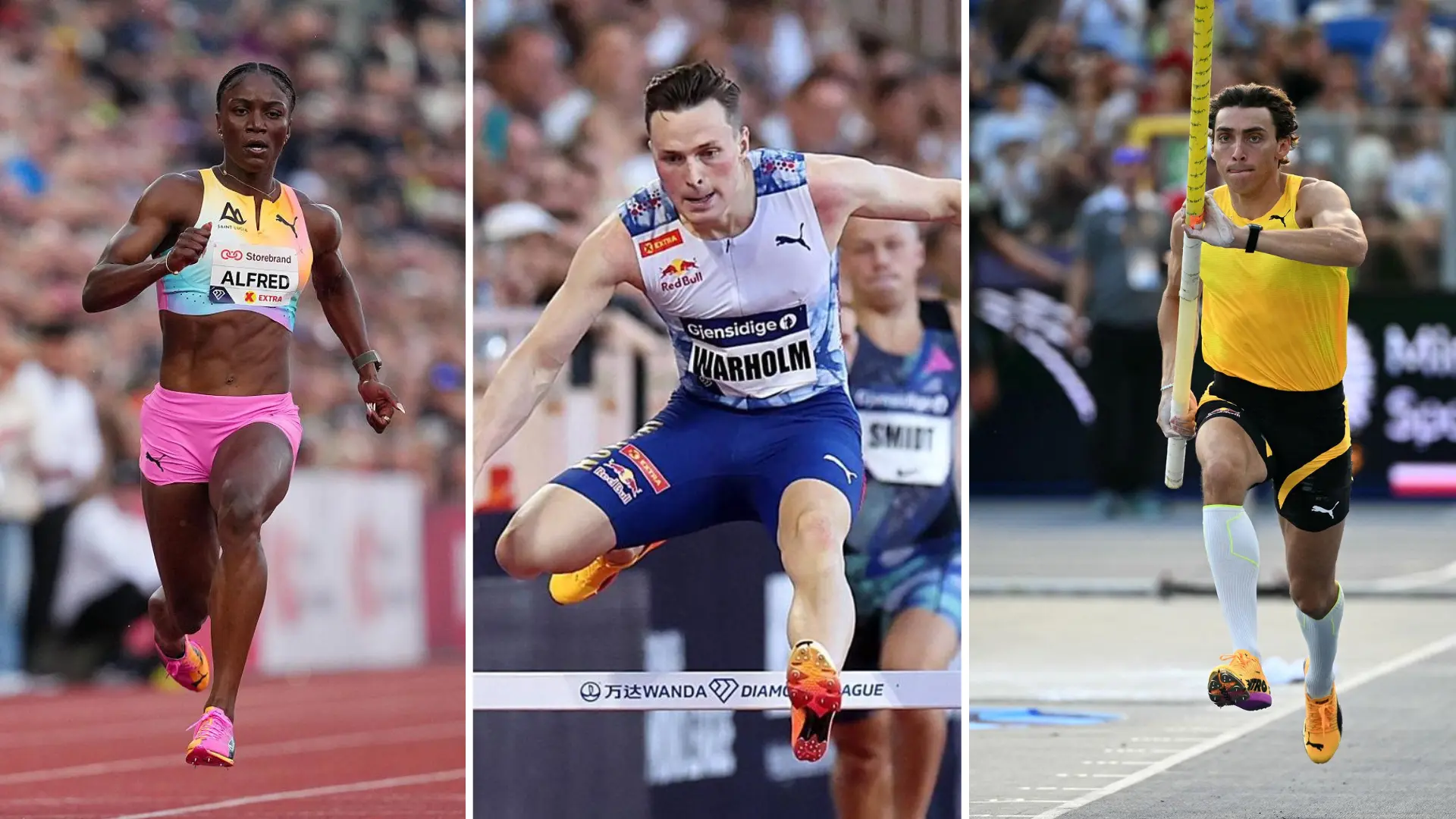
The Wanda Diamond League is gearing up for an electric afternoon of athletics on Sunday, August 23, at the Kamila Skolimowska Memorial in the Silesian Stadium, where a star-studded lineup of Olympic champions, world titleholders, and world record-holders will battle for supremacy and vital qualification spots for the Diamond League Final in Brussels and the inaugural Ultimate Championship.
Anticipation has reached a fever pitch as athletes from across the globe descend upon Poland for what promises to be one of the most memorable track and field meetings of the season.
The marquee event on the track features a thrilling sprint rematch in the women’s 100 meters, where Saint Lucia’s undefeated Olympic champion Julien Alfred squares off against the United States’ treble world champion Melissa Jefferson-Wooden. This marks their first clash over the distance since last year’s world final.
Jefferson-Wooden secured victory in Silesia last year by equalling the meeting record of 10.66 seconds, and while she has only suffered a single defeat this season, falling to Alfred in the 200 meters in Rome, she will have to contend with a formidable field that includes 2023 world champion Sha’Carri Richardson, two-time world 200m champion Shericka Jackson, world silver medallist Tina Clayton, last year’s runner-up Tia Clayton, and home favourite Ewa Swoboda.
In the men’s 100 meters, Jamaica’s world champion Oblique Seville goes hunting for his second Diamond League win of the season, facing stiff competition from Nigeria’s Kayinsola Ajayi, who previously defeated him in London and Eugene, alongside in-form contenders like Emmanuel Eseme, Akani Simbine, Jordan Anthony, and Kenny Bednarek.
The middle-distance events are equally loaded with star power, most notably highlighted by the return of Norway’s two-time Olympic champion Jakob Ingebrigtsen. Returning to Diamond League competition for the first time in nearly two years following an injury, Ingebrigtsen heads back to the exact Silesian track where he shattered the 3000m world record in 2024. This time, he contests the 1500m, fresh off his European 5000m title win in Birmingham, and will face elite rivals including Olympic champion Cole Hocker, world champion Isaac Nader, and 2022 world champion Jake Wightman. In the women’s 1500m, world silver medallist Dorcus Ewoi locks horns with world leader Birke Haylom, Olympic silver medallist Jess Hull, and Olympic 800m silver medallist Tsige Duguma.
Meanwhile, the women’s 5000m showcases a fierce rivalry between world leader Likina Amebaw and her Ethiopian compatriot Medina Eisa, alongside double world medallist Nadia Battocletti. The steeplechase features the indomitable Soufiane El Bakkali, who aims to extend his season win streak to four consecutive Diamond League victories against world bronze medallist Edmund Serem.
Hurdles enthusiasts are treated to a masterclass of technique and speed as Norway’s world record-holder Karsten Warholm locks horns with Brazil’s world leader and 2022 world champion Alison dos Santos in the 400m hurdles. Dos Santos currently holds the world lead at 46.48 seconds and has defeated Warholm in their three previous clashes this season, though Warholm struck back with a win in London in 46.61.
In the flat 400m, Olympic and world 400m hurdles champion Rai Benjamin steps down to face world champion Collen Kebinatshipi, who is riding high after setting Diamond League records in Paris and Monaco, clocking 43.44 in the latter. Over in the 110m hurdles, Ja’Kobe Tharp, who famously lowered the world record to 12.75 in Eugene, headlines a stellar field that includes world champion Cordell Tinch, Jamal Britt, and Trey Cunningham, while the women’s 100m hurdles brings together Pia Skrzyszowska, Alaysha Johnson, Danielle Williams, and Megan Simmonds. The women’s 400m is anchored by unbeaten Olympic champion Marileidy Paulino, who faces home star Natalia Bukowiecka following a brilliant season that included a Diamond League record and personal best of 48.48 in Paris.
Field events are set to deliver equal amounts of drama, starting with the pole vault where Swedish superstar Mondo Duplantis aims high following an epic battle in Lausanne against Emmanouil Karalis, returning to the very venue where he set his tenth world record of 6.26 meters in 2024.
The high jump showcases a legendary duel between Ukraine’s world record-holder and Olympic champion Yaroslava Mahuchikh and Australia’s world champion Nicola Olyslagers, supported by a world-class entry list featuring Eleanor Patterson, Angelina Topić, and Yuliia Levchenko, with an eve-of-meeting clash adding excitement through the men’s high jump featuring Gianmarco Tamberi, Mutaz Barshim, and Sanghyeok Woo. The discus circle boasts a clash of titans as Mykolas Alekna takes on world leader Matthew Denny, alongside global gold medallists Kristjan Čeh, Daniel Ståhl, and Rojé Stona. In the triple jump, Olympic champion Thea LaFond takes on world champion Leyanis Pérez Hernández and Davisleydi Velazco in a battle of athletes who have all soared past the 15-meter mark this year.
Additional non-Diamond League events feature world-leading shot putters and hammer throwers, including Leonardo Fabbri, Tom Walsh, Joe Kovacs, Camryn Rogers, DeAnna Price, Bence Halász, and Ethan Katzberg, ensuring every inch of the Silesian Stadium is alive with athletic excellence.
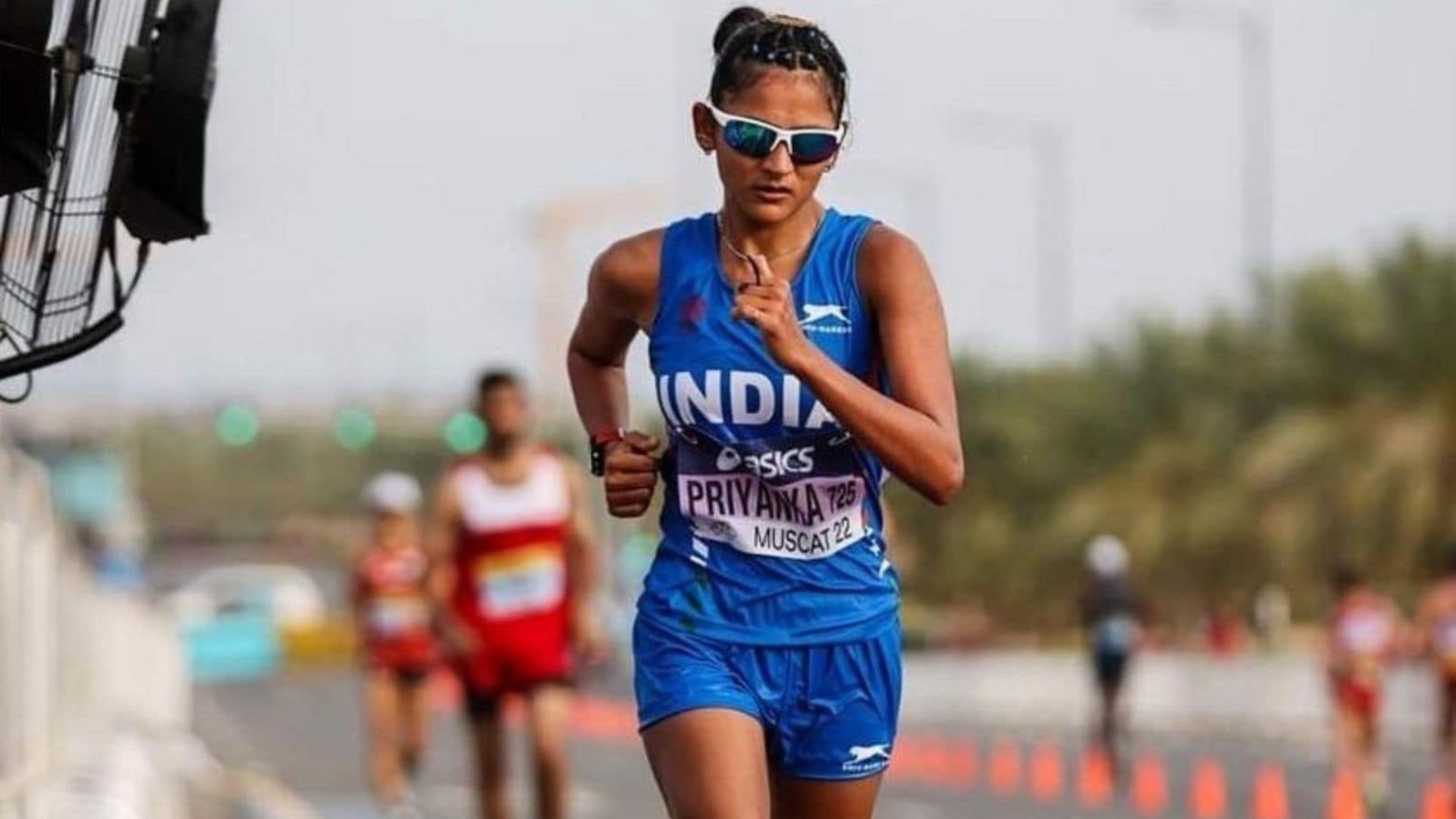
For elite athlete Priyanka, a cupboard full of shimmering medals – including a historic Commonwealth Games silver – is not merely a collection of trophies. It is the physical manifestation of a lifetime carved out of grit, sweat, and relentless perseverance. When the news of her selection for the prestigious Arjuna Award reached her, it triggered a wave of emotion. Sitting down for an exclusive interview, Priyanka reflected on what the honour truly represents.
“This is not an award for me,” she shared, her voice carrying the weight of past hardships. “This is the whole journey of my life in sports, in which I have seen ups and downs. I have struggled a lot in my life. So, I remember all that in a moment, that finally my perseverance has paid off, and I have got the award for that hard work today.”
Her ascent to national prominence is a testament to the famous line – It takes a village to raise a champion. While she acknowledges the invaluable foundation laid by her parents and family, she also points to the pivotal turning point of 2020. That was the year she began a specialized training regimen that culminated in 2021 when she shattered the national record and qualified for the Olympics with a stellar time of 1 hour 28 minutes and 5 seconds. Ask her how she plans to organize her accolades – placing her Commonwealth silver alongside state honours like the Rani Lakshmi Bhai Award – and she insists the CWG medal itself will always sit proudly at the very top, for it was the catalyst that changed her life forever.
Priyanka’s story, however, did not begin on an international track. It started locally in Meerut; a city steeped in a rich sports culture. In her early days, she competed in a modest 3-kilometer race, entirely unaware of what senior-level distances like 20 kilometres or marathons entailed. Her prize for that district-level race? A simple travelling bag. Today, she still keeps that first souvenir at home, a humble reminder of where it all started, long before she transitioned permanently into race walking and secured a Youth National silver medal just five months later.
Yet, stepping into elite international fields brought entirely new challenges. Training under legendary Olympic medallist Ronald Weigel transformed her technical approach, guiding her to strong finishes at World Championships in Tokyo and Brazil. Weigel also taught her a crucial mental skill: blocking out the volatile noise of social media and public criticism.
“In our country, it happens a lot. Athletes are promoted and eliminated very quickly,” Priyanka noted, drawing on observations from international peers like World Champion, Olympic medallist and Commonwealth gold medallist Evan Dunfee, who also experienced the ebbs and flows of athletic performance. Under Weigel’s guidance, she learned to look past the media cycles, manage pre-event pressure, and stay anchored entirely to her training.
That mental fortitude has been tested in gruelling conditions, from the extreme humidity and heat of Tokyo, where simply crossing the finish line felt like an act of survival amid a sea of struggling competitors, to her transition toward the demanding Marathon Race Walking circuit. Logging staggering off-season training loads of up to 180 kilometres per week, Priyanka is now setting her sights on future continental and global multi-sport games, preparing her body and mind to endure the punishing demands of long-distance pacing.
Reflecting on the broader landscape of Indian sports, Priyanka is candid about the structural hurdles. She believes strongly that youth athletics should be prioritized much earlier in schools, pointing out that foreign competitors often begin training a decade earlier than many Indian athletes. While government initiatives like Khelo India and district-level improvements under leaders like the Chief Minister of Uttar Pradesh are steadily transforming the ecosystem by offering better infrastructure, nutrition support, and job opportunities, she believes personal resilience remains the ultimate differentiator.
For the next generation looking at her journey, Priyanka offers a grounded, honest perspective. Race walking is not for the faint hearted; it demands immense physical and mental suffering. She does not sugarcoat the struggle, choosing instead to welcome those genuinely inspired by her path to step forward, lace up their shoes, and commit to the grind.
As she looks ahead to the podiums of upcoming international championships, Priyanka remains delightfully hungry for more. The medals may pile up, but for the girl who started with a simple district prize bag, the heartbeat of her journey remains unchanged: one step, one kilometre, and one relentless stride at a time.
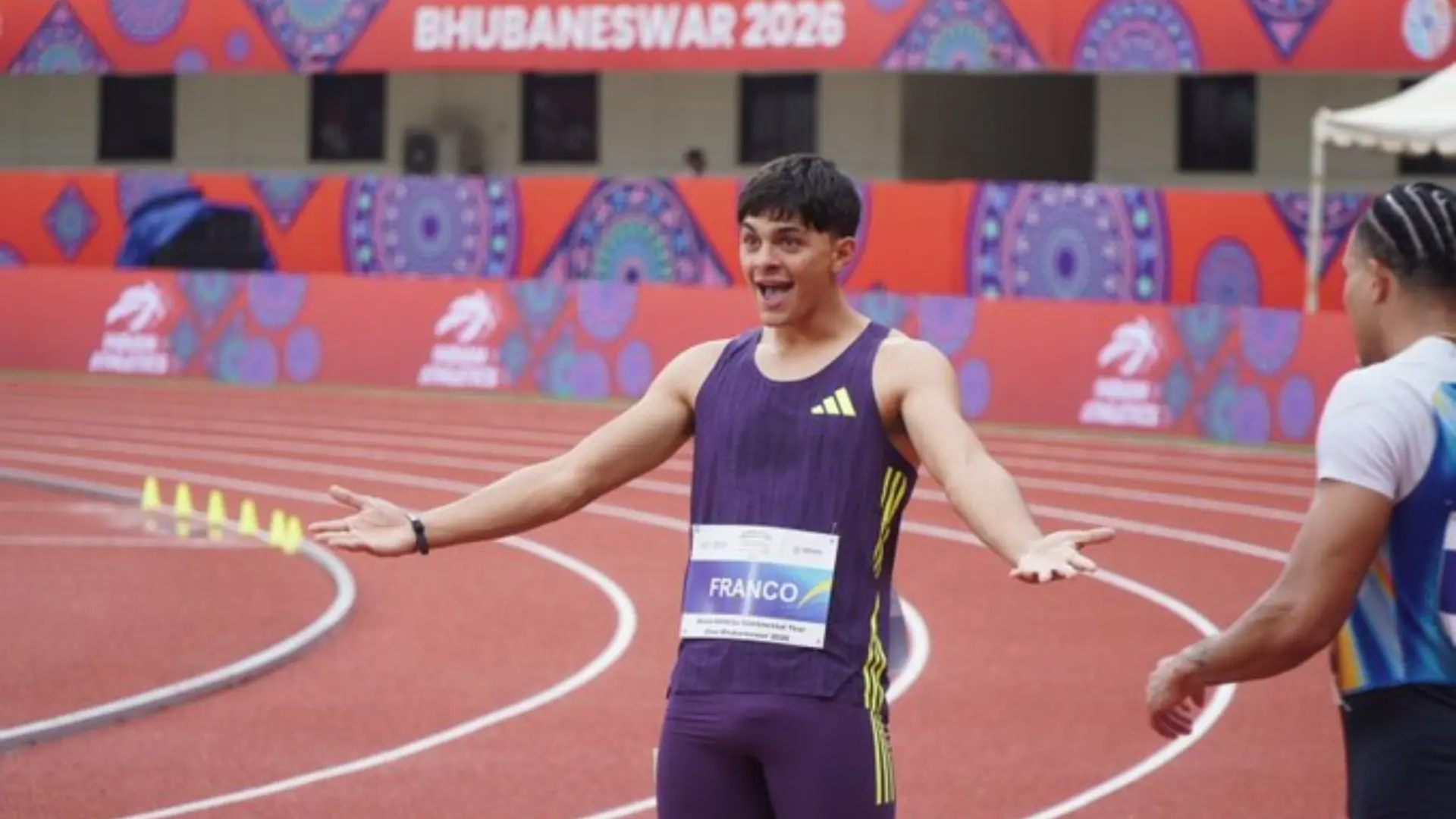
India’s first-ever World Athletics Continental Tour Silver-level meet in Bhubaneswar is shaping up to be a major international athletics spectacle, with several Commonwealth, Asian and World U20 medallists set to compete at Kalinga Stadium.
The meet will feature a strong mix of international stars and India’s leading athletes, providing a high-quality competition ahead of the upcoming Asian Games.
Diana Wanza to Lead Women’s 5000m Field
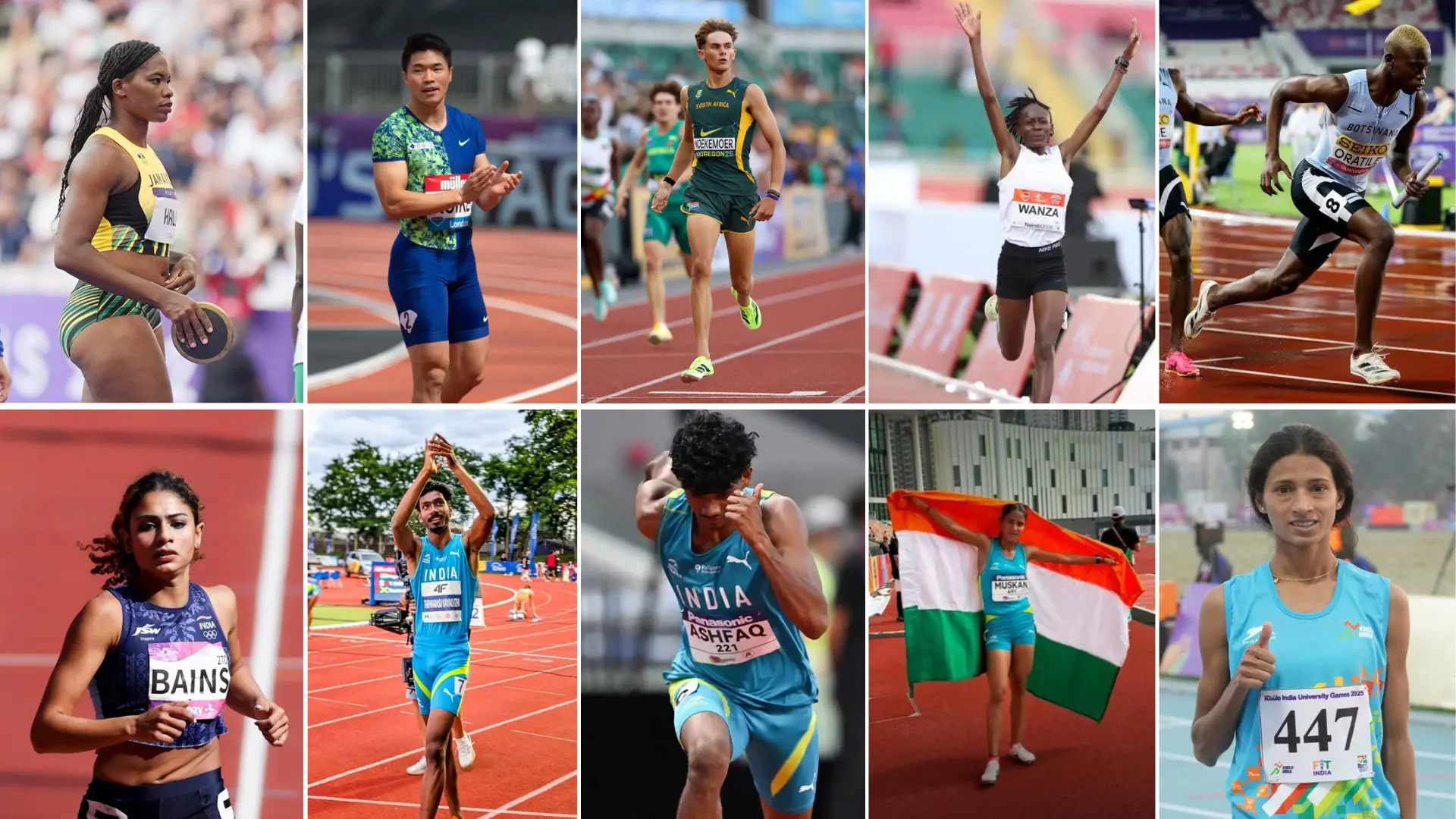
Kenya’s Diana Wanza, the 2026 Commonwealth Games silver medallist in the women’s 10,000m, will step down in distance to compete in the women’s 5000m in Bhubaneswar.
She will face a strong Indian field featuring:
- 🇮🇳 Harmilan Bains – Double Asian Games medallist
- 🇮🇳 Ravina Gaikwad – 2025 Inter-State champion
- 🇮🇳 Muskan – U20 Asian champion
Several other leading Indian distance runners are also expected to line up, setting the stage for a competitive women’s 5000m.
Three Sub-45 Runners Set for Men’s 400m
South Africa’s Leendert Koekemoer, the World U20 400m bronze medallist, will compete in Bhubaneswar.
Koekemoer produced a sub-45-second performance at the World U20 Championships, clocking 44.96s, to secure the bronze medal.
He will face India’s Vishal TK, the senior national record holder with 44.98s, and Mohammed Ashfaq, the U20 national record holder and World U20 finalist with 45.81s.
Botswana’s Justice Oratile, who has a best of 44.61s, will also compete.
With three athletes in the field having broken the 45-second barrier, the men’s 400m could be one of the most exciting events of the meet.
Asian Games Champion Yuki Koike to Race in Bhubaneswar
Japan’s Yuki Koike, the 2018 Asian Games 200m champion, will add further star power to the men’s sprint events.
Koike is a sub-10-second sprinter with a lifetime best of 9.98s and a season’s best of 10.06s.
He will face India’s leading sprinters, including:
- 🇮🇳 Gurindervir Singh – 10.09s
- 🇮🇳 Animesh Kujur – 10.14s
- 🇮🇳 Mohd. Azeem Fahimi – 10.09s this season
The presence of multiple 10-second performers promises a highly competitive men’s 100m.
Commonwealth Champion Samantha Hall Set for Women’s Discus
Jamaica’s Samantha Hall, the reigning Commonwealth Games women’s discus throw champion, will also compete in Bhubaneswar.
Hall boasts a lifetime best of 66.39m and won Commonwealth Games gold last month with a throw of 61.66m.
She will face India’s Seema, who recently won the bronze medal at the Commonwealth Games 2026.
The clash will give Seema an opportunity to test herself against the reigning Commonwealth champion on home soil.
A Major International Meet for Indian Athletics
With athletes such as Diana Wanza, Leendert Koekemoer, Yuki Koike and Samantha Hall joining India’s leading performers, the Bhubaneswar meet is developing into one of the most significant events on India’s 2026 athletics calendar.
The competition will not only give Indian athletes a chance to compete against international opposition but will also provide a major platform for fans in the country to watch world-class athletics at Kalinga Stadium.