
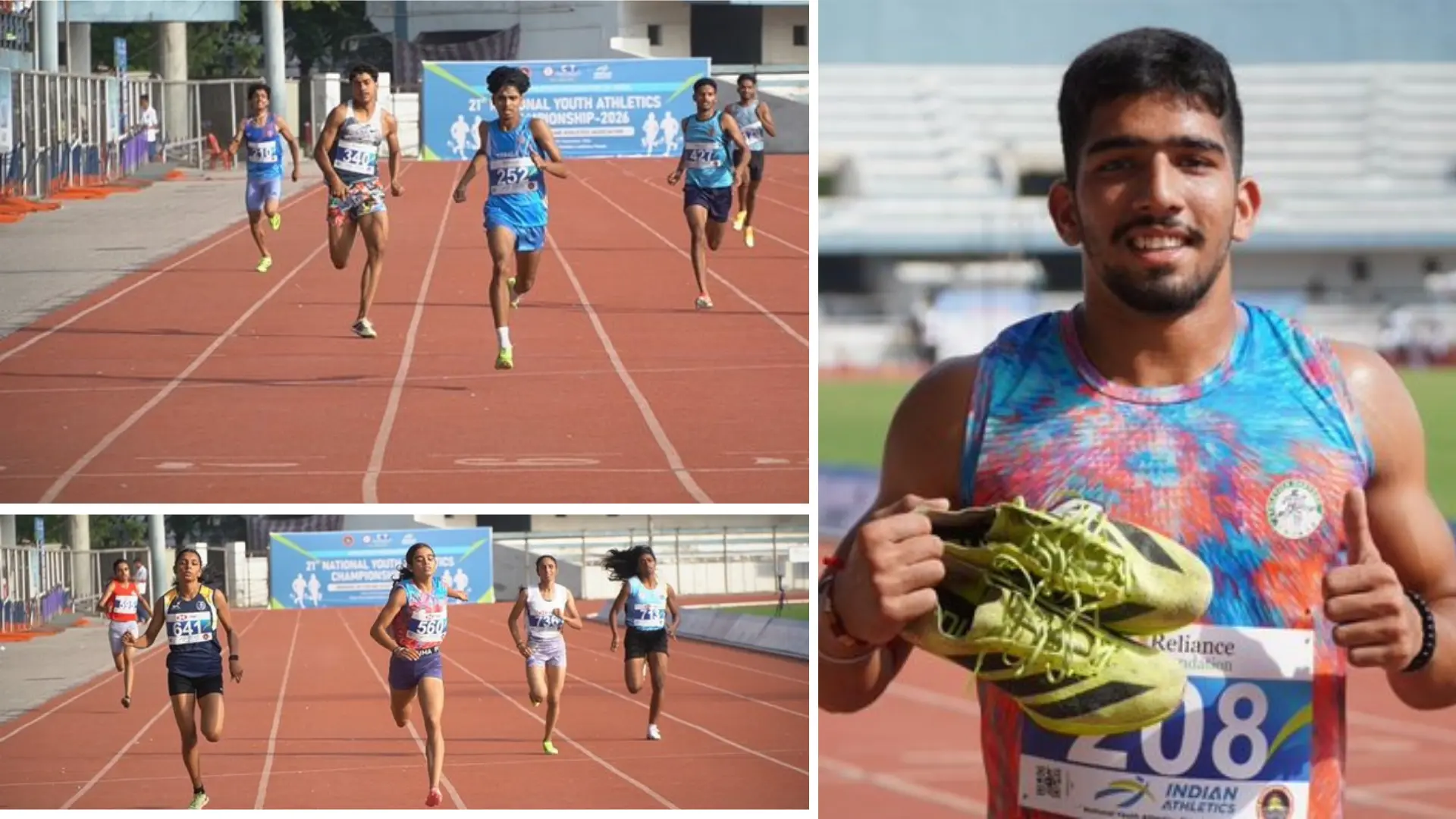
Guru Nanak Stadium in Ludhiana, Punjab, will host the 21st National Youth Athletics Championships 2026, a three-day competition that will also serve as the upcoming Youth Olympics 2026.
Around 650 athletes will participate across 36 events, with 18 events each for men and women.
Although the Athletics Federation of India has not announced any qualification standards, the federation may select the top 2 athletes from each event based on the best results.
A Stepping Stone for Indian Athletics
The 21st National Youth Athletics Championships 2026 will be a stepping stone for Indian athletics, providing an opportunity to see the new stars who could feature more often in the future.
Among the events, the 100m and 200m have received the most entries across both categories.
One of the events that stands out is the women’s javelin throw, which has received around 30 entries. The strong participation looks promising when considering the future of Indian athletics.
Complete Event-Wise Bib List
The complete event-wise bib list for the 21st National Youth Athletics Championships 2026 is available below.

By Sushant Singh
The final leg of the Indian Series before the Indian Series Final is scheduled to take place on 2 September at the newly built Kailash Prakash Sports Stadium, Meerut, Uttar Pradesh.
The meet will be the first national-level tournament at Meerut’s first synthetic track. The city is known to have produced the most medals in athletics at the Asian level.
The Indian Series-15 has received a bumper entry, with the single-day meet featuring 24 events — 12 for men and 12 for women — and more than 600 entries.
The Men’s 100m has received the biggest entry, with around 70 athletes, followed by the Men’s 1,500m with around 65 athletes and the Men’s 400m with around 63 athletes. Together, these three events account for a significant portion of the total entries.
Athletes to Look Out For
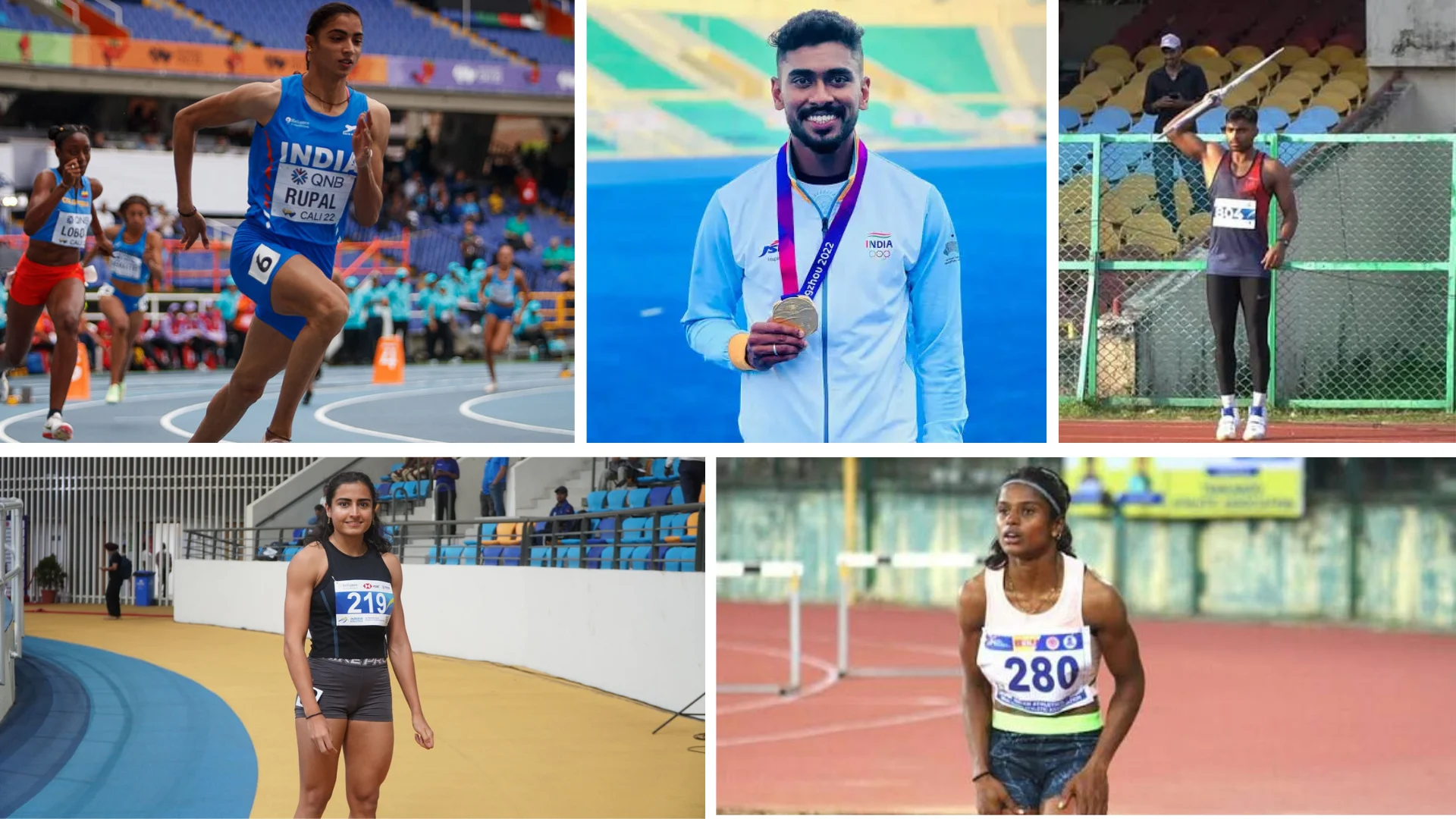
1. Rupal Chaudhary
Asian Athletics 2025 400m silver medallist Rupal Chaudhary will finally begin her 2026 season at Indian Series-15 on 2 September in Meerut, Uttar Pradesh.
The 22-year-old has been out of competition since 2025 due to injury and is now set to make her long-awaited comeback.
Rupal has been training at the NCOE Trivandrum.
Sources in AFI indicate that her performance in Meerut could determine whether she gets an opportunity to compete at the Indian Series Final.
Her timings in both competitions could also put her in contention for a place in India’s women’s 4×400m relay squad for the Asian Games 2026.
2. Mijo Chacko Kurian
The 2023 Budapest World Championships relay team member will also compete in both the 200m and 400m, representing the Indian Air Force.
Chacko has clocked a season-best time of 46.15s this season, which is close to his PB of 46.10s. His SB places him 9th on the current 2026 Men’s 400m list.
The Men’s 4×400m relay team has yet to be announced officially. He will be looking to make the Top 6 this season, although he will likely need to clock a sub-46-second performance to achieve that.
3. Rishabh Nehra
The 80m javelin thrower will also be competing at this meet.
Nehra, who has been struggling with his form this season, has only managed 65.67m and has competed in just one competition.
Last season at the Open Nationals, he clinched the gold medal with a massive PB of 80.12m, joining the elite 80m club. But since then, he has failed to breach the 80m mark.
Nehra, who hails from Uttar Pradesh, will be looking to regain some of his form in his home state.
4. Harita Bhadra
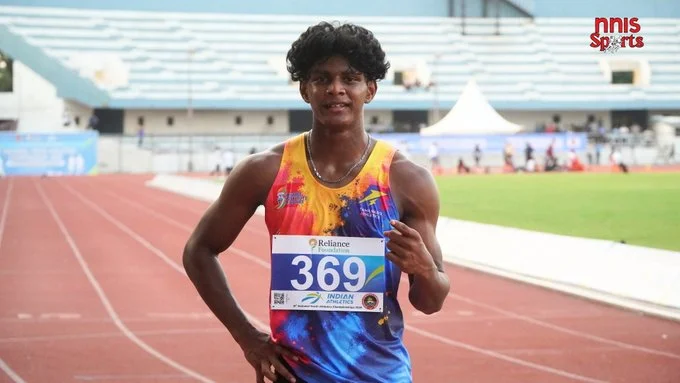
The Reliance sprinter breached the 200m Asian Games standard at the Interstate Championships, registering a huge lifetime best of 23.14s in the women’s 200m.
She will be competing in the 100m at this event.
This season, she has already clocked PBs in both the 100m and 200m. It has been a very interesting season for the 23-year-old.
5. Aishwarya B
Returning after her doping ban, Aishwarya will be competing in the women’s triple jump at this meet.
This will be her third competition since her return. She made her comeback at Indian Series-13, registering a 5.63m mark to finish sixth.
In her last competition, she breached the 6m mark, registering a 6.01m jump to finish third.
By Sushant Singh
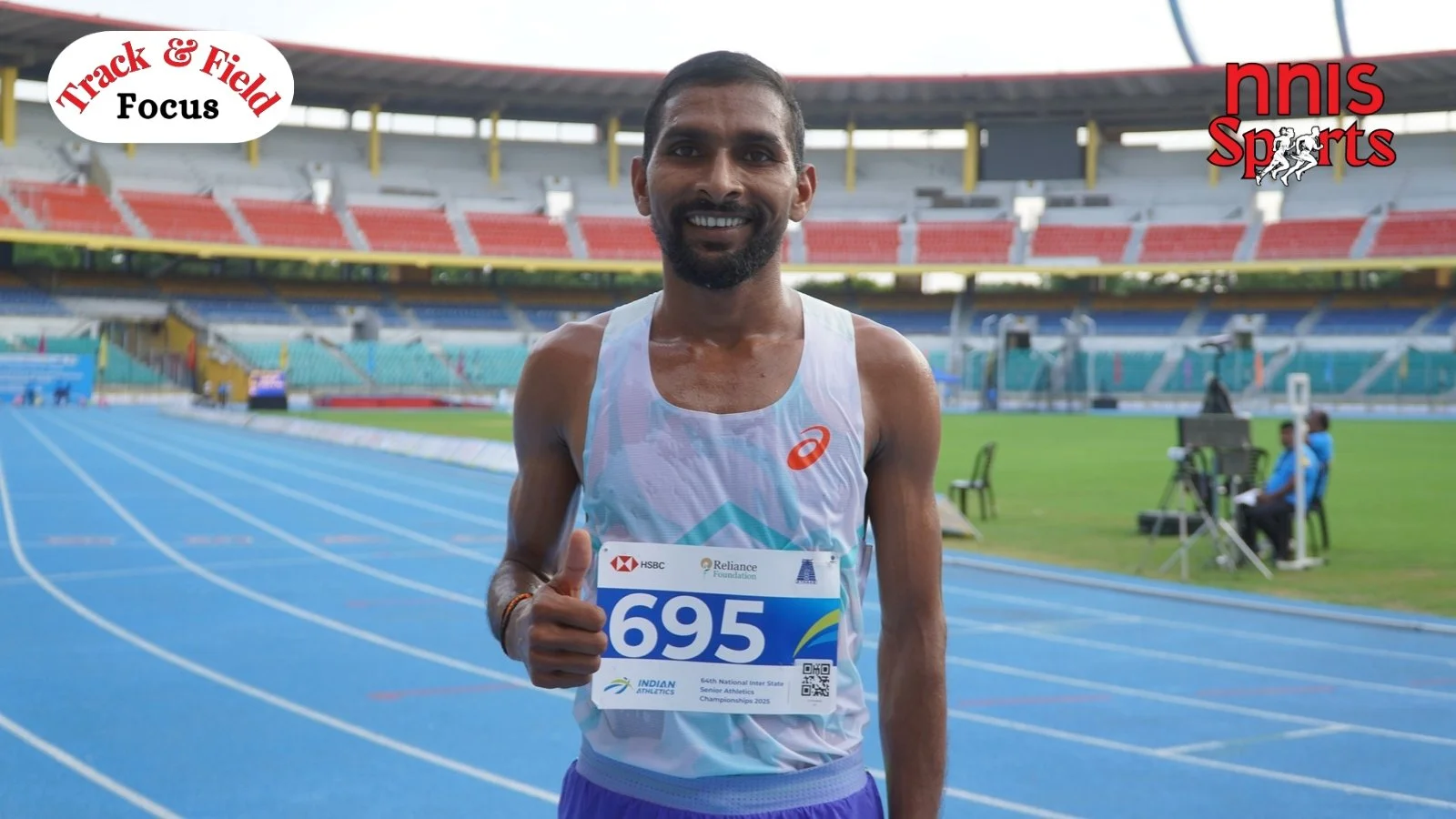
NNIS Sports yesterday broke the news that Abhishek Pal, an Asian Games-bound athlete, has tested positive for a banned substance.
Pal recently won two medals at the Inter-State Championships, which also served as an Asian Games qualification event, taking GOLD in the 10,000m and SILVER in the 5,000m.
The development is particularly significant because Pal was expected to represent India in both the 5,000m and 10,000m at the upcoming Asian Games 2026.
However, the details that have emerged regarding the case make it an interesting one. According to an article in The Tribune by Vinayak Padmadeo, Pal received an Adverse Analytical Finding (AAF) from NADA after his sample showed the presence of clomiphene.
What Is Clomiphene?
Clomiphene is a female fertility drug used to induce ovulation in women who are not ovulating and want to become pregnant.
It is also sometimes prescribed off-label for male infertility or low testosterone, as it can stimulate the body’s own LH/FSH production rather than directly replacing testosterone.
The same substance also featured in the case of V. K. Vismaya, who was part of the 2018 Asian Games gold medal-winning 4x400m relay squad and tested positive for the same substance.
She later revealed that she was three months pregnant and had been using the drug, but had failed to mention it in her Therapeutic Use Exemption (TUE) application.
NADA provisionally suspended her in 2024. She later challenged the TUE issue in the Kerala High Court, arguing that the circumstances surrounding her fertility treatment should be taken into account.
Then, in April 2026, the NADA Anti-Doping Disciplinary Panel imposed a two-year ban on her.
Why Is Clomiphene Prohibited in Sport?
However, the drug used for fertility treatment in women has other potential effects in men, particularly in relation to sports performance.
Clomiphene is prohibited by the World Anti-Doping Agency (WADA) under the category of hormone and metabolic modulators. Athletes subject to anti-doping rules can therefore test positive for it.
Clomiphene is a selective estrogen receptor modulator (SERM). In simple terms, it interferes with estrogen’s feedback signal to the brain.
This alters hormonal signalling. In men, it can increase LH and FSH levels and stimulate endogenous testosterone production.
WADA places clomiphene under S4.2 — Anti-estrogenic substances, within the Hormone and Metabolic Modulators category. It is prohibited both in competition and out of competition.
What Happens Next for Abhishek Pal?
Pal has already sent his reply to NADA after it was alleged that the sample showed a concentration lower than two nanograms per millilitre (2 ng/mL), the minimum reporting level set by WADA.
If a sample shows the presence of a substance below the minimum reporting level, the agency has to investigate and determine whether it was a case of deliberate doping or was unintentional.
According to news reports, NADA investigated the finding before issuing the AAF.
The 2023 Asian Athletics Championships bronze medallist has also asked for an early hearing from the National Anti-Doping Agency (NADA), as he is an Asian Games-bound athlete and was expected to represent India in both the 5,000m and 10,000m.
But with less than 15 days left until the Asian Games, his participation in the Asian Games appears to be under a cloud.
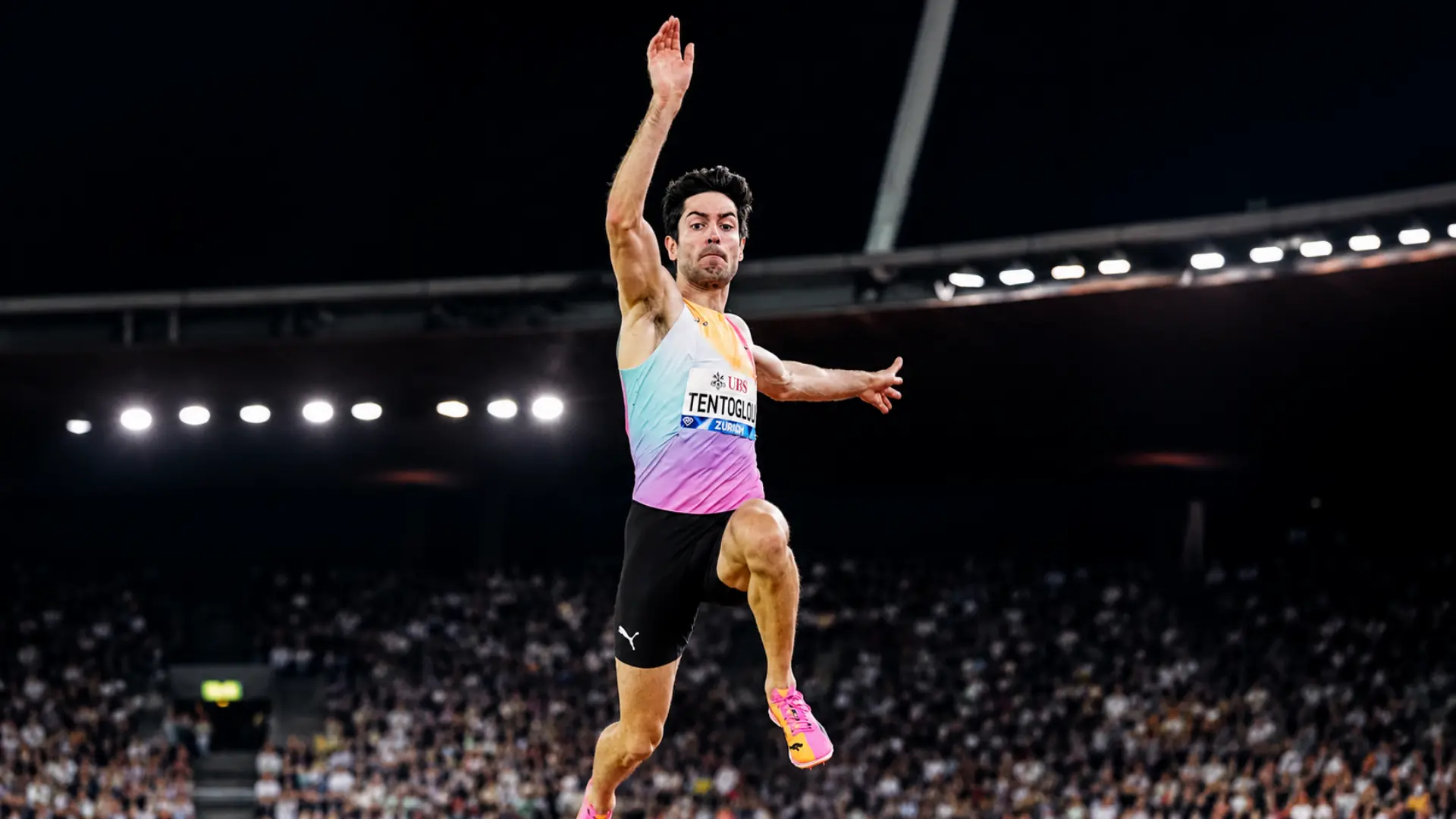
When Miltiadis Tentoglou stepped onto the runway at the Weltklasse meeting in Zurich and secured yet another high-profile victory with a commanding 8.45m leap, it felt like business as usual. In a discipline as volatile and mechanically punishing as the long jump, consistency is the rarest commodity in athletics. Boards are millimetres wide, runway conditions shift with the wind, and take-off angles demand millimetre-perfect precision. Most elite jumpers experience wild fluctuations – soaring past 8.40m one week only to foul out or dip into the sevens the next. Yet, standing entirely apart from the statistical chaos of his peers is the Greek phenomenon.
Tentoglou has redefined what reliability means in track and field, operating less like a mortal athlete and more like a Swiss atomic clock. To watch him compete year after year, meet after meet, is to witness the absolute zenith of competitive stability. He simply does not falter.
A glance across his historical progression reveals a staggeringly unbroken chain of excellence. Ever since he burst into the international consciousness by clearing 8.19m in Kalamata back in 2016, Tentoglou has anchored his career to the mythical 8-meter barrier as if it were a baseline rather than a milestone.
Every single year without fail, his seasonal best has scaled jaw-dropping heights: 8.30m in 2017, 8.25m in 2018, 8.38m indoors in 2019, 8.60m in 2021, 8.65m in 2024, and a blistering 8.66m national record in Volos in 2026. For a decade, an off-day for Tentoglou has meant jumping 8.20m – a mark that would win gold at most international competitions.
This metronomic brilliance reached a fever pitch during his monumental 2026 campaign. Examining his sequence of competitions from that single year alone shows a supreme athlete who has understood what elite athletic preservation and peak-performance scheduling is. Across a gruelling winter indoor circuit and a jam-packed summer outdoor calendar, Tentoglou didn’t just clear 8 meters; he treated the barrier as an absolute floor.
In January 2026, he opened with 8.25m in Paiania, followed up with 8.27m in Belgrade, 8.14m at the Balkan Indoors, 8.22m at the Greek Indoor Championships, and 8.19m at the World Indoor Championships in Toruń.
Transitioning outdoors, the relentless excellence only accelerated. He opened his summer campaign with 8.21m in Argostoli, soared 8.46m in Xiamen, leaped 8.49m in Limassol, and hit 8.24m at the Golden Gala in Rome. June and July brought an unstoppable wave of elite performances: 8.54m in Vari, 8.36m at the Balkan Championships, 8.39m on the streets of Piraeus, a massive 8.61m in Monaco, 8.31m in Budapest, and his crowning 8.66m national record at the Greek Championships in Volos.
Even deep into the late-summer championship grind, when fatigue usually fractures technique, Tentoglou churned out European Championship gold with 8.44m in Birmingham, bounced back with 8.17m and 8.24m in Lausanne, and capped it off with that 8.45m victory at Weltklasse Zurich. Every single legal series paints the portrait of an athlete who physically and mentally lacks the capacity to buckle under pressure.
This peerless reliability naturally translates into an exhaustive, roll of honour that makes him one of the greatest field event competitors in track and field history. Tentoglou is a two-time Olympic champion (Tokyo 2020, Paris 2024), a World Outdoor Champion (Budapest 2023), a two-time World Indoor Champion (Belgrade 2022, Glasgow 2024), a four-time European Outdoor Champion (2018, 2022, 2024, 2026), a three-time European Indoor Champion, a European Games gold medallist, and a Diamond League Final champion.
So, is he the most consistent long jumper in history? Looking at the historical archives, the argument for Tentoglou is virtually bulletproof. While legends like Carl Lewis and Mike Powell achieved higher absolute peaks with world records that have stood for decades, their careers occasionally featured bouts of tactical selectivity or episodic variance in standard meetings. Tentoglou, by contrast, competes with staggering frequency and treats every single appearance, whether a minor European Permit meet or an Olympic final, with the exact same ruthless, mechanical execution. His ability to consistently sail past 8.20m, 8.30m, and 8.50m on demand, year after year, without suffering major troughs in form or lengthy slumps, places him in a tier entirely of his own.
Miltiadis Tentoglou has turned athletic excellence into a routine. He doesn’t just win medals; he manufactures them with a calm, smiling inevitability that leaves competitors demoralized before they even step onto the runway. As long as he is in the pit, the rest of the field isn’t just fighting for gold, they are fighting against a standard of consistency that may never be matched again.
Men’s Long Jump Final Results
- 1. Miltiadis Tentoglou (GRE) – 8.45
- 2. Tajay Gayle (JAM) – 8.43 SB
- 3. Wayne Pinnock (JAM) – 8.33
- 4. Jorge A. Hodelín (CUB) – 8.32
- 5. Bozhidar Sarâboyukov (BUL) – 8.16
- 6. Simon Ehammer (SUI) – 8.14
- 7. Luka Bošković (SRB) – 8.09
- 8. Lester Lescay (ESP) – 7.85
- 9. Francesco Ettore Inzoli (ITA) – 7.81
- 10. Erwan Konaté (FRA) – 7.79
Track and field has witnessed its fair share of magical nights, but few will ever rival the sheer, unadulterated brilliance of the Weltklasse meeting in Zurich. With the Wanda Diamond League Final in Brussels just one week away and the World Athletics Ultimate Championship looming on the horizon, the world’s elite arrived at Letzigrund Stadium looking sharp. What unfolded instead was an explosion of speed, power, and history, an evening of athletics that left the entire sport utterly breathless.
From the opening gun to the final leap, records tumbled with astonishing regularity. Yet, amidst a night featuring multiple global marks and world-leading performances, a few monumental achievements stood out, transforming a standard regular-season finale into a meeting of stars.
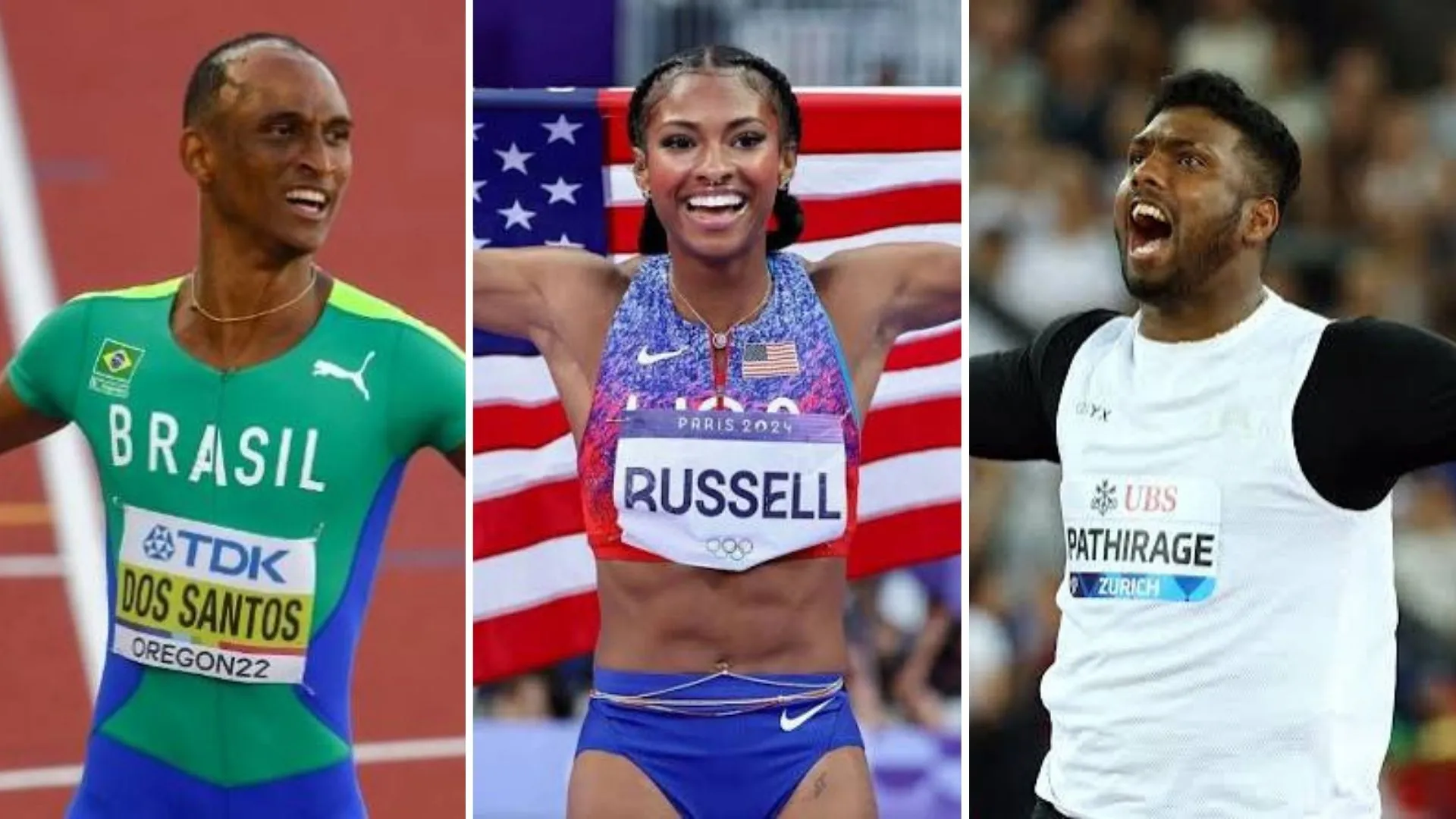
Alison dos Santos ignited the record-breaking fever with a run for the ages in the men’s 400m hurdles. Facing off against his great rival, multi-global champion Karsten Warholm, the 2022 world champion knew he had to do something extraordinary. By the halfway mark, Dos Santos had brilliantly made up the stagger on the Norwegian star, before launching into a relentless display of acceleration and sheer willpower.
The Brazilian charge carried him through the finish line in a mind-blowing 45.80 seconds. In doing so, Dos Santos shaved 0.14 seconds off the world record that Warholm had famously set at the Tokyo Olympic Games in 2021. Warholm himself crossed in a distant yet elite second at 46.69, but this belonged entirely to Dos Santos, a career-defining run that sent shockwaves across the globe.
“I have no words to explain what happened other than: I just broke the world record,” Dos Santos reflected, overwhelmed with emotion. “We changed a lot in training and racing for this. I’m starting faster, I’m finishing stronger, and that is what I had to do.”
If the crowd had barely caught its breath from the hurdles, the field events were about to deliver another layer of awe, highlighted by a stunning statement in the men’s shot put. Jordan Geist produced the performance of his life in the circle, unleashing a massive personal best of 22.53m. The monumental heave was more than enough to capture gold in a fiercely contested field, holding off Rajindra Campbell, who reached an impressive 22.22m. Geist’s explosive power underscored the sheer depth of excellence on display across every discipline in Zurich.
The technical brilliance didn’t stop in the throwing ring. Sri Lanka’s world leader Rumesh Tharanga Pathirage delivered a jaw-dropping throw in the men’s javelin, inching agonizingly close to a 30-year-old meeting record. After two-time world champion Anderson Peters initially led with 86.93m, Pathirage seized control in round two with an 88.23m throw and steadily built momentum. In the final round, the Sri Lankan star uncorked a massive, majestic launch of 92.07m. It was a statement throw of the highest order, cementing his status as the premier javelin force of the season.
And just when it felt the stadium had witnessed every possible iteration of greatness, the track delivered yet another world record. Less than 40 minutes after Dos Santos’ heroics, Olympic champion Masai Russell etched her name permanently into the history books in the women’s 100m hurdles. Having hovered agonizingly close to the global benchmark twice earlier in the year, Russell finally executed a flawless race over the barriers.
Stopping the clock at 12.09, she sliced 0.03 seconds off the previous world record. Nigeria’s Tobi Amusan finished a stellar second in a season’s best of 12.23, but the night belonged to Russell, who admitted that watching Dos Santos break the world record moments earlier served as ultimate proof that the Letzigrund track was historically fast.
The hits simply kept coming. Mondo Duplantis and Emmanouil Karalis engaged in a breathtaking, gravity-defying duel in the men’s pole vault, both clearing 6.10m and 6.15m before Karalis cleared a Greek record of 6.20m and Duplantis answered with an outdoor world lead of 6.25m. Both men even took ambitious shots at a would-be world record height of 6.32m. Meanwhile, Audrey Werro delighted her home crowd with a Diamond League record of 1:53.70 in the women’s 800m, and Anna Cockrell shattered Femke Bol’s meeting record in the women’s 400m hurdles with a world-leading 52.13.
Sprint spectacles added further electricity to the damp Zurich air. Emmanuel Wanyonyi claimed a world-leading 1:41.76 in a tactical men’s 800m thriller, Kenny Bednarek dominated the 200m in 19.62, and Olympic champion Julien Alfred edged world champion Melissa Jefferson-Wooden in a historic photo-finish women’s 100m where both clocked 10.70.
When the dust finally settled on the Letzigrund track, it was clear that Zurich had delivered far more than a typical Diamond League fixture. With world records falling, colossal throws piercing the night sky, and athletes operating at the absolute peak of human capability, this was a championship final in miniature. As the athletics caravan packs its bags for Brussels, Zurich will forever be remembered as the night the track caught fire and left the entire sporting world enthralled.
By Sushant Singh
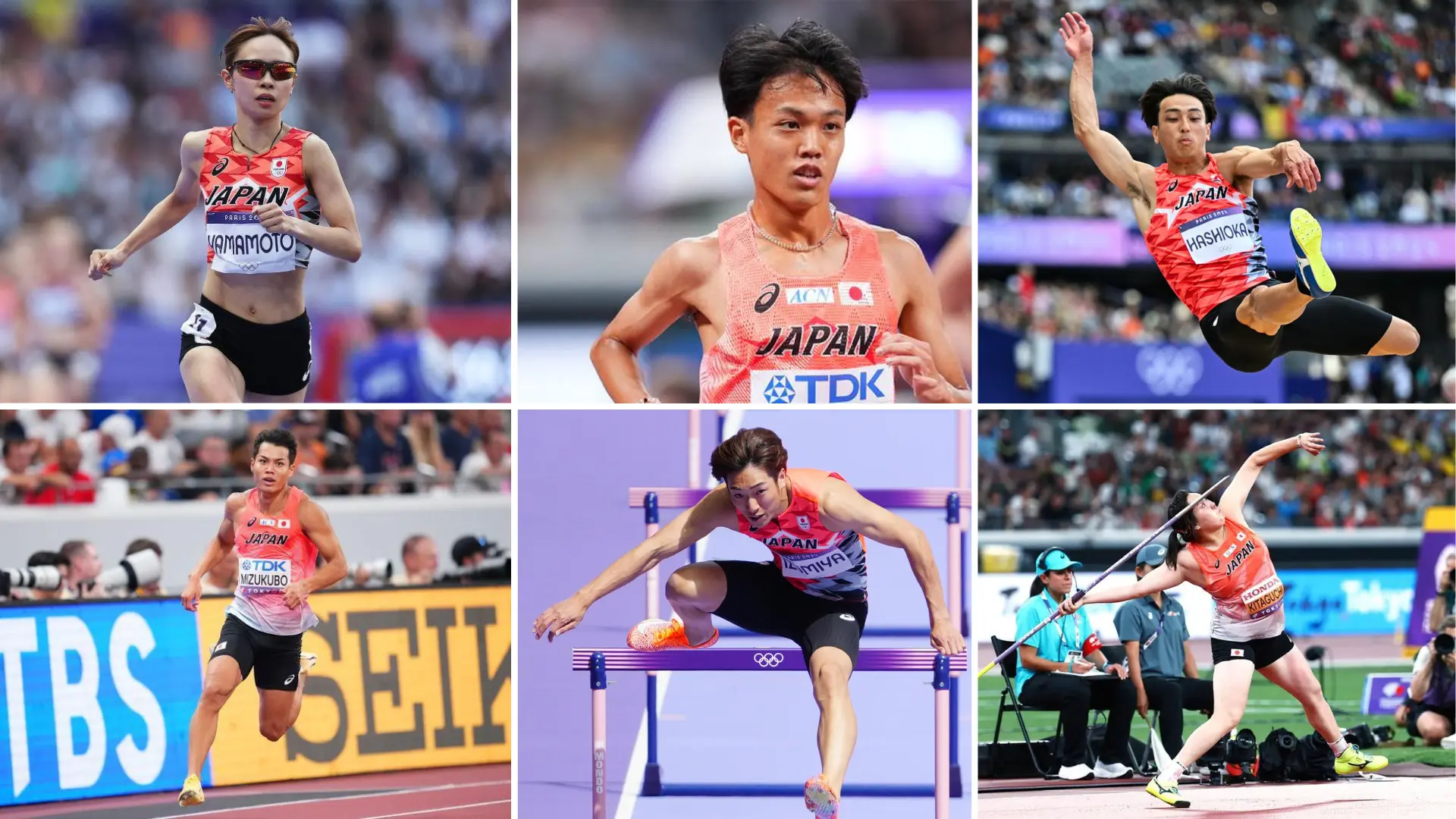
Japan, the host nation of the 2026 Asian Games, has announced its 86-member athletics squad, comprising 45 men and 41 women, for the Aichi Nagoya 2026 Asian Games.
The athletes were announced on June 15 and 16, 2026, subject to the final procedures of the Japanese Olympic Committee (JOC).
At the last edition of the Asian Games in 2023, Japan finished fifth in the athletics medal table, winning a total of 17 medals, including two gold, seven silver and eight bronze.
The team features several prominent athletes, including 2024 Olympic women’s javelin throw champion Haruka Kitaguchi, who holds a lifetime best and Japanese national record of 67.38m.
The squad also includes 2024 Asian Indoor Championships 60m silver medallist Shuhei Tada, while Shunsuke Izumiya has clocked a lifetime best of 13.00s in the 110m hurdles this season and finished second at the Paris Diamond League.
Also part of the squad is Toshikazu Yamanishi, the 2022 World Race Walking Championships champion.
Here is the complete list of athletes:
MEN
100m
Shuhei Tada, Yuki Koike
200m
Souji Mizakubo, Touka Uzawa
400m
Yuki Joseph Nakajima, Shinya Hayashi
800m
Nanaki Manno, Akira Ochiai
1500m
Chito Iizawa, Nagiya Mori
5000m
Mori Nagisa, Yamaguchi Tomonori
10,000m
Mebuki Suzuki, Yamato Yoshii
110m Hurdles
Murata Rashid, Izumiya Shunsuke
400m Hurdles
Daiki Goto, Kazuki Kurokawa
3000m Steeplechase
Ryuji Miura, Ryoma Aoki
High Jump
Ryoichi Akamatsu, Hirokazu Sakai
Pole Vault
Tomoya Karasawa, Masaki Ejima
Long Jump
Yuki Hashioka, Riku Ito
Triple Jump
Masahito Miyao
Discus Throw
Tsuyoshi Yugami, Yuji Tsutsumi
Hammer Throw
Tatsuto Nakagawa, Shota Fukuda
Javelin Throw
Yuta Sakiyama, Rin Suzuki
Half Marathon Race Walk
Toshikazu Yamanishi, Ayato Yoshikawa
Marathon Race Walk
Hayato Katsuki, Motoaki Suwa
Marathon
Yuya Yoshida, Kazuki Yamashita
Decathlon
Yuma Maruyama, Keisuke Okuda
4x100m Relay
Akuto Komuro, Yoshihide Kiryu
4x400m Relay
Kenki Imaizumi, Fuga Sato, Kentaro Shirahata
WOMEN
100m
Midori Oikase, Abigail Fuka Ido
200m
Abigail Fuka Ido, Aiko Iki
400m
Nanako Matsumoto
800m
Rin Kubo, Ayano Shiomi
1500m
Nozomi Tanaka, Mizuki Michishita
5000m
Yuma Yamamoto, Nozomi Tanaka
10,000m
Ririka Hironaka, Nozomi Tanaka
100m Hurdles
Hitomi Nakajima, Mako Fukube
400m Hurdles
Honoka Aoki, Satsuki Umehara
3000m Steeplechase
Miu Saito, Minami Nishiyama
High Jump
Nagisa Takahashi, Yuzuki Ishioka
Pole Vault
Misaki Morota, Akari Osakaya
Long Jump
Misuzu Hata, Ayaka Tara
Triple Jump
Akari Funada
Discus Throw
Nanaka Kori
Hammer Throw
Raika Murakami, MacArthur Joy Iris
Javelin Throw
Haruka Kitaguchi, Sae Takemoto
Half Marathon Race Walk
Ayane Yanai, Ayumi Sugibayashi
Marathon Race Walk
Koko Umeno, Maika Yarai
Marathon
Sayaka Sato, Mikuni Yada
Heptathlon
Yuri Tanaka, Nanaka Kajiki
4x100m Relay
Masumi Aoki, Aika Miura
4x400m Relay
Shizuho Moriyama, Yuzuki Nakao, Aoi Teramoto
By Sushant Singh
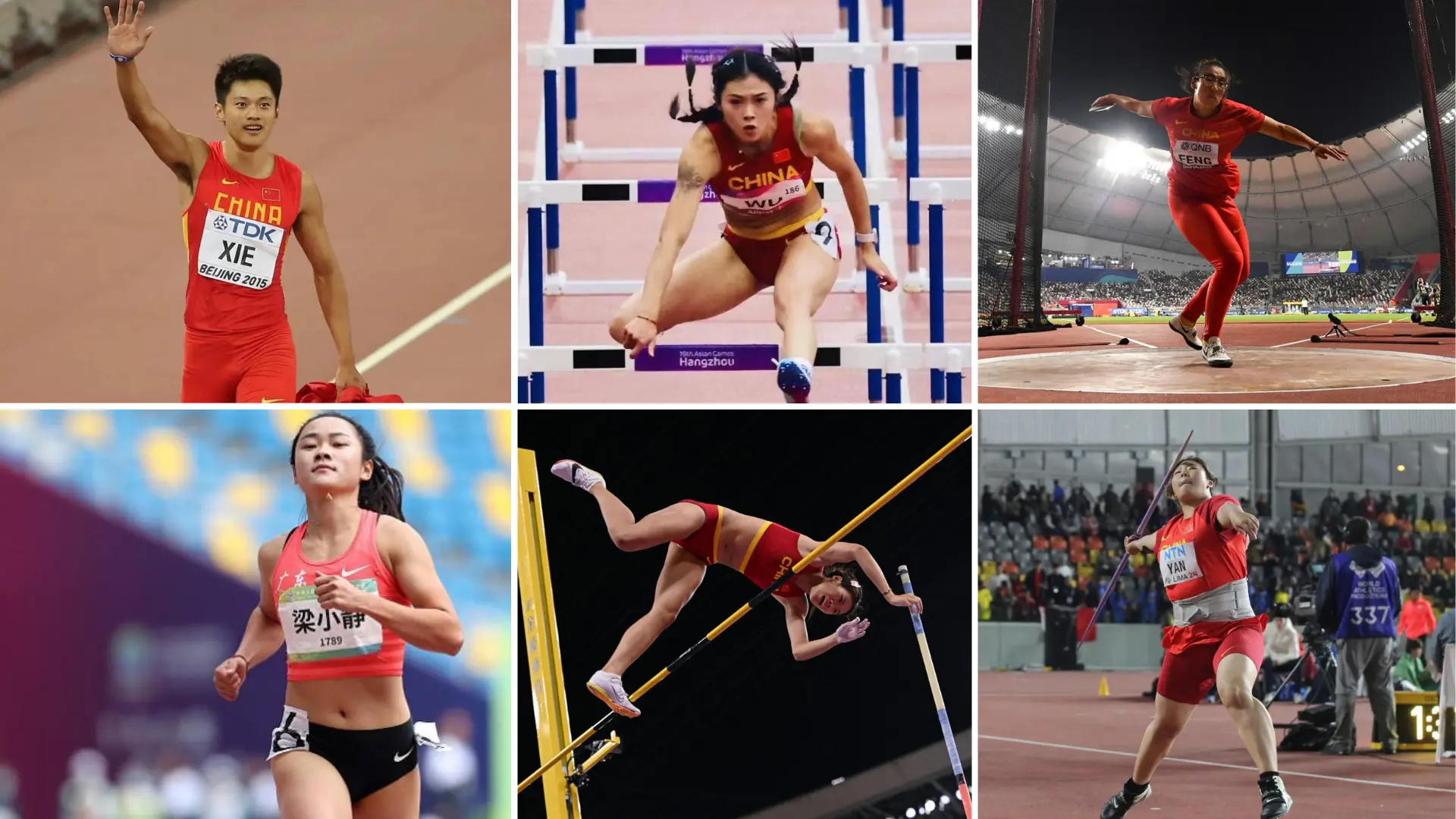
The People’s Republic of China, which topped the 2022 Asian Games athletics medal table with a total of 39 medals – 19 Gold, 11 Silver and 9 Bronze – has announced its athletics team for the 2026 Aichi-Nagoya Asian Games.
A total of 72 Chinese track and field athletes, 36 men and 36 women, will participate in the track and field events at the Nagoya Asian Games.
Among the men’s athletes, Xie Zhenye, the Asian record holder in the men’s 200 meters with a time of 19.88s, along with Huang Youwen, a young speedster from China who clocked 20.15s this season, are both on the sprint/relay list.
In addition, Wang Wenjie, Xing Jialiang, Li Chenyang and Feng Peiyou, who broke national records this season in the men’s 10,000m, men’s shot put, men’s pole vault and men’s marathon respectively, are also included.
Among the women’s athletes, in addition to 2022 world champion and 2024 Olympic silver medallist discus thrower Feng Bin, who has a lifetime best of 69.12m, there is also China’s young sensation Yan Ziyi. The 18-year-old 2026 U20 World champion and Monaco Diamond League winner in the javelin throw has thrown a massive lifetime best of 71.74m this season, which ranks as the world’s second-best throw of all time.
Niu Chunge, the newly crowned Asian record holder in the women’s pole vault, and Zhao Jie, the Asian record holder in the women’s hammer throw, are also on the list.
Young athletes such as Chen Yujie and Chen Xinxuan will team up with experienced athletes Liang Xiaojing and Ge Manqi to compete in sprints/relays. Wu Yanni, who just won the National Athletics Championships, will represent China in the women’s 100m hurdles alongside Lin Yuwei.
Women
- 100m / 200m / 4×100m Relay / Mixed 4×100m Relay: Chen Haoying, Liu Guoyi, Zhu Junying, Chen Xinxuan, Liu Xiajun, Xu Jialu, Liang Xiaojing, Ge Manqi
- 400m / 4×400m Relay / Mixed 4×400m Relay: Zhou Li, Jiang Yutong, Kong Yingying, Zuo Siyu
- 800m: Wu Hongjiao, Li Chunhui
- 1500m: Li Chunhui, Wu Hongjiao
- 100m Hurdles: Wu Yanni, Lin Yuwei
- High Jump: Lu Jiawen, Jin Ruoxuan
- Pole Vault: Niu Chunge
- Long Jump: Huang Yingying, Tan Mengyi
- Triple Jump: Li Yi, Huang Yingying
- Shot Put: Zhang Linru, Song Jiayuan
- Discus Throw: Feng Bin, Jiang Zhichao
- Hammer Throw: Zhao Jie, Zhang Jiale
- Javelin Throw: Yan Ziyi, Dai Qianqian
- Marathon: Ziren Cuomu, Wu Bing
- Half Marathon Race Walk: Jiang Yunyan, Yang Liujing
- Marathon Race Walk: Ma Li, Danzeng Quzong
Men
- 100m / 200m / 4×100m Relay / Mixed 4×100m Relay: Zeng Keli, Wu Haolin, He Jinxuan, Xie Zhenye, Chen Jinfeng, Wang Shengjie, Huang Youwen, Shi Junhao
- 400m / 4×400m Relay / Mixed 4×400m Relay: Ailixier Wumaier, Liu Kai, Chen Zhisheng, Ding Wenhao, Liang Baotang, Xiao Heng
- 800m: Xi Xiaoheng
- 1500m: Liu Dezhu, Xi Xiaoheng
- 5000m: Wang Wenjie
- 10,000m: Wang Wenjie
- 110m Hurdles: Chen Yuanjiang, Liu Junxi
- Pole Vault: Li Chenyang, Yao Jie
- Long Jump: Yuan Chenlong, Shi Yuhao
- Triple Jump: Su Wen, Ma Yinglong
- Shot Put: Xing Jialiang
- Discus Throw: Abduaini Turgun, Wu Nanjun
- Hammer Throw: Wang Qi
- Decathlon: Chen Xinghua
- Marathon: Feng Peiyou, Jia Erenjia
- Half Marathon Race Walk: Shi Shengji, Li Chenjie
- Marathon Race Walk: Zhou Chengying, Tang Yushuai