




Just when a few chinks appear in his armour, Mondo Duplantis seals them effectively, leaving his rivals to fight for the minor places. The Swedish superstar once again showed why he can single-handedly decide his own fate at a championship.
At the World Athletics Ultimate Championship Budapest 26 on Friday (11), Duplantis added another prestigious title to his collection by clearing 6.20m to the sounds of his own song, Gold, the Ultimate Anthem, which he wrote and recorded.
The 26-year-old produced a perfect scorecard through his winning height before taking three attempts at a world record of 6.32m. A clearance would have marked his 16th world record, but the chilly Friday evening at the Gyula Zsivotzky National Athletics Centre denied him that opportunity.
Even so, the title was safely secured. Duplantis added the Ultimate crown to his two Olympic titles, three world gold medals and four world indoor victories.
Karalis Pushes Duplantis
Greece’s Emmanouil Karalis mounted a fierce challenge, clearing 6.15m to finish second.
Norway’s Sondre Guttormsen took third on countback after also clearing 6.15m. Kurtis Marschall and Zach Bradford matched the height.
The result created just the second competition in history — and the first outdoors — where five athletes cleared 5.95m or higher.
Duplantis Returns to Budapest
Budapest holds special significance for Duplantis.
It was the site of his second world title and the setting for his 13th world record. He also returned to competition after withdrawing from the Diamond League Final due to leg tightness.
His opening campaign was smooth.
Duplantis cleared 5.60m on his first attempt before passing at 5.80m. He then cleared 5.95m, 6.05m and 6.15m on his first attempts.
That left Karalis chasing him all the way.
Karalis Keeps the Pressure On
Karalis, second on the world all-time list with his 6.20m clearance in Zurich, was also managing minor leg and back issues.
He kept his hopes alive by clearing 6.05m on his third and final attempt. He then matched Duplantis at 6.15m with his first attempt.
However, Karalis could not go higher.
He failed once at 6.20m and twice at 6.25m, bringing his challenge to an end.
Duplantis, meanwhile, skipped directly to 6.32m after securing the title.
Before his second attempt at the historic height, pole vault legend Sergey Bubka wished him good luck during a crowd interview.
Duplantis: “This Was a Missing Piece for Me”
Duplantis admitted that the competition brought a mixture of nerves and excitement.
“I approached this event with a combination of a lot of nerves and excitement,” Duplantis said. “This was a missing piece for me, to become the Ultimate champion.”
He also praised Karalis and his team for their season.
“With Manolo (Karalis), I just want to give a huge shout-out to him and his team and give a big hats-off for what they accomplished throughout this year.”
Duplantis believes pole vault has entered an exciting new era.
“Pole vault is always the most exciting event out there, but it is totally different now.”
With the Ultimate title secured, Duplantis can now enjoy some downtime in Budapest.
“I’m going to sing the anthem (Gold) on Sunday, so now I will be enjoying the city and getting some sleep.”
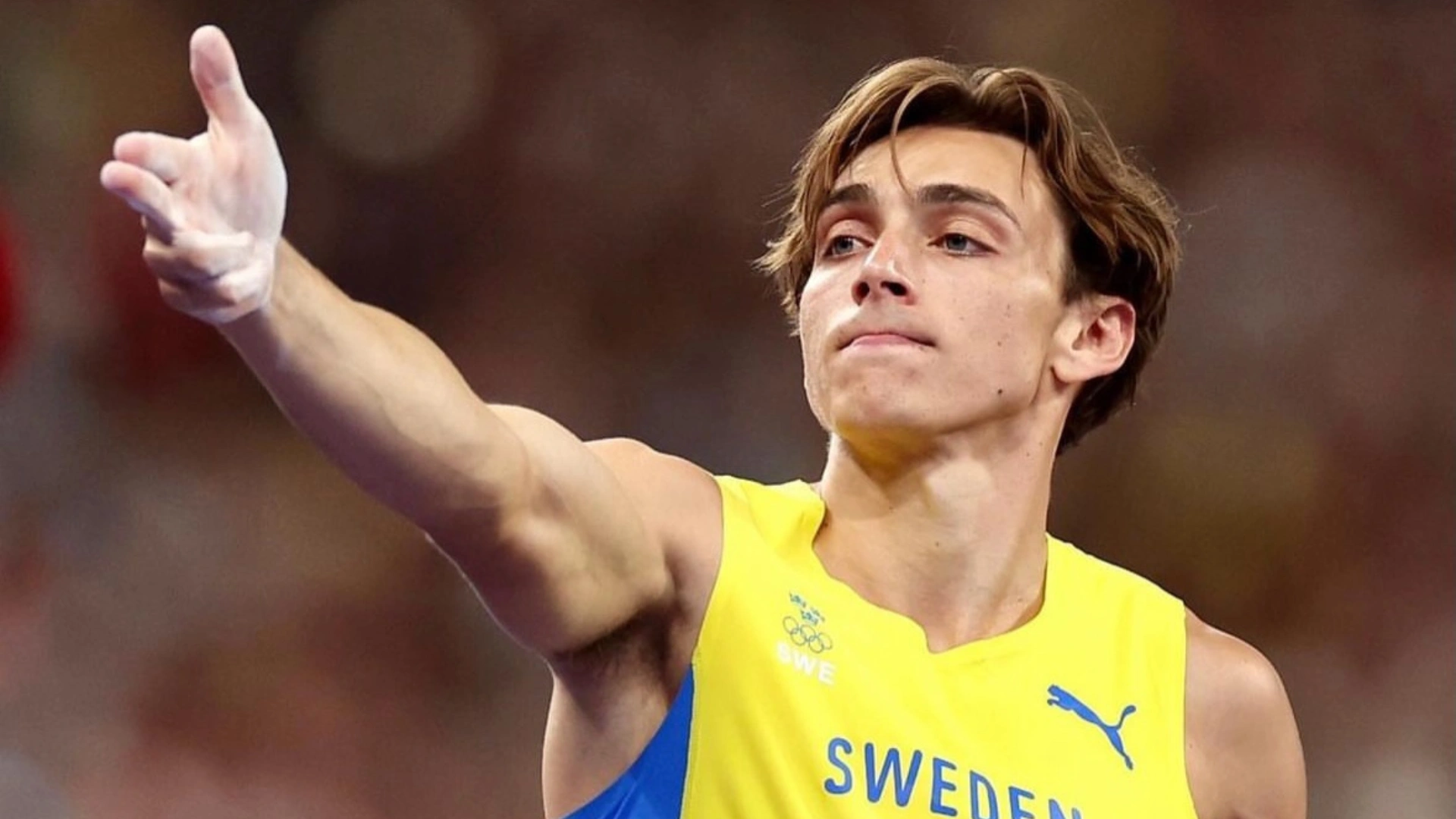
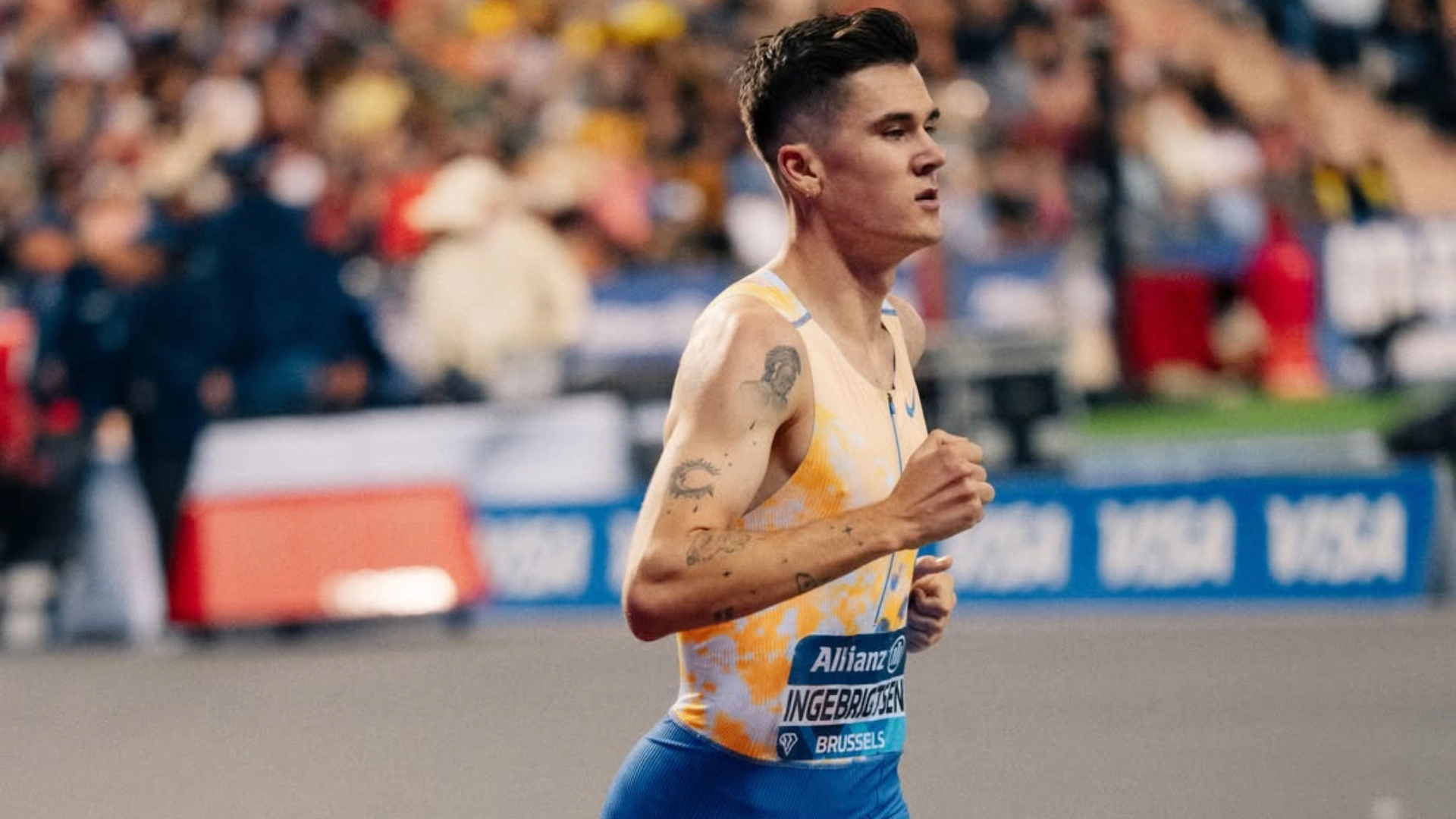
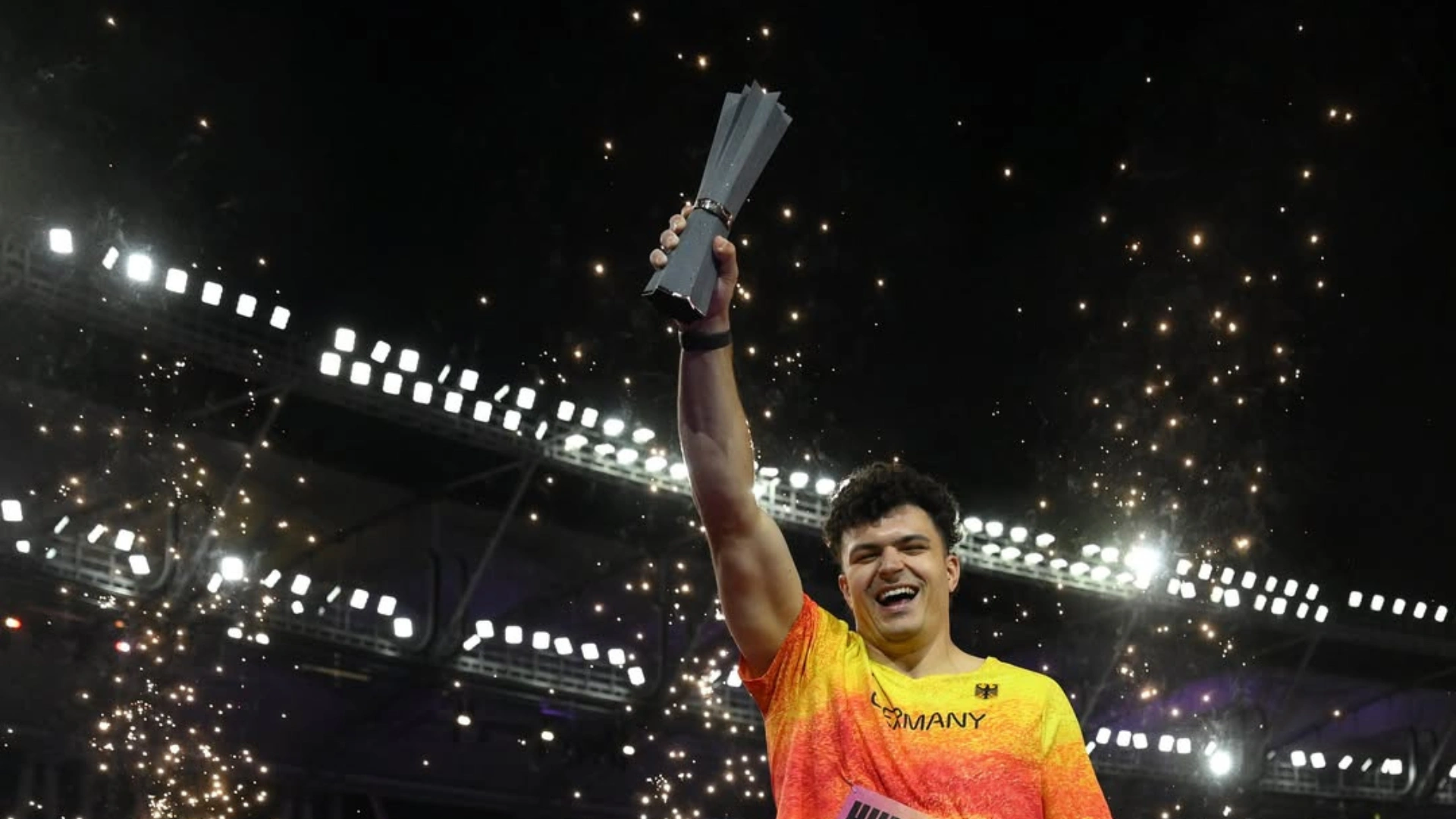
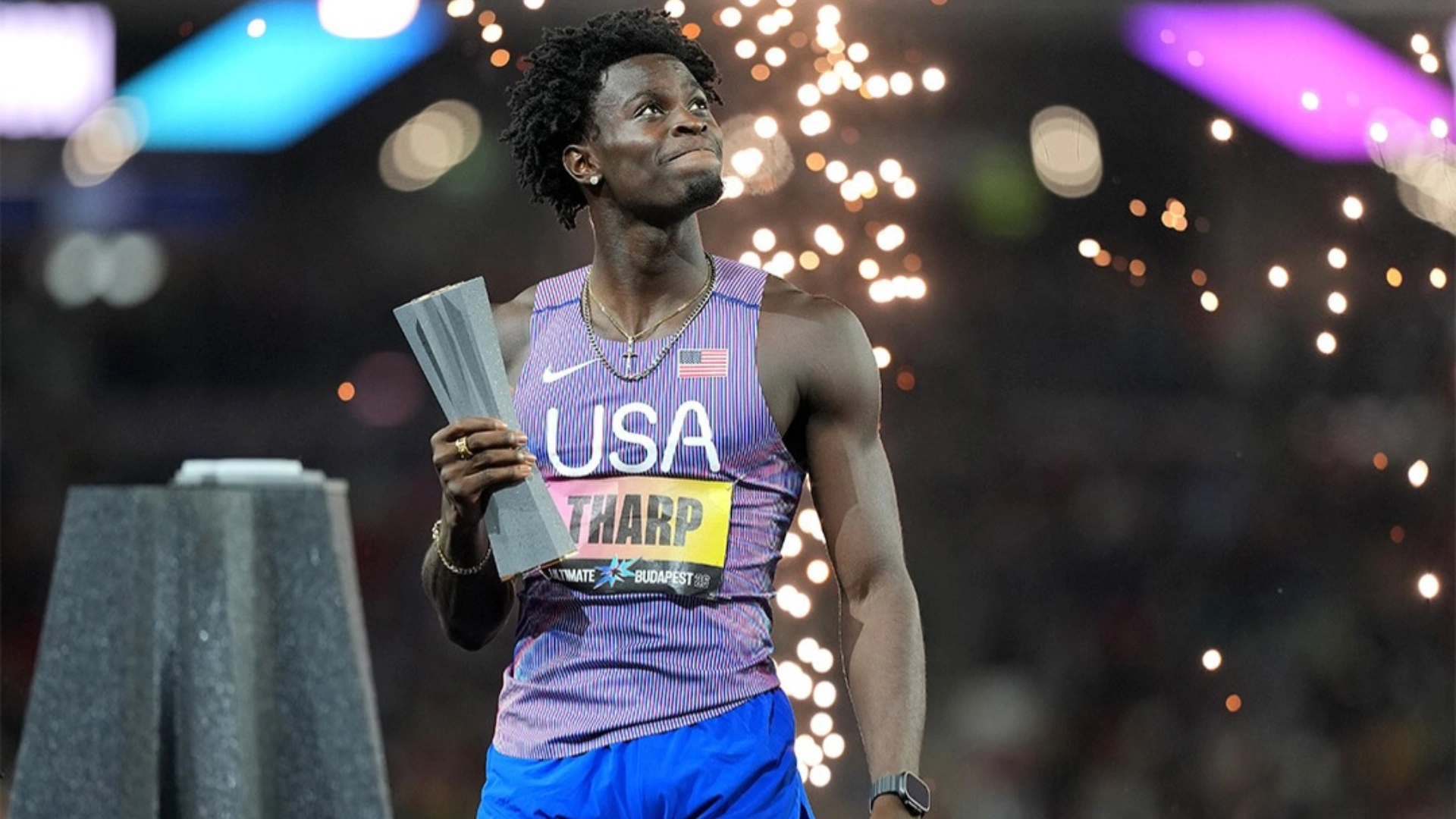
The javelin world converges on Budapest for an explosive eight-man Ultimate Challenge, with a field packed with global title winners and five athletes who have thrown beyond the 90-metre mark.
The absence of Neeraj Chopra, who withdrew from the finale due to a hamstring injury, leaves a notable void. However, South Asia’s golden hopes remain firmly alive.
Pathirage Leads South Asian Charge
This has been the year of Rumesh Tharanga Pathirage.
The Sri Lankan sensation has transformed from an emerging challenger into a dominant force. His biggest highlight came in Rome, where he set a national record of 92.62m and moved to eighth on the world all-time list.
Pathirage backed up that performance with Diamond League victories in Rome, Doha, Lausanne and Zurich. He then secured the Diamond Trophy in Brussels before adding a Commonwealth title in Glasgow with an 89.75m throw.
If Pathirage struggles under the pressure of the unique four-round format, South Asian hopes will rest on Olympic champion Arshad Nadeem.
Together, Pathirage and Nadeem carry the region’s hopes. If either man finishes on top, the javelin crown will remain in South Asia.
Julian Weber Leads European Challenge
The pair will face fierce competition from a deep international field.
Leading the European challenge is Julian Weber, the European champion and Pathirage’s closest rival on the 2026 world list.
Weber captured gold in Birmingham with 90.40m before following it with 89.54m in Berlin.
World Champions Bring Serious Firepower
Keshorn Walcott returns as the reigning world champion after his triumph in Tokyo. Anderson Peters claimed silver there, while Curtis Thompson took bronze.
Peters, a two-time world champion in 2019 and 2022, arrives in strong form with an 86.93m season’s best.
Thompson sits close behind with 87.59m.
Dawid Wegner enters as a major dark horse. He has peaked at the right moment after producing a lifetime best of 87.47m to finish second to Pathirage at the Diamond League Final.
They are joined by Kenyan veteran and 2015 world champion Julius Yego, completing an elite field where a single throw could completely change the competition.
Ultimate Challenge Final
Final: Sunday, 13 Sep, 18:13
Contenders:
- Keshorn Walcott (TTO)
- Arshad Nadeem (PAK)
- Rumesh Tharanga Pathirage (SRI)
- Anderson Peters (GRN)
- Julian Weber (GER)
- Curtis Thompson (USA)
- Julius Yego (KEN)
- Dawid Wegner (POL)
World lead: 92.62m — Rumesh Tharanga Pathirage (SRI), Rome, 4 Jun

The launch of “The Day Before” at the World Athletics Ultimate Championship Budapest 26 marked more than a change to the event schedule. It introduced a new athlete-focused approach to presenting track and field.
For decades, athletes have often operated within traditional media formats. The new model puts greater emphasis on personality, fan engagement and entertainment. With red carpets, exclusive content opportunities and the sport’s first live 200m lane draft, World Athletics has created a platform designed to place its stars at the centre of the spectacle.
A New Athlete-First Media Format
Athletes brought personality, anticipation and a preview of the competition to the Gyula Zsivótzky National Athletics Centre through “The Day Before”.
The programme replaced the traditional athlete press conference with a series of immersive media and content opportunities.
The debut featured:
- A high-profile red carpet
- Exclusive athlete interviews
- Content creation sessions
- The sport’s first 200m lane draft
- The Kids’ Athletics Ultimate Challenge
Approximately 200 elite athletes participated and interacted with 220 accredited members of the global media and broadcasters.
The afternoon began with an official press conference featuring World Athletics President Sebastian Coe, Ultimate Legend Usain Bolt, Gábor Pósfai, Minister of the Interior of Hungary, and 2008 Olympic 100m hurdles champion Dawn Harper-Nelson, who will serve as the infield host for the three-day championship.
Coe said the new format creates a stage where the best athletes can settle the debate over who is the best.
Pósfai highlighted the importance of reaching young people and developing innovative models to bring new audiences to the sport.
Bolt also welcomed the fresh approach, saying it would be exciting to see the best athletes compete against each other.
Harper-Nelson said the format gives athletes a voice while adding drama and excitement to the competition.
200m Lane Draft Adds Strategic Drama
Harper-Nelson later oversaw one of the afternoon’s biggest innovations: the inaugural 200m lane draft.
Men’s and women’s sprinters selected their semi-final heats and starting lanes based on their world rankings. Each athlete made a choice with the previous selections visible.
That allowed competitors to either line up directly against leading rivals or choose to avoid them.
The biggest moments came when the second-ranked athletes in both fields chose to challenge the world No.1 athletes directly.
Women’s 200m Draw
In the women’s competition, Melissa Jefferson-Wooden selected lane six. That placed her directly beside world No.1 and Olympic champion Gabby Thomas.
Their semi-final also includes Rhasidat Adeleke, Jenna Prandini, Kayla White and Torrie Lewis.
The other semi-final features Shaunae Miller-Uibo, Amy Hunt, Anavia Battle and Jaël Bestué.
Men’s 200m Draw
The men’s draw produced a similar statement of intent.
Olympic champion Letsile Tebogo selected lane six, placing him immediately outside world No.1 and Diamond League champion Kenny Bednarek.
Their heat also includes Alexander Ogando, Courtney Lindsey, Timothé Mumenthaler and Udodi Chudi Onwuzurike.
The second race features Andre De Grasse, Makanakaishe Charamba, Bryan Levell and Aaron Brown.
Athletes Showcase Their Personalities
Athletes and ambassadors arrived throughout the afternoon for a custom red-carpet experience designed to celebrate their identities beyond the competition track.
Competitors chose their own lifestyle apparel before moving through photography, video and Glambot stations. They then took part in interviews and content sessions with rights-holding broadcasters, international journalists and digital creators.
Two-time world indoor champion and world record-holder Simon Ehammer welcomed the change from traditional pre-competition routines.
“It was so good and so strange at the same time to step onto the red carpet at the stadium,” Ehammer said. “It’s not like the usual stuff we do before a competition, but I think it’s a good idea to show another side of the athlete.”
European 1500m champion Georgia Hunter Bell also embraced the opportunity to express her style.
“I like growing my hair out but, being in a long race for four minutes, you can’t wear your hair down all the time,” she said. “So I usually have to finish my race before letting my hair down.”
World 400m hurdles record-holder Alison dos Santos stressed the importance of allowing athletes to express themselves.
“I want to show people that I love and enjoy what I’m doing, just be myself,” Dos Santos said. “I want to be that guy who is going to bring people to the sport because they’re going to be curious about it.”
Stars Connect With the Next Generation
The afternoon ended with Melissa Jefferson-Wooden and Letsile Tebogo stepping away from elite competition to lead local children in the Kids’ Athletics Ultimate Challenge.
Jefferson-Wooden, the world 100m and 200m champion, said spending time with children who share her passion reminded her of why she started running.
Tebogo also enjoyed the session and praised the children for working together despite a language barrier.
US sprinter TeeTee Terry joined the activity and interacted with the young participants. She also signed copies of her children’s books, TeeTee’s World Adventure and TeeTee’s World Adventure: Little Steps, Big Wins.
The dynamic showcase brought “The Day Before” to a close and set the stage for the official opening of the World Athletics Ultimate Championship Budapest 26 at the National Athletics Centre.

Avinash Sable made his much-awaited return to the 3000m steeplechase at the Indian Athletics Series Final, winning the men’s title in 8:32.39.
It was Sable’s first 3000m steeplechase race in almost a year. The performance marked an important comeback after recovering from a serious injury that kept him away from competition.
His return comes at a crucial point in the season, with the Asian Games 2026 approaching.
Sable Returns to Competition
The Indian national record holder had been sidelined for an extended period following the injury.
He spent the past several months rebuilding his fitness and confidence. The Indian Series Final gave him his first opportunity to test himself competitively after the long layoff.
Sable also brings major Asian Games experience into his comeback. He won the 2023 Asian Games 3000m steeplechase gold.
He will now represent India in the event at the upcoming Asian Games.
Parul Chaudhary Wins Women’s Steeplechase
In the women’s 3000m steeplechase, Parul Chaudhary also secured the title at the Indian Series Final.
She clocked 9:22.49 to win the event.
Parul is set for a busy Asian Games campaign. She will represent India in the 1500m, 3000m steeplechase and 5000m.
Her latest performance adds another competitive outing ahead of the continental championships. She will be aiming to make an impact across all three events.
With Sable and Parul returning to the steeplechase spotlight, the Indian Series Final offered an important final test for two of India’s leading distance runners before the Asian Games.

The Indian Athletics Series Final in New Delhi produced strong performances in the field events, with Mohd. Sazid Atta breaking the 8m barrier in the men’s long jump and Tajinderpal Singh Toor claiming another shot put title.
Sazid Atta Clears 8m for the First Time
Haryana’s Mohd. Sazid Atta produced a major breakthrough in the men’s long jump, winning the title with a lifetime best of 8.01m.
The jump made him the only athlete in the competition to cross the 8m mark. Karnataka’s Arya S finished second with 7.90m, while Odisha’s Sarun Payasingh took bronze with 7.61m.
The 8.01m effort marks an important milestone for Atta as he enters the 8m club for the first time. The Athletics Federation of India’s official results confirm the podium and distances.
Toor Leads Indian Shot Put Podium
India’s leading shot putter Tajinderpal Singh Toor secured the men’s shot put gold with a best throw of 20.64m.
Toor finished comfortably ahead of Samardeep Singh Gill, who took silver with 19.59m. Karanveer Singh secured bronze with 19.51m.
Toor, the defending Asian Games champion, used the Indian Series Final as part of his preparation for the Asian Games 2026.
Both Toor and Karanveer Singh are set to represent India at the Asian Games. The competition gives them an important opportunity to build momentum ahead of the continental event.
The performances added to an eventful Indian Athletics Series Final, which also saw national records broken in both the men’s and women’s hammer throw.

Harita Bhadra produced the biggest 100m performance of her career at the Indian Series Final, winning the women’s title in a stunning 11.22 seconds.
The Maharashtra sprinter’s performance marks a huge improvement on her previous best. According to the result provided, the run moves her to second on the all-time Indian women’s 100m list, behind only the national record.
Harita Bhadra Makes Major 100m Breakthrough
Harita entered the Indian Series Final as one of India’s emerging sprint talents.
Earlier this season, she had already made a major breakthrough in the 100m. She clocked 11.55s at Indian Athletics Series-6 in Chennai.
That performance was then a lifetime best. It also placed her among the leading Indian sprinters of the season.
Her latest 11.22s run now represents another significant step forward.
Strong Progress Over 200m
Bhadra has been even more impressive over 200m.
At the National Inter-State Senior Athletics Championships in June, she won the women’s 200m title in a stunning 23.14s.
The performance was comfortably inside the Asian Games qualification standard of 23.70s.
Her 23.14s run was a huge improvement on her previous personal best of 23.90s. It established her as one of India’s leading women’s 200m runners.
She also became the fastest Indian woman over 200m in 2026 at that point.
Bhadra’s progress has extended across multiple sprint events. She has also recorded 7.32s in the indoor 60m.
Asian Games 2026 Awaits
Bhadra has earned a place in India’s 77-member athletics squad for the 2026 Asian Games in Aichi-Nagoya.
She has been selected for the women’s 200m and mixed 4x100m relay.
Her 200m form will be particularly important in Nagoya. With a 23.14s personal best and now an 11.22s 100m performance, Bhadra is heading into the Asian Games with significantly improved speed and confidence.
Her season trajectory tells the story clearly: 11.55s in the 100m, 23.14s in the 200m, and now 11.22s over 100m.

Ancy Sojan continued her remarkable 2026 season by winning the women’s long jump title at the Indian Series Final with a best effort of 6.76m.
The mark is the second-best winning performance of her career, behind only the sensational 6.88m she produced earlier this season to rewrite the Indian national record.
Ancy Sojan Continues Record-Breaking Season
Ancy’s 6.88m leap came at the National Inter-State Senior Athletics Championships in Bhubaneswar in June. She broke Anju Bobby George’s 22-year-old national record of 6.83m, set at the 2004 Athens Olympics.
She reached the record mark on her fifth attempt. Earlier in the season, she had recorded a personal best of 6.75m in Ranchi.
Her consistency in 2026 has been particularly impressive.
Before the national-record leap, Ancy had already jumped 6.75m at the National Senior Athletics Federation Competition in Ranchi, where she won the event.
Her series there included:
6.47m, 6.56m, 6.69m, 6.75m, 6.68m and 6.57m.
From Sprinting to Long Jump
Ancy’s athletic background extends beyond the long jump. She was previously a sprinter before establishing herself as one of India’s leading long jumpers.
Her personal bests include 11.82s in the 100m and 24.24s in the 200m. She has also clocked 45.06s as part of India’s 4x100m relay team.
That sprinting background has become an important asset in her long jump career.
Her coach has highlighted the emphasis placed on improving her speed on the runway during preparations for the 2026 season.
Chasing Gold in Nagoya
Ancy is now set to represent India at the Asian Games 2026 in Aichi-Nagoya.
She will aim to improve on the silver medal she won at the previous edition.
Her 6.88m national record has established her as one of Asia’s leading long jumpers this season. She has also made no secret of her ambition to challenge for the gold medal in Japan.
