
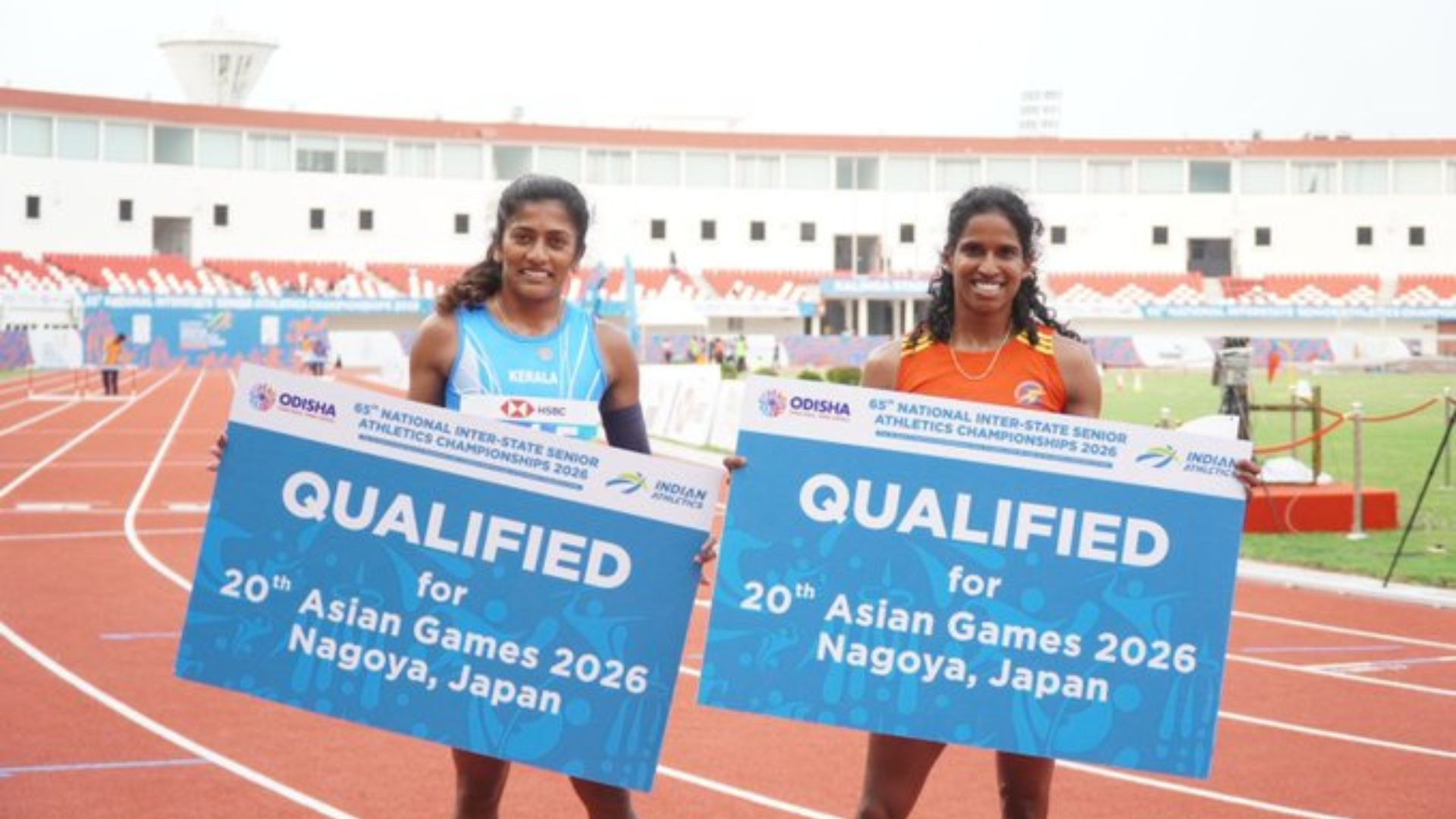
Vithya Ramraj delivered yet another statement performance at the 65th Interstate Athletics Championships 2026, storming to victory in the women’s 400m hurdles with a superb time of 56.07 seconds. The Tamil Nadu athlete looked in complete control throughout the race, comfortably taking the gold medal while reinforcing her status as one of India’s premier quarter-milers over hurdles.
Kerala’s Anu R produced an equally impressive run to finish second, ensuring a thrilling one-two finish. More importantly, both athletes went well under the Asian Games qualifying standard of 57.21 seconds, securing their qualification with plenty to spare.
For Vithya, the performance continues her consistent run of form on the national circuit. The experienced hurdler has been India’s leading name in the event over the past few seasons and once again showcased her ability to deliver when it matters most.
Anu R’s breakthrough performance is equally significant. Going comfortably below the qualification mark highlights the growing strength of Indian women’s 400m hurdles, with multiple athletes now capable of competing at the continental level.
With both Vithya Ramraj and Anu R booking their places for the Asian Games, India heads into the international season with encouraging depth in one of its strongest track events. Their performances at the Interstate Championships underline the steady rise of the women’s 400m hurdles and provide optimism for the challenges ahead.
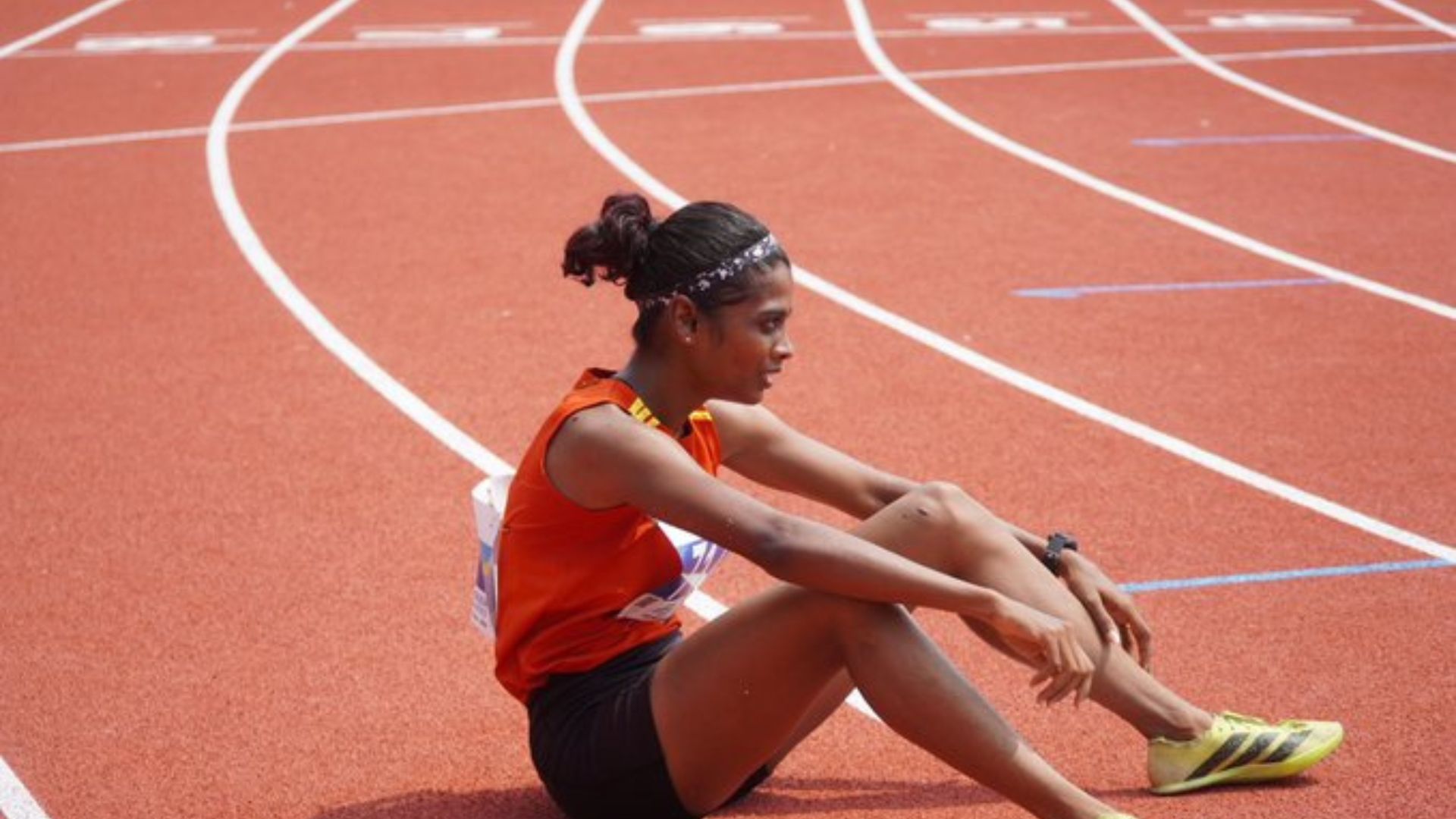
A forgotten hurdle. A solo re-run. And ultimately, a missed opportunity.
One of the most unfortunate incidents of the 65th National Inter-State Senior Athletics Championships unfolded in the women’s 400m hurdles, where 20-year-old Harshitha was left paying the price for an officiating error that has raised serious questions about athlete welfare and competition management.
Harshitha had initially appeared to have done everything right.
Competing in Heat 1 on Friday evening, she clocked 1:01.03, finishing fourth and seemingly earning a place in the final.
But celebrations were short-lived.
Officials later discovered that one hurdle had not been placed in her lane, meaning she had cleared only nine hurdles instead of the mandatory ten. The error rendered the race invalid for her, despite the mistake being entirely beyond her control.
Following the discovery, officials invoked World Athletics Competition Rule (CR) 18.7, which allows the referee to order a re-run or advancement when an athlete has been adversely affected by circumstances during the competition.
As a result, Harshitha was asked to contest the race again.
This time, she had to run alone.
A Race Against the Clock
The solo re-run was scheduled for 9:30 am on Saturday, just hours before the final.
Unlike her competitors, who advanced through the normal heats, Harshitha faced the unusual task of running without anyone alongside her—a significant disadvantage in an event where pacing and competition often influence performance.
To qualify for the final, she needed to clock under 1:02.00.
She stopped the clock at 1:02.54, missing qualification by 0.54 seconds.
Her Inter-State Championships ended there.
“Everyone Is Running Two Races. I Am Running Three.”
Speaking to the media after the re-run, an emotional Harshitha questioned the fairness of the situation.
“Everyone is running two races, while I am running three.”
She also revealed another troubling aspect of the episode.
“The officials said it was my fault too, as I cleared the adjacent lane’s hurdle yesterday.”
The remark has only intensified the debate surrounding the handling of the incident.
Bigger Questions for Indian Athletics
While the decision to order a re-run was in accordance with World Athletics rules, the episode has highlighted the difficult balance between following regulations and ensuring fairness to athletes.
A 400m hurdles race is built around rhythm, stride pattern and race dynamics. Running alone, without direct competition, presents a very different challenge from racing in a full field.
The incident becomes even more significant because the Inter-State Championships are not just a national competition. They also serve as the final domestic qualifying event for selection to the 2026 Asian Games.
For Harshitha, an officiating lapse meant running an additional race and ultimately missing the final.
The regulations may have been followed.
But the larger question remains: Should an athlete bear the consequences of an officiating error at a championship of this importance?
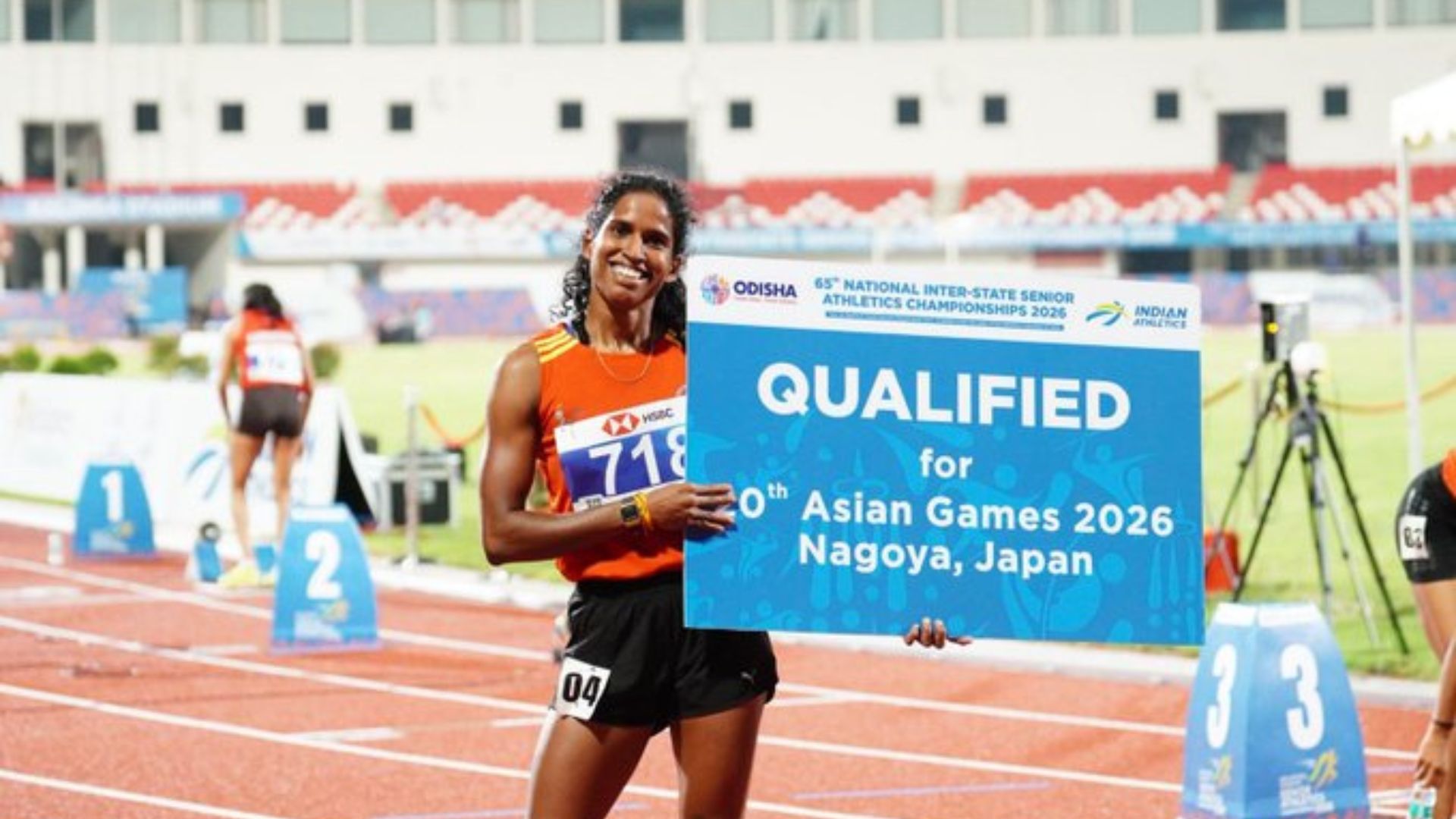
India’s leading 400m hurdler Vithya Ramraj made a strong statement at the 65th National Inter-State Senior Athletics Championships 2026 by achieving the Asian Games qualification standard during the heats of the women’s 400m hurdles.
The joint national record holder, who shares the national mark with legendary sprinter PT Usha, clocked 56.61s to comfortably secure qualification for the upcoming Asian Games. Her performance was the fastest across both heats, ensuring that she advanced to the final as the top qualifier.
Known for her consistency on the national circuit, Vithya once again demonstrated why she remains India’s leading contender in the event. Running with control and confidence, she produced a performance that not only met the qualification standard but also highlighted her readiness for the championship final.
The qualification adds another important milestone to Vithya’s season as she continues to build momentum ahead of major international competitions. By registering the quickest time of the preliminary rounds, she has positioned herself as the athlete to beat in the final and reinforced her credentials as one of India’s most reliable performers in the 400m hurdles.
Vithya’s success also reflects her ability to consistently deliver on the big stage. Having already established herself as one of the country’s finest quarter-milers over the hurdles, her latest performance further strengthens India’s prospects in the event as preparations continue for the Asian Games.
The Interstate Championships have served as an important platform for athletes chasing qualification standards, and Vithya capitalised on the opportunity with a composed run in the heats. Her ability to secure qualification while conserving enough energy for the final speaks to her experience and race management.
With the Asian Games qualification now secured and the fastest qualifying time to her name, Vithya Ramraj will return to the track for the women’s 400m hurdles final looking to add the national title to an already impressive performance at the championships.
India’s national record holder Tejas Shirse made a strong statement at the 65th National Inter-State Senior Athletics Championships, clocking 13.43 seconds in the men’s 110m hurdles heats to comfortably breach the Asian Games qualification standard and advance to the final as the fastest qualifier.
Shirse’s performance was the quickest across all heats, underlining his status as the country’s premier hurdler and one of India’s strongest medal prospects in the event heading into the 2026 Asian Games in Nagoya.
The qualification mark had been one of the key targets for athletes competing at the Inter-State Championships, the final major domestic opportunity to secure standards for international selection. Shirse achieved that goal with authority, producing a controlled run that saw him comfortably progress to the final while also ticking off the Asian Games requirement.
The Maharashtra hurdler has been on a remarkable upward trajectory over the past two seasons. Earlier this year, he rewrote the Indian record books by becoming the first Indian man to run under 13.50 seconds in the 110m hurdles, setting a new national record and establishing himself among Asia’s elite hurdlers.
His rise has been particularly significant for Indian athletics, where the men’s sprint hurdles has historically lacked the depth and international success enjoyed by some of the country’s field events and distance disciplines. Shirse’s breakthrough performances have changed that narrative, giving India a genuine contender on the continental stage.
At just 23 years of age, the hurdler has consistently improved his technique, speed between hurdles and race execution, transforming himself from a promising talent into a national record holder capable of challenging the best athletes in Asia.
The performance in Bhubaneswar also comes at an important stage of the season. With the Asian Games qualification standard secured, Shirse can now focus on building towards the major championships ahead while fine-tuning his form for international competition.
Although the heats were primarily about securing qualification for the final, Shirse’s time served notice to the rest of the field. No athlete ran faster across the preliminary rounds, making him the overwhelming favourite heading into the medal race.
For now, however, the immediate objective has been achieved.
Fastest in the heats. Asian Games qualification secured. And one step closer to another national title.
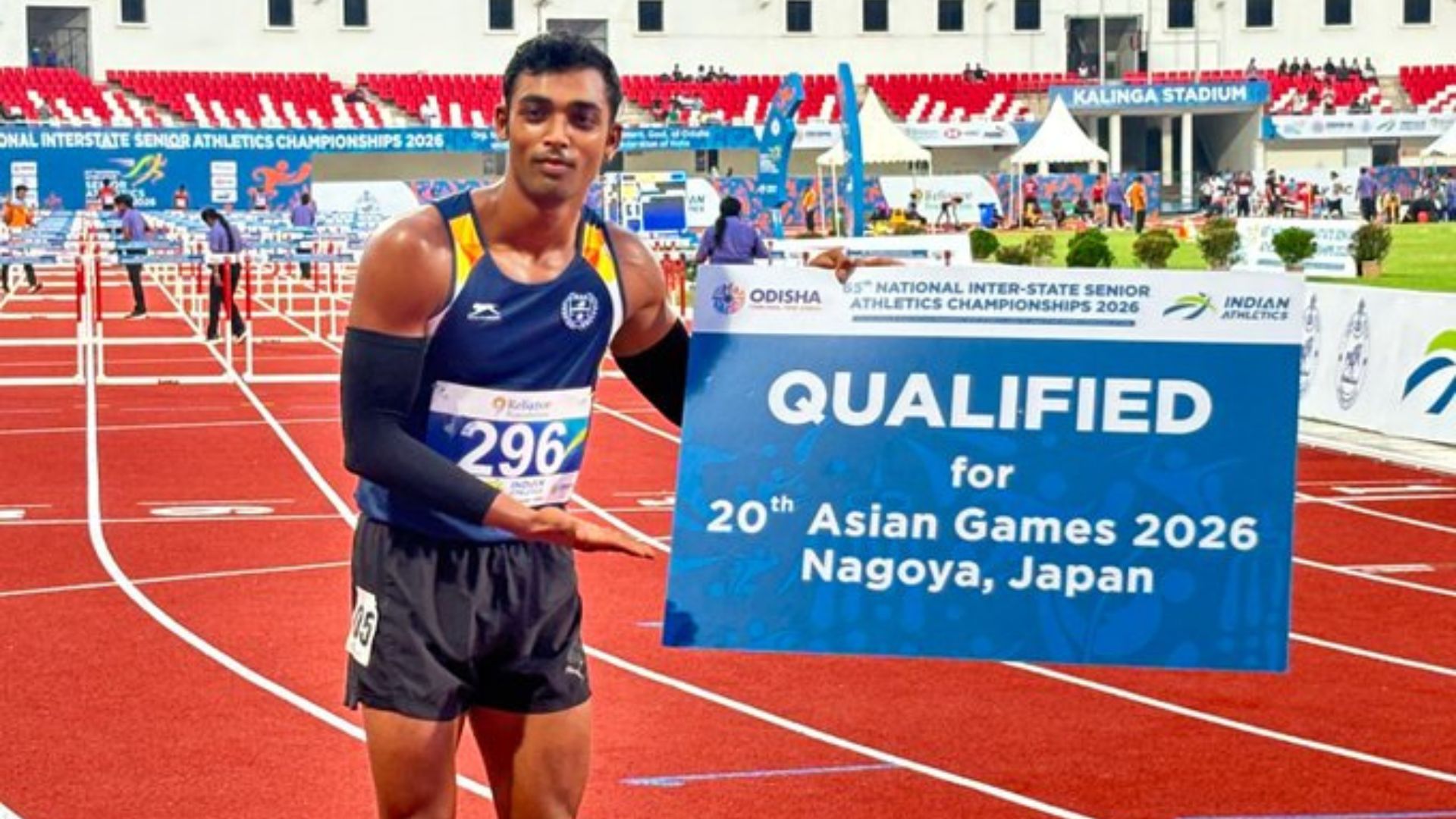
Indian hurdling star and national record holder Jyothi Yarraji marked a sensational return to competition by clinching the women’s 100m hurdles title at the 65th Interstate Athletics Championships 2026, clocking an impressive 12.99 seconds.
The performance carried extra significance as it was Jyothi’s first competition of the season following a lengthy rehabilitation period after suffering an ACL injury — one of the most challenging setbacks an athlete can face. Months of recovery, rehabilitation, and uncertainty culminated in a triumphant comeback on the national stage.
Earlier in the day, Jyothi had already shown signs that she was back to her best by comfortably breaching the Asian Games 2026 qualification standard in the heats. She then raised her level even further in the final, breaking the 13-second barrier and reminding everyone why she remains India’s undisputed hurdle queen.
Her victory was a testament not only to her speed and technique but also to the resilience and determination that carried her through the difficult months away from competition. Returning from an ACL injury is never easy, especially for a sprint hurdler whose event demands explosive power, speed, and precise movement over barriers.
The final saw a strong field of competitors, with Nandhini K finishing second in 13.22 seconds and Pragyan Prasanti taking third place in 13.48 seconds.
Women’s 100m Hurdles Final
🥇 Jyothi Yarraji – 12.99s
🥈 Nandhini K – 13.22s
🥉 Pragyan Prasanti – 13.48s
With the Asian Games qualification mark already secured and a sub-13-second performance in her season opener, Jyothi’s comeback could not have been scripted any better. As the road to the Asian Games gathers pace, India’s hurdle queen has sent a clear message — she is back, stronger than ever.
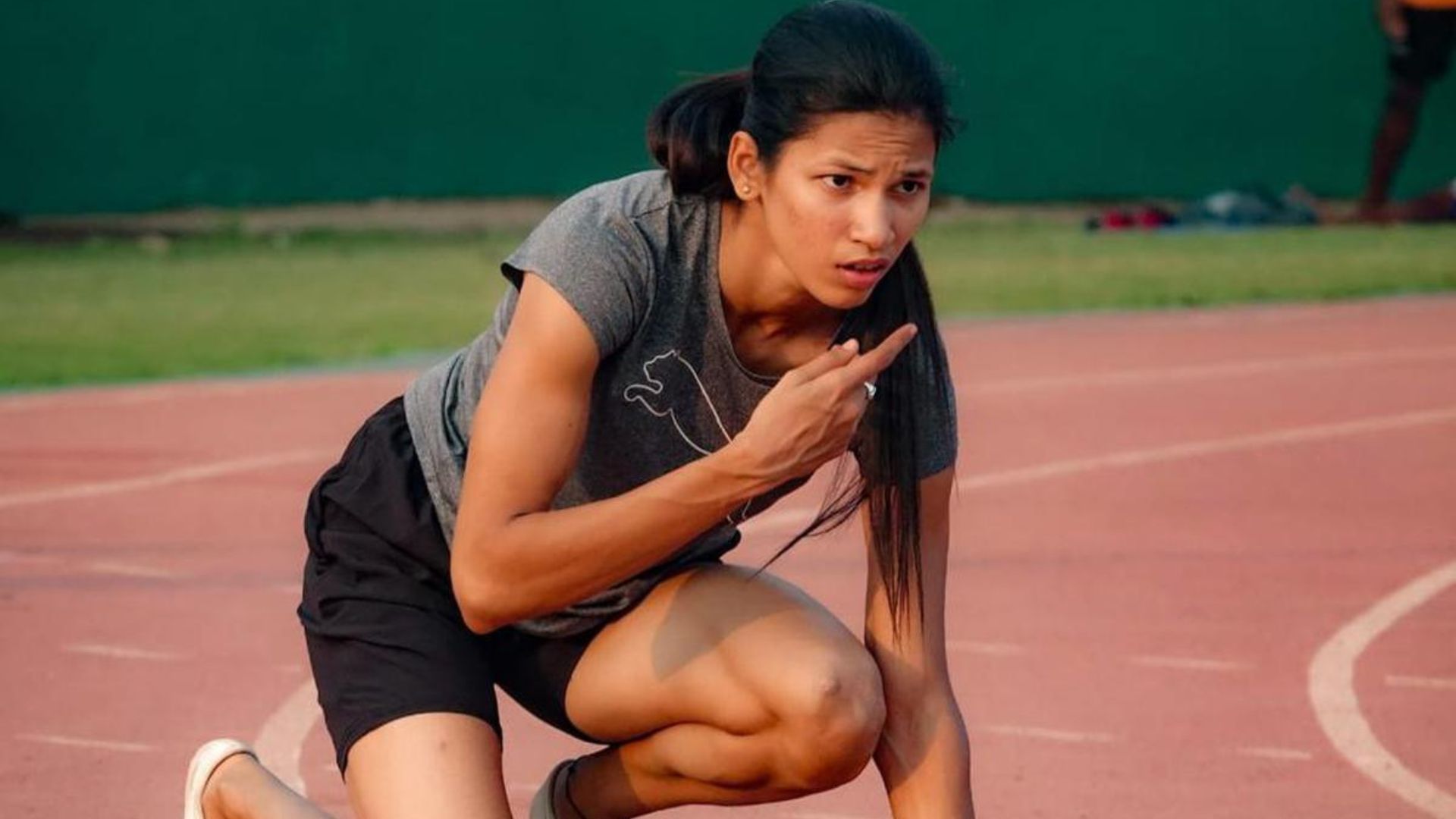
Indian hurdler Nandhini K joined compatriot Jyothi Yarraji in breaching the Asian Games qualification standard in the women’s 100m hurdles at the 65th National Inter-State Senior Athletics Championships, delivering a lifetime-best-equalling performance of 13.24 seconds in Heat 2.
With the Asian Games qualification mark set at 13.34 seconds, Nandhini comfortably punched her ticket to Nagoya, capping off a memorable day for Indian women’s hurdling.
Earlier in the day, Asian champion Jyothi Yarraji had clocked 13.14 seconds in Heat 1 to achieve the qualification standard in her first race back from injury. Nadhini’s performance ensured that both heats of the women’s 100m hurdles produced Asian Games qualifiers, underlining the growing depth in the event in India.
For Nandhini, the result was particularly significant as she matched the personal best of 13.24 seconds that she had set earlier in her career. Producing a performance of that quality at one of the most important domestic competitions of the season demonstrates both consistency and readiness as the race towards the 2026 Asian Games gathers momentum.
The women’s 100m hurdles has emerged as one of India’s strongest sprint events in recent years, led by Yarraji’s continental success and national record performances. Nandhini’s qualification now adds another serious contender to India’s ranks, giving the country multiple athletes capable of competing at the highest level in Asia.
The timing of the performance is also crucial. The National Inter-State Championships serve as the final domestic qualification opportunity for athletes targeting major international championships, including the Asian Games.
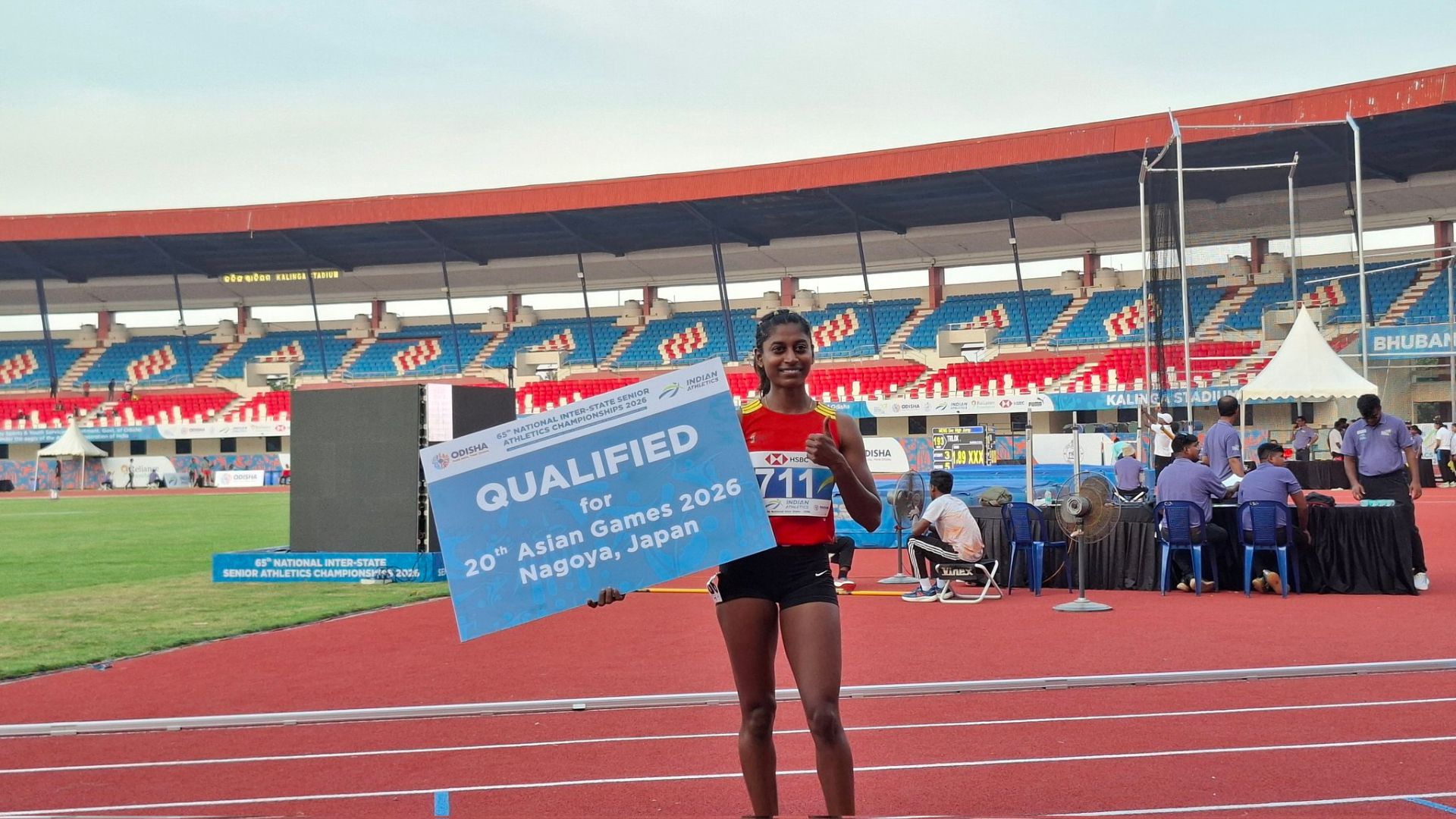
Indian hurdling star Jyothi Yarraji announced her return to the track in emphatic fashion, clocking 13.14 seconds in Heat 1 of the women’s 100m hurdles at the 65th National Inter-State Senior Athletics Championships to comfortably breach the Asian Games qualification standard of 13.34 seconds.
The performance was significant not just because it secured qualification for the 2026 Asian Games in Nagoya, but because it marked the comeback of one of India’s brightest athletics stars after a lengthy injury layoff.
Competing in her first race of the 2026 season, Yarraji looked sharp and composed as she cruised to the top spot in her heat, sending a strong message to her rivals ahead of the final.
The road back has been anything but easy.
In July last year, the reigning Asian champion suffered a freak knee injury during training, bringing her season to an abrupt halt and ruling her out of the World Athletics Championships in Tokyo. The injury eventually required surgery and sidelined her for the remainder of the 2025 season.
At the time, the setback was particularly cruel. Yarraji was coming off one of the best phases of her career, having successfully defended her Asian Championships title and established herself among the world’s leading hurdlers. The injury not only ended her hopes of competing at the World Championships but also interrupted the momentum she had built over several seasons.
After spending seven months away from competition, Yarraji returned to training only earlier this year, carefully rebuilding her strength and confidence under the guidance of her support team. Her coach James Hillier had repeatedly stressed that the Asian Games would be the primary target for her comeback season.
On Tuesday, she showed exactly why.
Running her first competitive race since the injury, the national record holder looked in complete control, clocking 13.14 seconds—well inside the Asian Games qualification mark and a highly encouraging start to a season that could culminate with another continental medal.
For Indian athletics, the result is a major boost. Yarraji remains the country’s premier hurdler, a two-time Asian champion and the national record holder in the event. More importantly, she is once again healthy, competing, and already meeting the standards required for India’s biggest targets of the year.
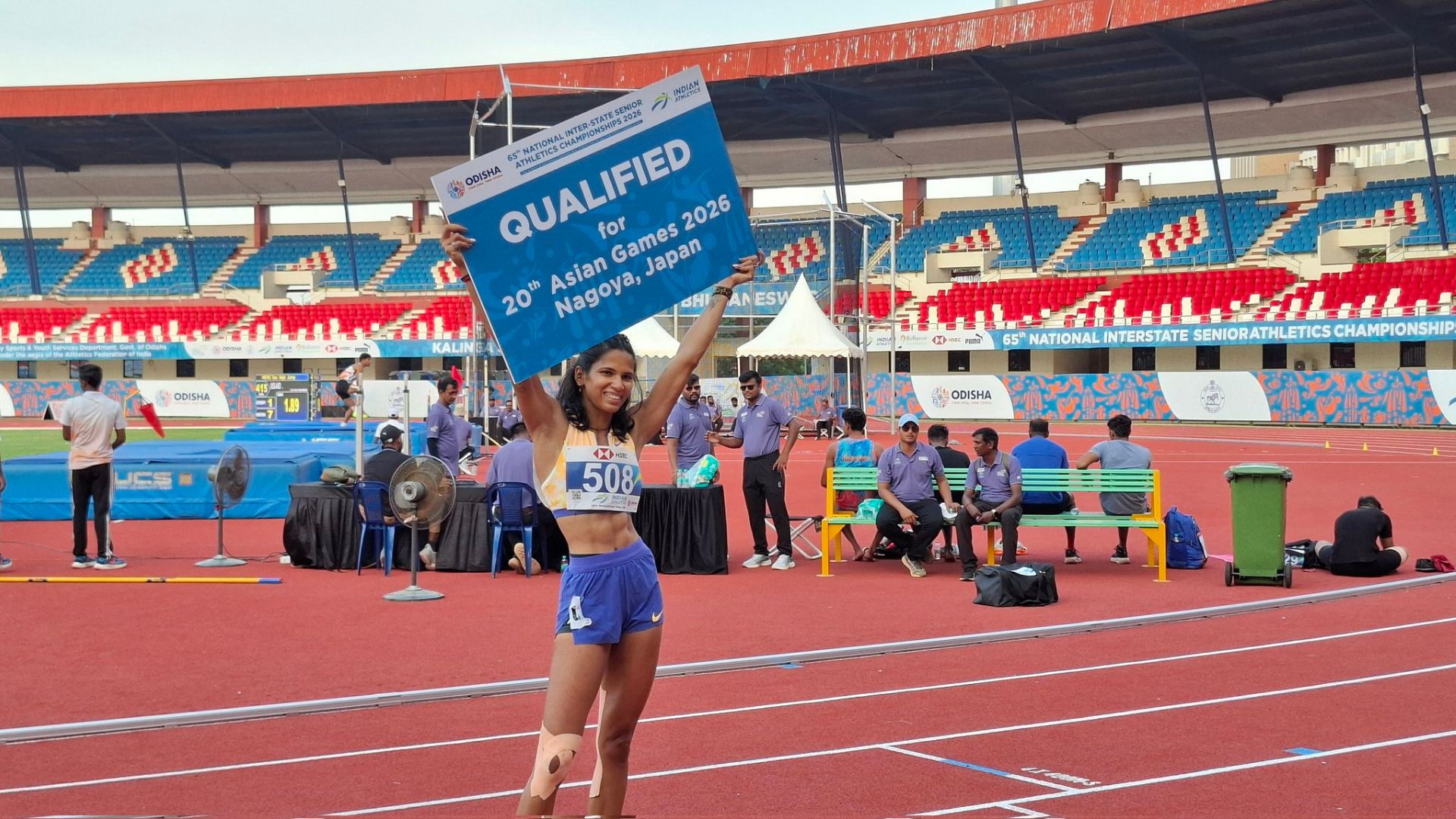
Tejas Ashok Shirse produced the standout performance of the Indian Athletics Series–9, clocking a sensational 13.27 seconds in the men’s 110m hurdles to set a new Indian National Record and achieve the qualification standard for the 2026 Commonwealth Games.
The Maharashtra hurdler delivered a flawless race to improve his personal best and move into elite company in Asian athletics.
The performance earned him multiple milestones:
 New Indian National Record
CWG 2026 Qualification Standard Achieved
Lifetime Best – 13.27s
Asia’s All-Time No. 14 Performer
Asia’s Sixth-Fastest Time of the 2026 Season
Shirse’s 13.27s eclipsed the previous national record and further established him as India’s leading sprint hurdler. The timing also places him among the fastest athletes the continent has produced in the event.
The run continues a strong upward trajectory for the 23-year-old, who has steadily improved over the past few seasons through a series of national-level victories and international appearances. His latest performance represents a significant breakthrough, particularly in an event where Indian athletes have traditionally struggled to match the standards set by the world’s leading hurdle nations.
Beyond the national record, the timing comfortably cleared the qualification mark for the 2026 Commonwealth Games in Glasgow, strengthening his prospects for selection.
The result is also significant in the broader context of Indian athletics. Sprint hurdling has rarely produced continental-level performances from Indian athletes, making Shirse’s entry into the upper ranks of Asian all-time lists a notable achievement.
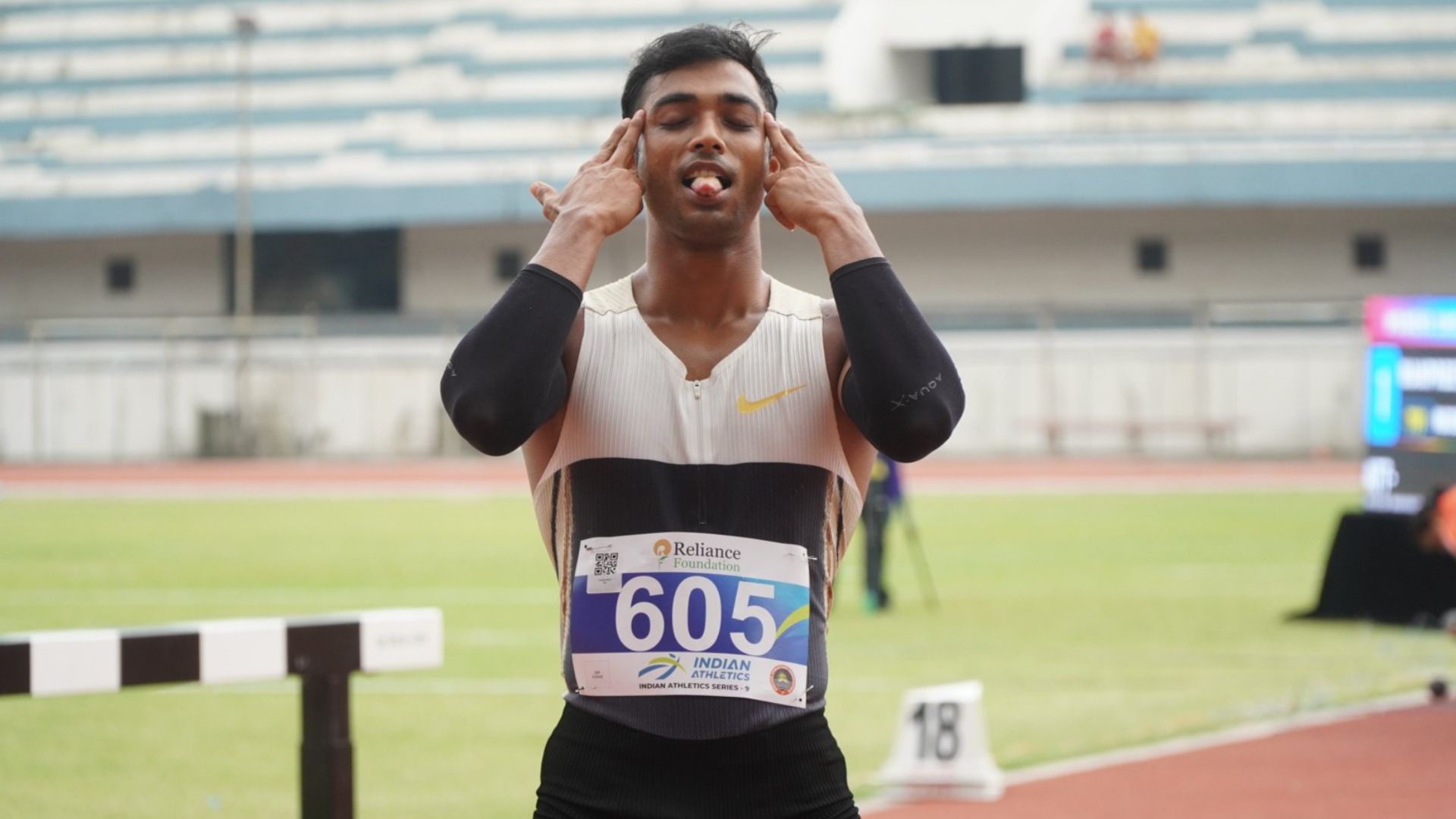
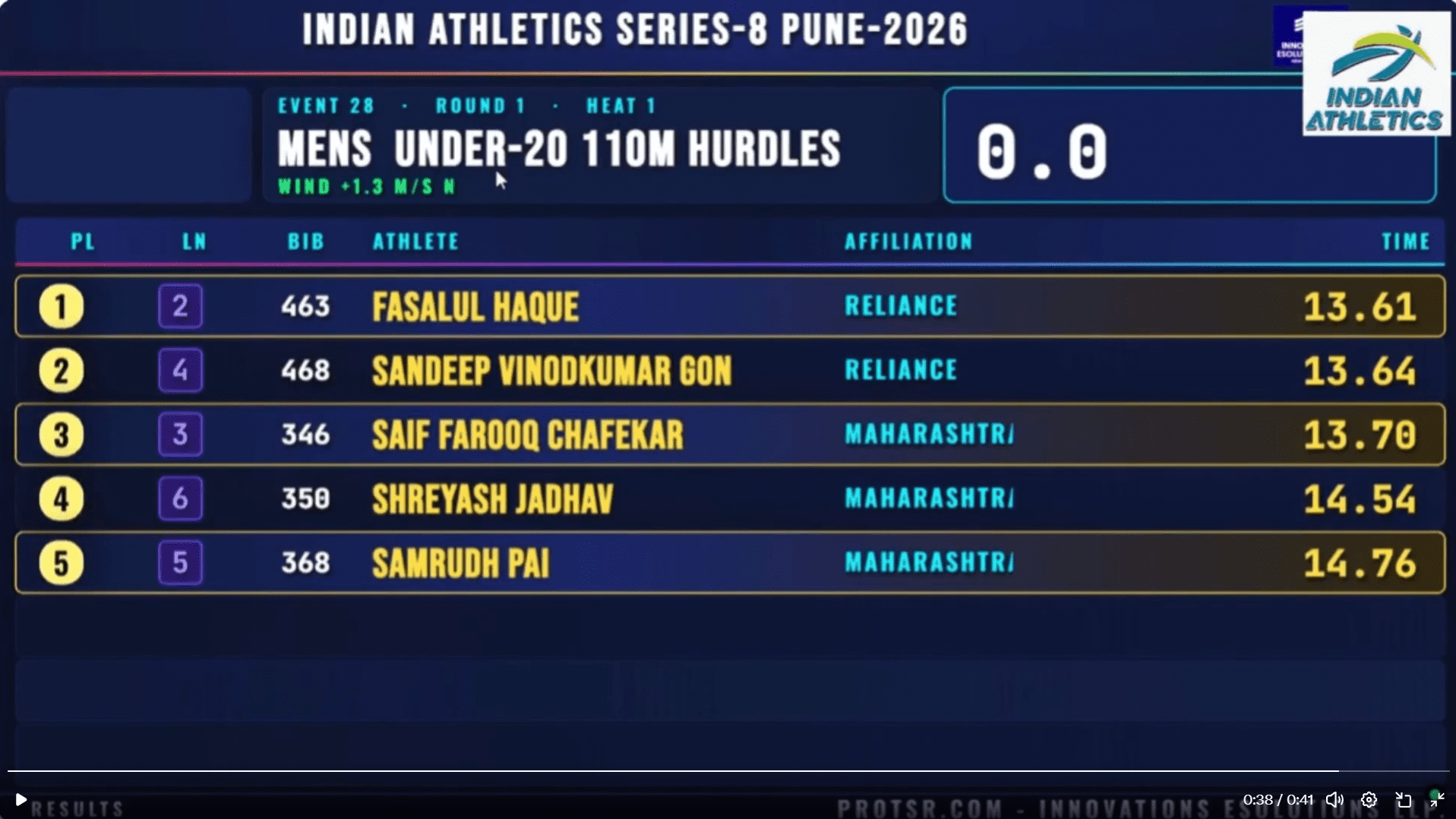
Reliance athlete Fasalul Haque delivered a sensational performance at the Indian Athletics Series–8, breaking the Indian U20 national record in the men’s 110m hurdles with a lifetime best of 13.61 seconds.
The young hurdler eclipsed the previous national record mark and continued the remarkable rise in standards that Indian junior hurdling has witnessed over the past year.
Adding further depth to the event, Sandeep, who finished second, also clocked a time faster than the previous national record, highlighting the growing competitiveness of the discipline among India’s emerging athletes.
According to Athletics Federation of India records, the previous U20 national record of 13.69 seconds was set by Yuvaraj S at the Junior Federation Cup last year. However, that mark had already been surpassed earlier this season when Kiran K clocked 13.66 seconds at the Junior Federation Cup.
Fasalul’s 13.61s now establishes a new national benchmark and further cements his status as one of India’s most promising sprint hurdlers.
The progression of the event over the last 12 months has been particularly striking. In the span of just one year, four different athletes have collectively produced six performances faster than the old national record of 13.69 seconds. During that period, the national record itself has been improved three separate times, underlining the rapid evolution of men’s junior hurdling in India.
India’s national record holder Tejas Shirse continued his impressive run on the international circuit, clinching the silver medal in the men’s 110m hurdles at the New Taipei City Athletics Open 2026.
In a thrillingly close final, Shirse clocked 13.58 seconds to finish second, missing out on gold by the narrowest of margins. Chinese Taipei’s 20-year-old Hsieh Yuan-kai produced a stunning run to take top honours in 13.57 seconds, with just 0.01 seconds separating the two athletes at the finish line.
The result adds another strong international performance to Shirse’s growing résumé as he continues to establish himself as one of Asia’s leading hurdlers.
The Maharashtra athlete has been India’s premier 110m hurdler over the last two seasons. In May 2024, he rewrote the national record books when he clocked 13.41 seconds at the Motonet Grand Prix in Finland, breaking Siddhanth Thingalaya’s seven-year-old national mark of 13.48 seconds.
Since then, Shirse has enjoyed a remarkable rise. He has dominated the domestic circuit, winning three consecutive National Games gold medals and setting a new Games record of 13.65 seconds at the 2025 edition in Dehradun. Earlier that year, he also broke the Indian national record in the 60m hurdles indoors, underlining his growing consistency across formats.
The 23-year-old’s journey has not been without challenges. After suffering an injury setback earlier this year, Shirse returned to competition in May and immediately reminded everyone of his quality by clocking 13.43 seconds in Chennai, just 0.02 seconds outside his own national record. The performance came after only a few weeks of training following a four-month injury layoff.
Born in Aurangabad to a farming family with no sporting background, Shirse transformed from a talented junior athlete into the country’s fastest-ever sprint hurdler