
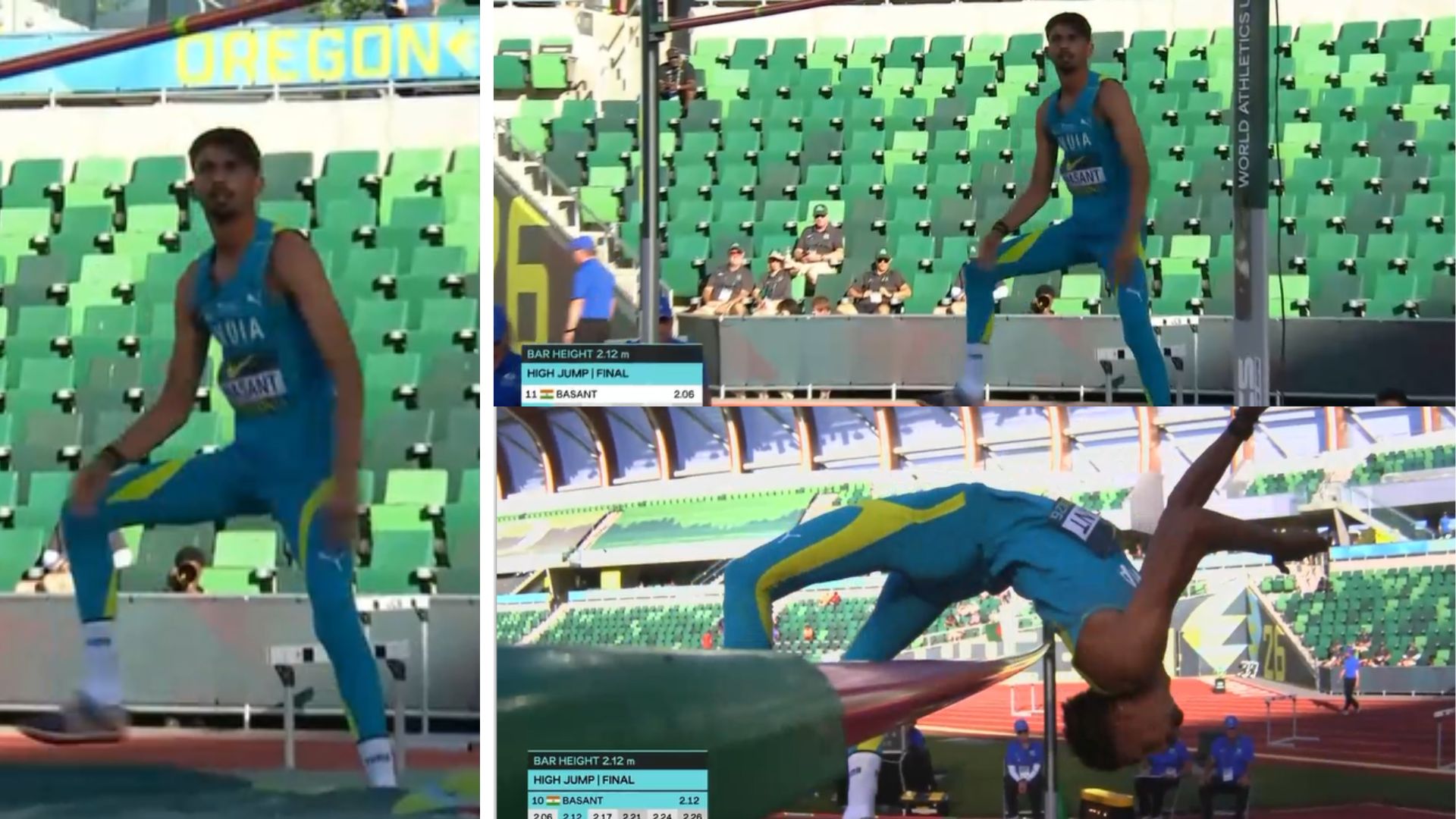
Basant delivered a breakthrough performance on the world junior stage, winning silver in the men’s high jump at the World Athletics U20 Championships and matching his lifetime best of 2.21m.
The young Indian high jumper showed composure under pressure throughout the competition, clearing 2.06m on his first attempt, 2.12m on his second and 2.17m on his first before producing his best when it mattered most — clearing 2.21m on his second attempt.
The clearance equalled Basant’s lifetime best and secured India its second medal of the championships.
It was an exceptionally tight contest at the top. Algeria’s Younes Ayachi, Basant and USA’s Otis Poole all cleared 2.21m, meaning the medals had to be decided on countback.
Ayachi took gold, Basant claimed silver and Poole finished with bronze, with the order determined by the number of attempts taken at the earlier heights.
Basant’s progression:
2.06m – first attempt
2.12m – second attempt
2.17m – first attempt
2.21m – second attempt
For Basant, the silver is a major moment on the international stage and a strong statement of his potential in Indian high jump.
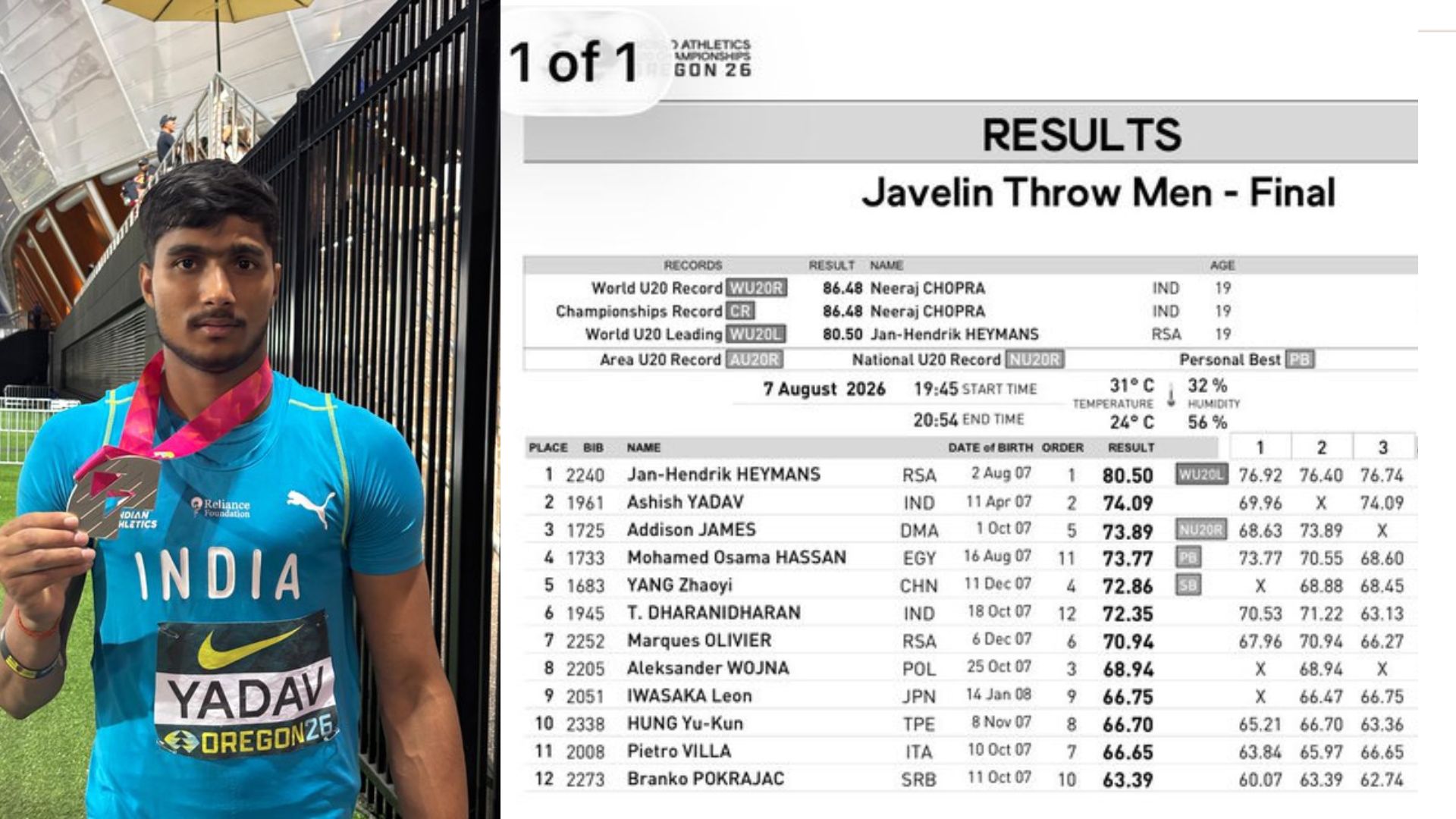
Ashish Yadav created history by winning the silver medal in the men’s javelin throw at the World Athletics U20 Championships 2026 in Eugene, becoming only the second Indian ever to win a medal in the event at the prestigious global age-group competition.
The young Indian produced a best throw of 74.09m to finish second, giving India its first medal of the championships. His achievement comes exactly a decade after Neeraj Chopra announced himself on the world stage by winning the World U20 javelin title in 2016, making Ashish only the second Indian after Neeraj to stand on the World U20 podium in the men’s javelin.
South Africa’s Jan-Hendrik Heymans dominated the competition with a world-leading throw of 80.50m to take the gold medal, while Dominica’s Addison James claimed bronze with a national U20 record of 73.89m.
Final standings:
Gold: Jan-Hendrik Heymans (South Africa) – 80.50m (World Lead)
Silver: Ashish Yadav (India) – 74.09m
Bronze: Addison James (Dominica) – 73.89m (U20 National Record)
Ashish’s silver-medal throw came in the early stages of the competition and proved good enough to keep him in medal position throughout. After three rounds, he had climbed to second place behind Heymans, with compatriot T. Dharanidharan lying fifth at 71.22m.
Remarkably, Ashish’s best effort was just 40cm short of his personal best of 74.49m, underlining the composure and consistency he displayed on one of the biggest stages in junior athletics.
The medal is another significant milestone for Indian javelin, a discipline that has enjoyed remarkable success since Neeraj Chopra’s breakthrough at the same championships in 2016. Ashish Yadav’s silver now adds another chapter to that legacy and reinforces India’s growing strength in the event at the global junior level.
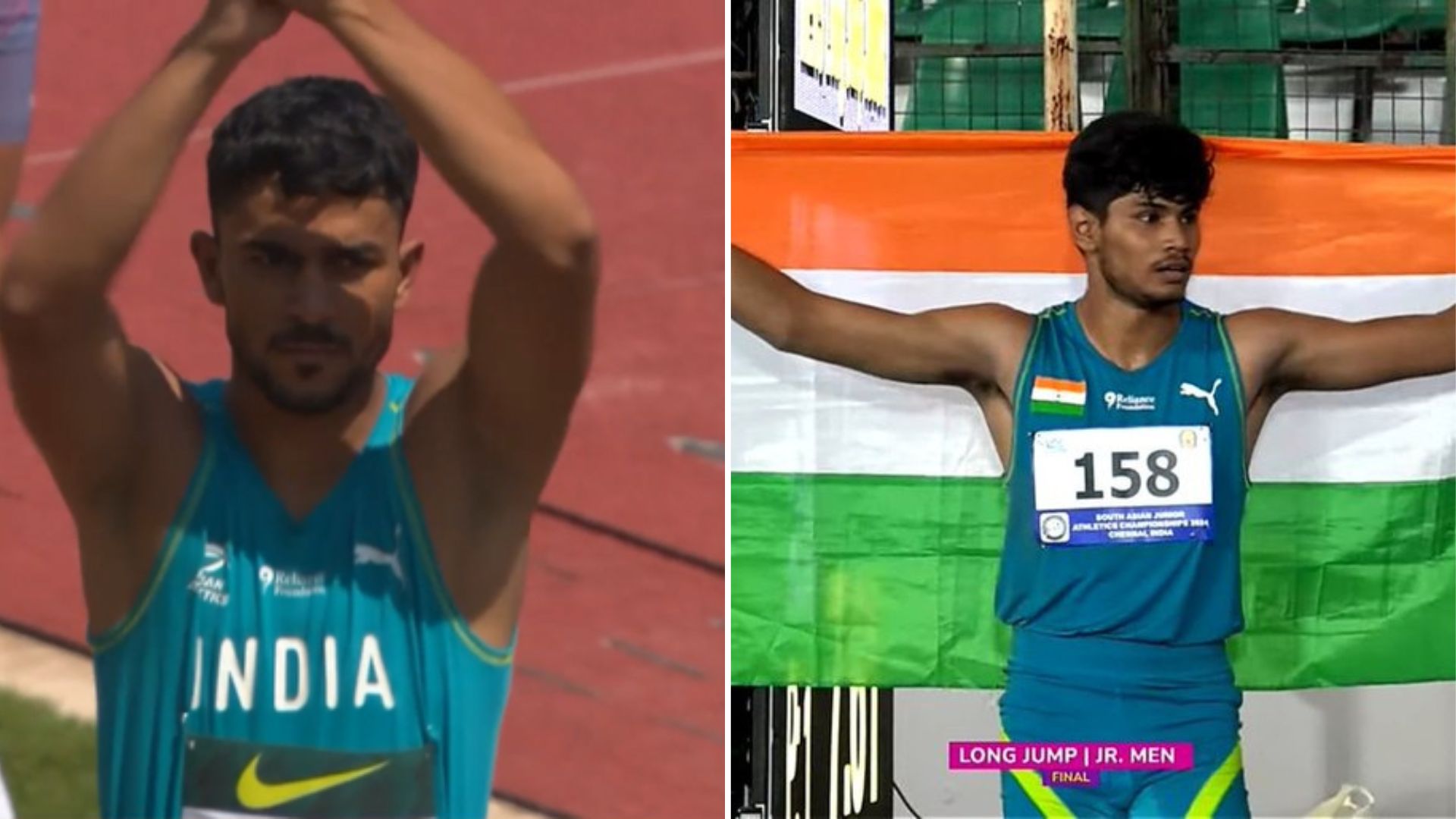
India will have two representatives in the men’s long jump final at the World Athletics U20 Championships after Shahnavaz Khan and Jithin Arjuna both secured their places among the top 12 qualifiers.
Shahnavaz produced the more comfortable qualification, finishing 5th overall with a best jump of 7.73m. He saved his best for his third and final attempt, moving into a qualifying position after opening with 7.51m and fouling his second jump.
The 7.73m effort placed Shahnavaz 4th in his qualification group and safely inside the top 12 overall.
Jithin, meanwhile, had to wait until the very end of qualification to secure his place. After recording identical jumps of 7.43m in his first two attempts, he delivered a crucial 7.57m on his final attempt.
That effort initially left him 6th in his group and 11th overall, but his qualification depended on the remaining athletes in the other group. Once all attempts were completed, Jithin held on to 12th place overall, taking the final qualifying spot.
The automatic qualification mark was 7.75m, but with fewer than 12 athletes reaching that distance, the remaining places were decided on the basis of the best overall performances.
Italy’s Daniele Inzoli was the standout performer in qualification and the only athlete across both groups to break the eight-metre barrier. He topped the standings with an impressive 8.15m.
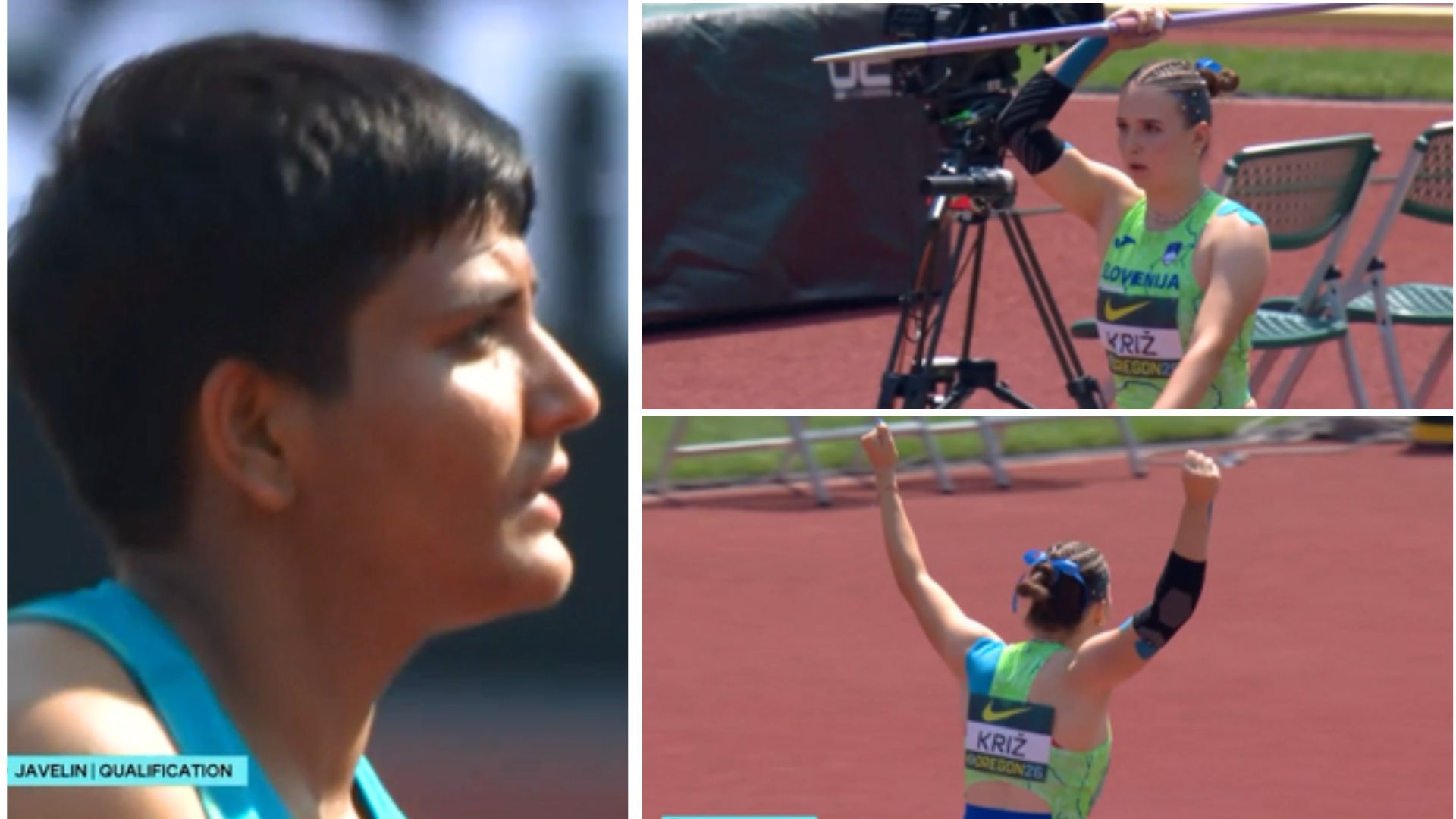
Poonam came agonisingly close to qualifying for the women’s javelin final at the World Athletics U20 Championships 2026, missing out by just one place after a dramatic finish to qualification.
Poonam opened with a throw of 48.81m, a mark that kept her firmly in contention for a place in the final. However, she was unable to improve on it, recording two consecutive fouls in her second and third attempts.
Her opening effort was enough to put her 7th in Qualification Group A and, for much of the qualification round, 12th overall — a position that would have secured the final qualifying spot.
But the qualification battle went down to the wire.
With Group B still completing its attempts, Slovenia’s Živa Križ, who was 12th in the throwing order, produced a crucial 49.22m on her final attempt.
That late effort lifted Križ into the top 12 and pushed Poonam down to 13th overall.
The Indian youngster was therefore left just outside the final despite a solid 48.81m opening throw.
It was a particularly painful exit for Poonam, who was just one position — and less than half a metre — away from making the World U20 final.
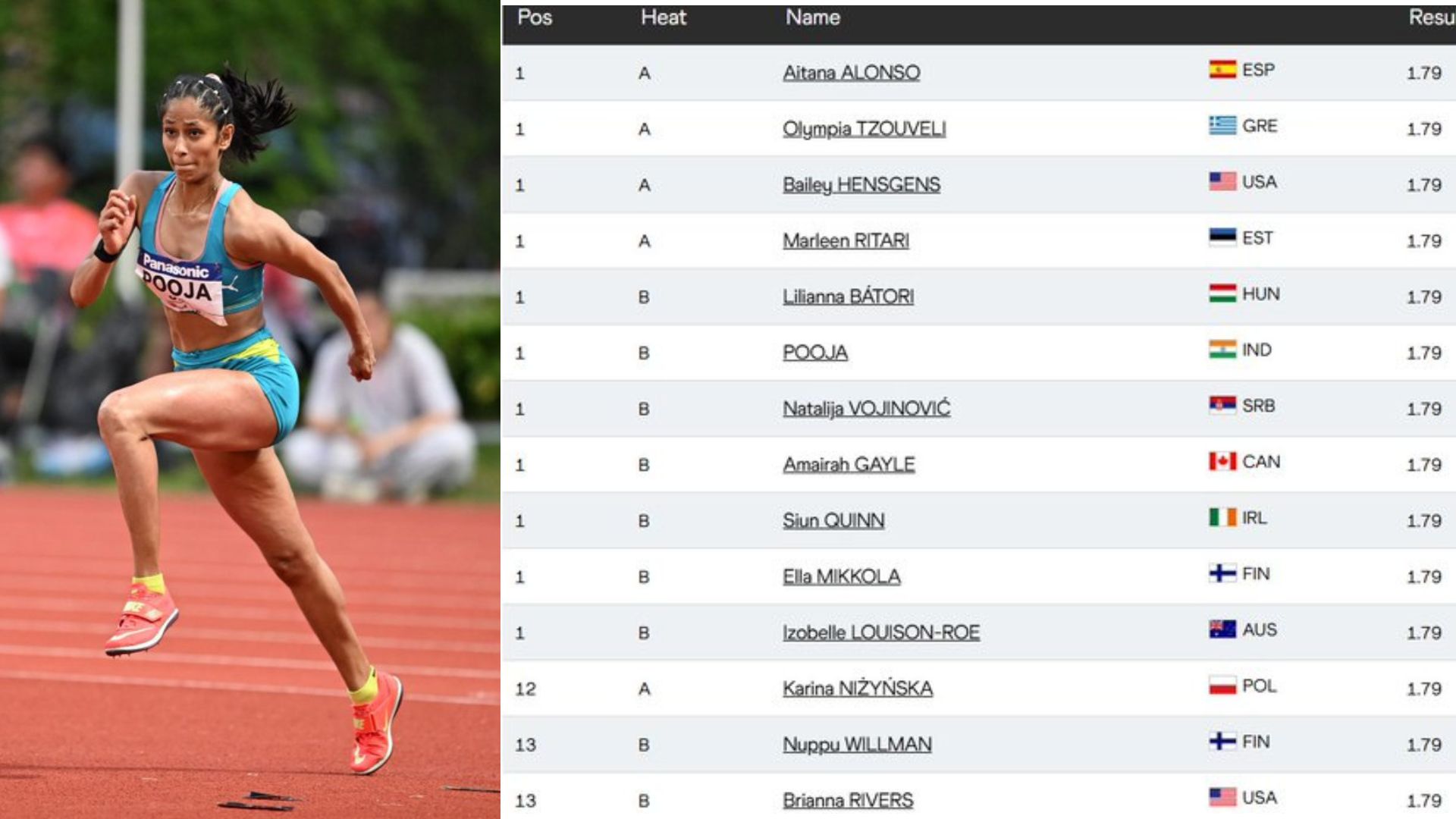
India’s Pooja Singh has officially qualified for the women’s high jump final at the World Athletics U20 Championships 2026 after producing a flawless qualification round.
The 19-year-old cleared both heights she attempted on her first try, going over 1.76m and then 1.79m without a single failure.
The automatic qualifying mark for the final was set at 1.84m, with the best 12 athletes also advancing if fewer than 12 cleared the standard. However, only 14 athletes across the two qualification groups managed to clear 1.79m, meaning all 14 earned places in the final.
Pooja’s qualification adds another chapter to what has been an impressive season for the Indian high jumper. She has emerged as one of India’s standout performers in 2026, setting a new Indian women’s high jump national record with a clearance of 1.93m.
That season-best mark also puts Pooja among the strongest contenders heading into the world final.
Having negotiated qualification without a single failed attempt, Pooja will now look to reproduce her best form when the medals are decided.
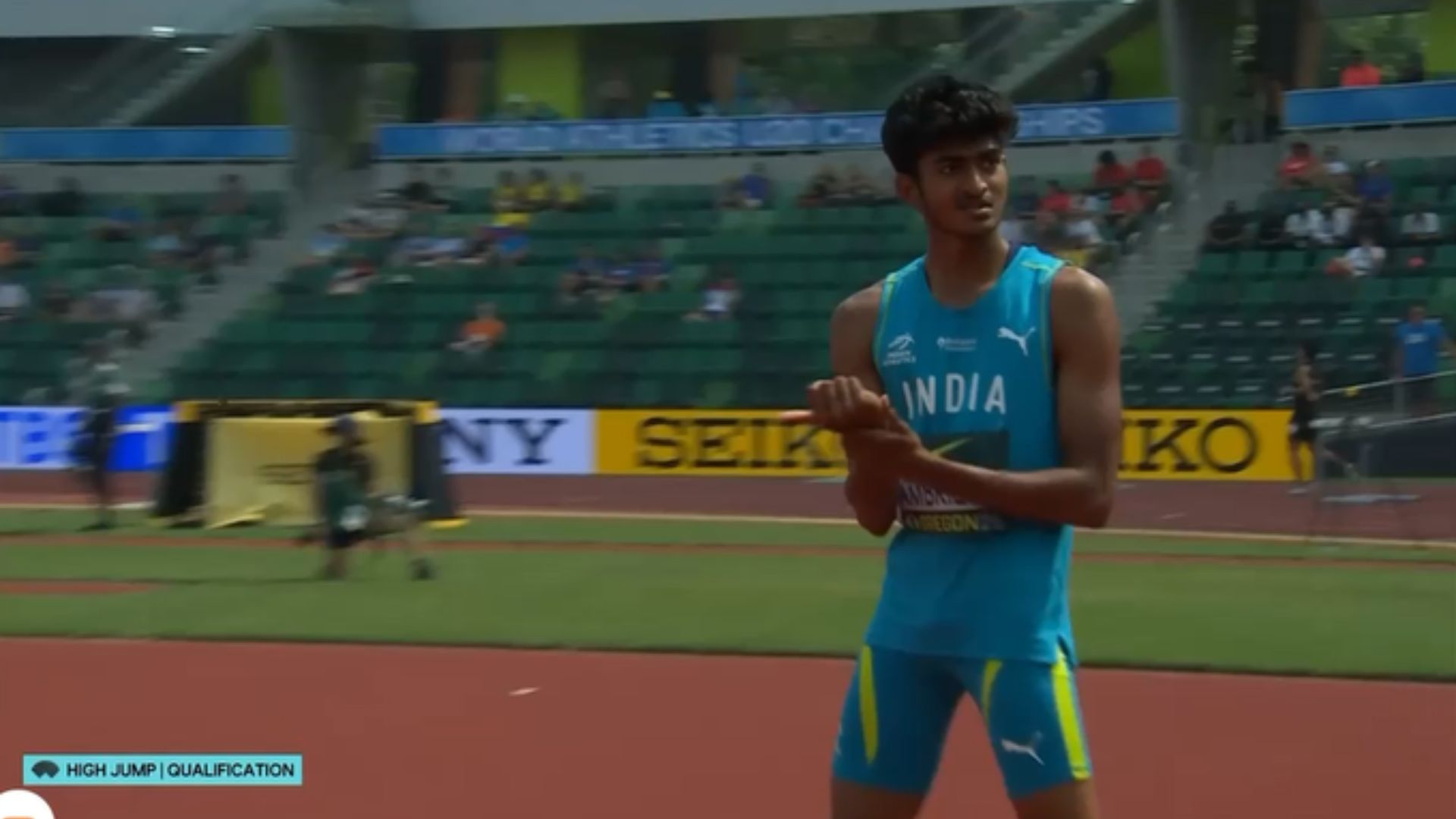
India’s K. Ambriesh saw his campaign come to an end in the men’s high jump qualification at the World Athletics U20 Championships 2026, narrowly missing out on a place in the final.
Competing in a highly competitive qualification round, Ambriesh produced a best clearance of 2.05m before being unable to progress further. He successfully cleared 2.05m, but could not negotiate 2.10m, falling short in all three attempts at the height.
The Indian youngster ultimately finished 12th in his qualification group, ending his challenge before the medal round.
Athletes were required to either clear the automatic qualifying height of 2.21m or finish among the 12 best performers across both qualification groups to secure a place in the final. However, Ambriesh’s clearance of 2.05m was not enough to earn one of the qualifying positions.
The qualification competition proved to be particularly challenging, with athletes battling for limited spots in the final through both clearances and countback. Despite a determined effort, Ambriesh was unable to improve on his best mark and bowed out at the qualification stage.
While his campaign ended earlier than hoped, competing at the World Athletics U20 Championships provided the young Indian high jumper with valuable international experience against some of the world’s leading junior athletes. Such exposure is an important step in the development of emerging talents as they prepare for future continental and global competitions.
Although Ambriesh’s journey concluded in the qualification round, India still has representation in the men’s high jump final through Basant, who earlier secured qualification with a clearance of 2.14m to finish 11th overall.
With the focus now shifting to the final, the Indian camp will look to build on Basant’s qualification while Ambriesh takes away valuable experience from his first appearance at the World Athletics U20 Championships.
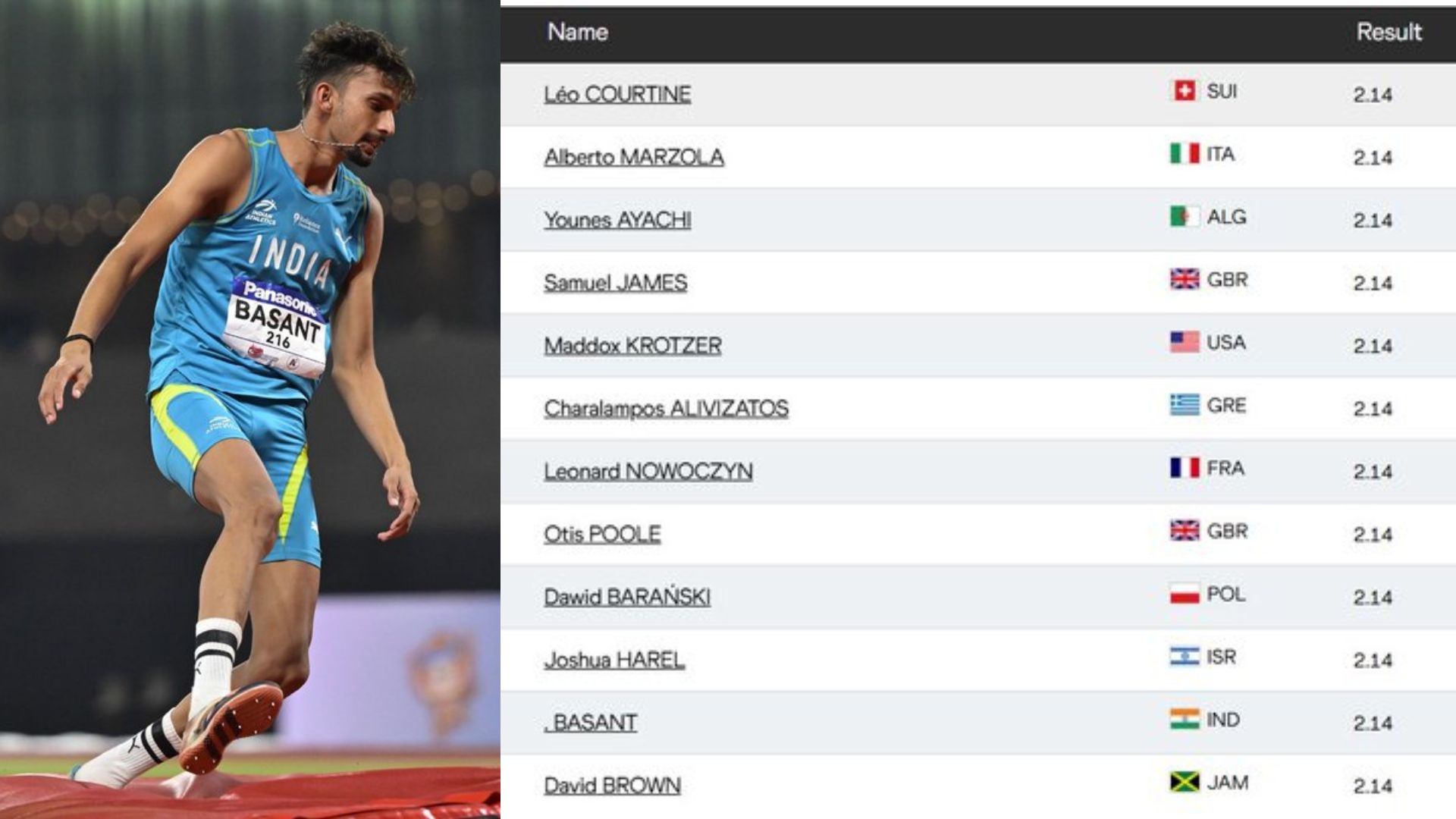
India received its first positive result of the day at the World Athletics U20 Championships 2026 as Basant booked his place in the men’s high jump final with a composed performance in the qualification round.
Basant cleared a best height of 2.14m to finish fifth in his qualification group and 11th overall, earning one of the 12 places available in the final. His consistent jumping and ability to clear crucial heights with minimal attempts proved decisive in a closely contested qualification competition.
The Indian youngster enjoyed an impressive series, beginning with a first-attempt clearance at 2.00m, before comfortably negotiating 2.05m and 2.10m, both on his first attempt. He then cleared 2.14m on his second attempt, a jump that ultimately secured his progression to the medal round.
Basant’s Qualification Series:
- 2.00m – Cleared on first attempt
- 2.05m – Cleared on first attempt
- 2.10m – Cleared on first attempt
- 2.14m – Cleared on second attempt
Interestingly, no athlete across either qualification group managed to clear the automatic qualifying height of 2.21m. As a result, qualification was determined by the athletes’ performances and countback, with 2.14m proving sufficient to secure a place among the top 12 finalists.
Basant’s composed display under championship conditions reflects his consistency and ability to deliver when qualification was at stake. Clearing three successive heights on the first attempt gave him a valuable advantage before his successful effort at 2.14m ensured his place in the final.
With qualification secured, Basant will now turn his attention to the medal round, where he will compete against the world’s best junior high jumpers. His performance in the qualifying competition provides a solid foundation as he looks to produce another strong display in the final and challenge for a place among the leading finishers at the World Athletics U20 Championships.
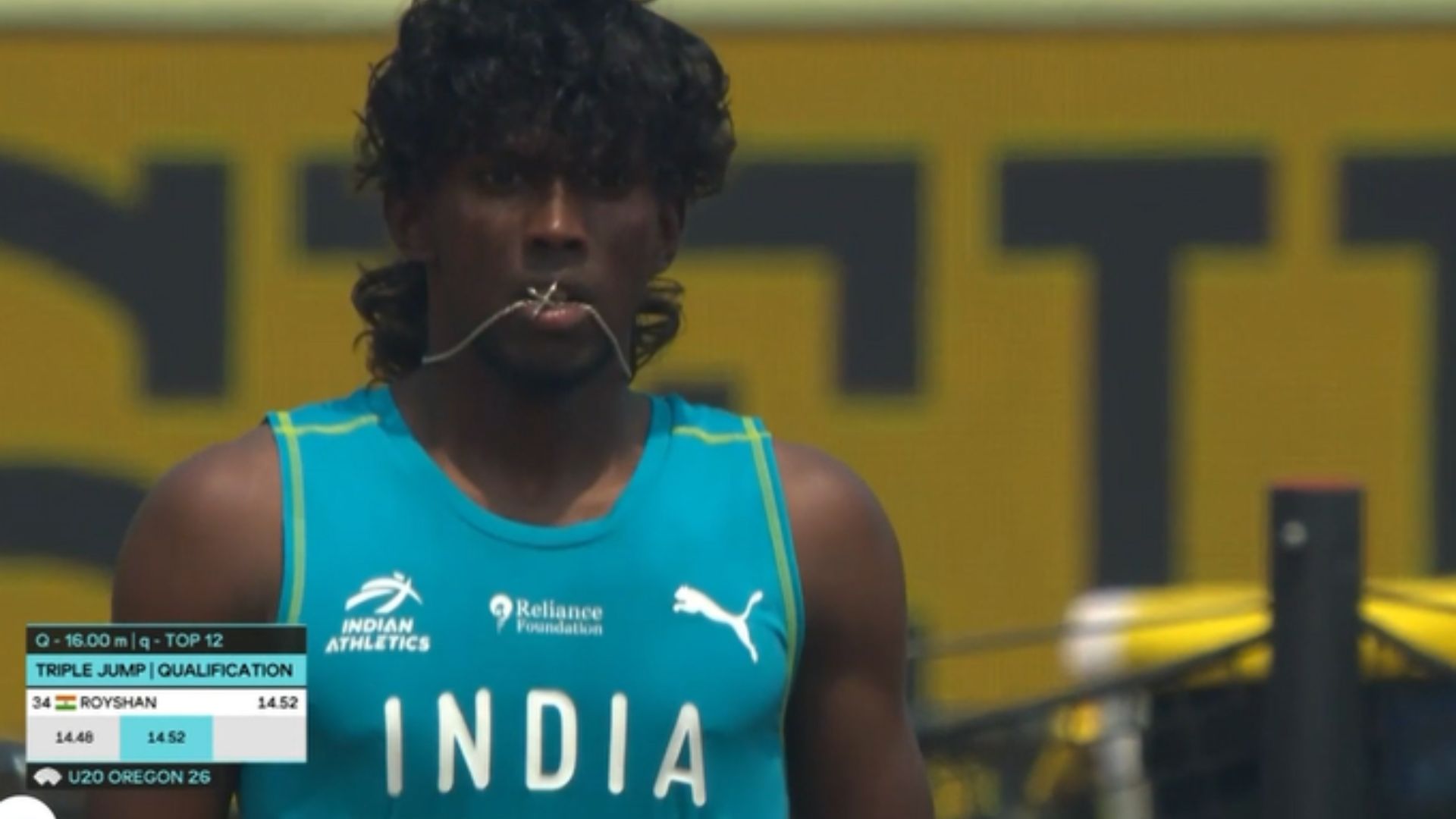
India’s P. Royshan and Dhanush Raj were unable to secure places in the men’s triple jump final at the World Athletics U20 Championships 2026, bringing the country’s campaign in the event to an end.
Competing in a strong qualification round featuring some of the world’s best junior jumpers, both Indian athletes fell short of the marks required to progress to the medal round. P. Royshan finished 25th overall, while Dhanush Raj placed 34th overall in the combined qualification standings.
Athletes needed to achieve the automatic qualifying standard of 16.00m or finish among the best 12 performers across both qualification groups to advance to the final. Despite their efforts, neither Indian jumper was able to meet the qualifying criteria.
The qualification round was topped by USA’s Miles Nesmith, who produced a personal best of 16.41m to comfortably surpass the automatic qualification mark and finish first overall heading into the final. Several other athletes also cleared the required standard or advanced based on their overall rankings to complete the 12-member final field.
Although Royshan and Dhanush Raj were unable to progress, competing at the World Athletics U20 Championships provided both athletes with valuable experience against the strongest junior triple jumpers in the world. The championships continue to serve as an important platform for young athletes to gain exposure at the highest international level and measure themselves against elite global competition.
The result concludes India’s participation in the men’s triple jump at the 2026 edition of the championships. Attention will now shift to the remaining Indian athletes still in action across track and field events, with several medal opportunities and qualification rounds yet to come in Eugene.
While the triple jump campaign ends in the qualification stage, India’s young athletes will look to build on the experience gained and continue their development in future international competitions.
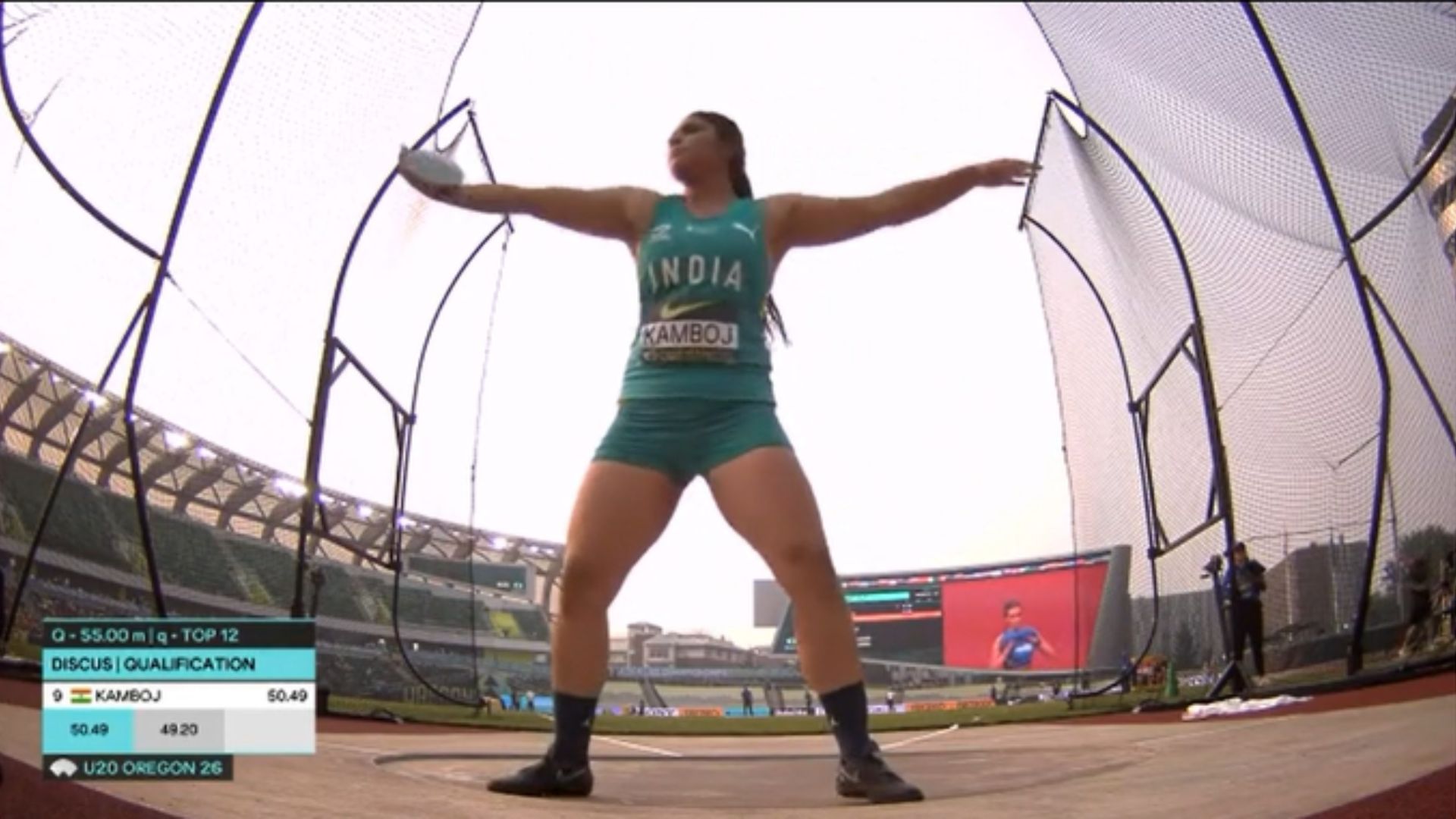
Amanat Kamboj has qualified for the women’s discus throw final at the World Athletics U20 Championships 2026 producing a season’s best throw of 52.58m to book her place among the world’s top young throwers.
The 19-year-old from Haryana finished sixth in Qualification Group A and 12th overall claiming the final qualifying spot for the championship final. Her 52.58m effort proved enough to edge into the 12-athlete field after the completion of both qualification groups.
Amanat, one of India’s leading junior throwers, delivered her best performance of the season when it mattered most. The throw highlighted the consistency that has made her one of the country’s brightest prospects in the discipline through a string of strong performances at the national junior level.
China dominated the qualification round, with Yixin Su topping the overall standings with a throw of 58.06m, while compatriot Chenyi Ma finished second overall after registering a season’s best 57.72m.
The World Athletics U20 Championships is the premier global competition for athletes under the age of 20 and has served as a launchpad for numerous future Olympic and World Championships medallists. A place in the final represents another significant milestone in Amanat’s development as she continues her transition towards the senior international circuit.
With qualification secured, Amanat will now turn her focus to the final, where she will look to build on her season’s best performance and challenge for a strong finish against the world’s best junior discus throwers.
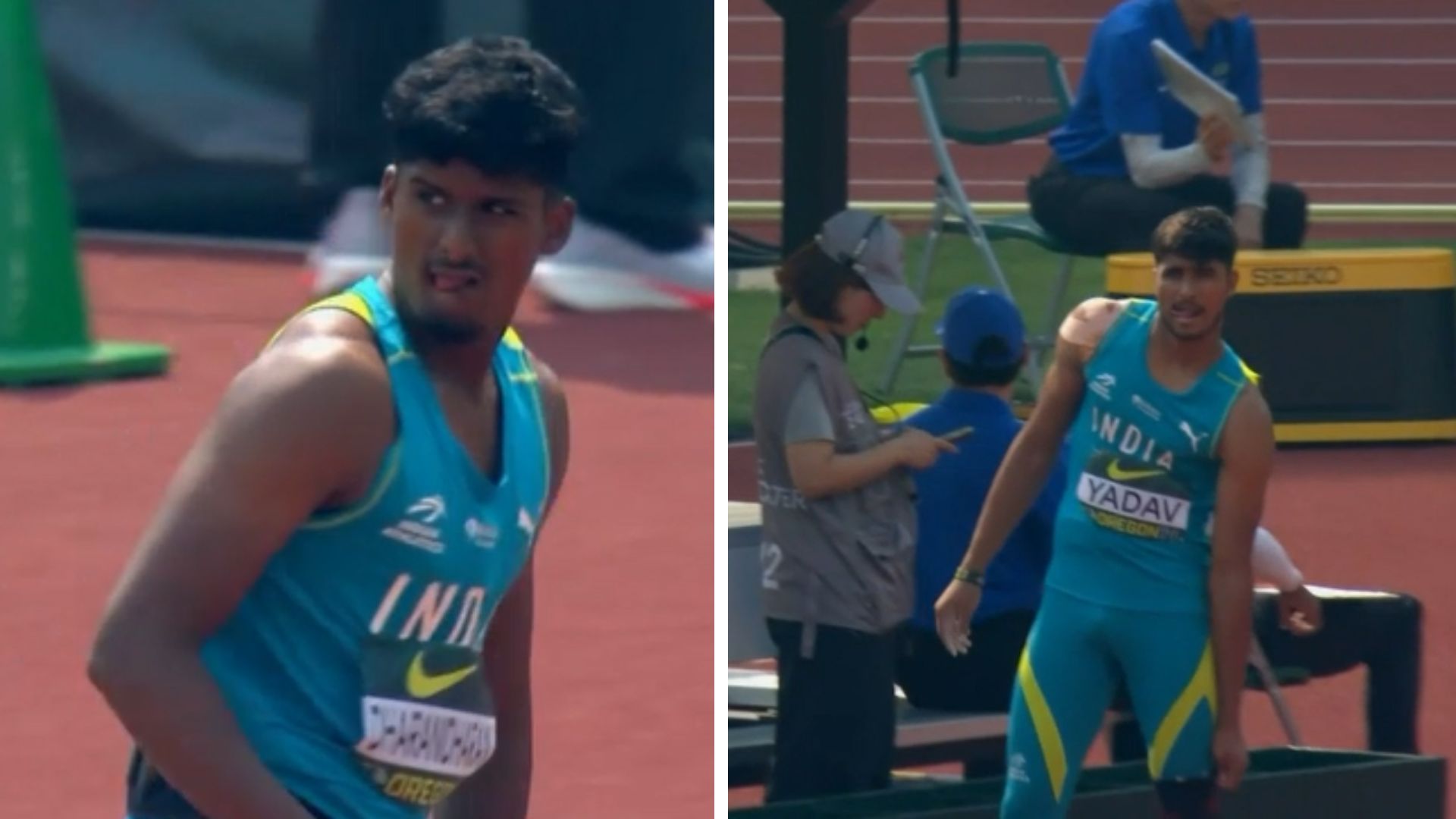
India will have two representatives in the men’s javelin throw final at the World Athletics U20 Championships 2026, with Ashish Yadav and T. Dharanidharan successfully advancing from the qualification round.
Ashish Yadav produced a confident performance to finish second overall across both qualification groups, registering a best throw of 69.87m. His consistent display ensured a comfortable qualification and established him as one of the leading contenders heading into the final.
Joining him in the medal round is T. Dharanidharan, who secured the 12th and final qualifying spot with a best effort of 68.07m. The Indian thrower held his nerve in a closely contested qualification round to book his place among the world’s top junior javelin throwers.
The qualification competition was topped by South Africa’s Jan-Hendrik Heymans, who was the only athlete to surpass the automatic qualification standard, recording an impressive 76.02m to lead the field into the final.
India’s double qualification is a significant achievement, ensuring strong representation in one of the championship’s most competitive field events. With Ashish finishing second overall and Dharanidharan also progressing, the Indian contingent will have two opportunities to challenge for medals in the final.
Both athletes have demonstrated consistency throughout the season and will now aim to produce their best performances on the biggest stage in junior athletics. Ashish enters the final with momentum after one of the strongest qualification performances, while Dharanidharan will look to build on his successful progression and improve further in the medal contest.
With two Indian javelin throwers reaching the World U20 final, India continues to showcase its growing strength in the event at the junior level. The final promises to be an exciting contest as Ashish Yadav and T. Dharanidharan take on the world’s best young javelin throwers in pursuit of a podium finish.