





The Sanlam Cape Town Marathon may still be chasing official World Marathon Major status, but the 2026 edition delivered exactly the kind of spectacle global road running wanted to see.
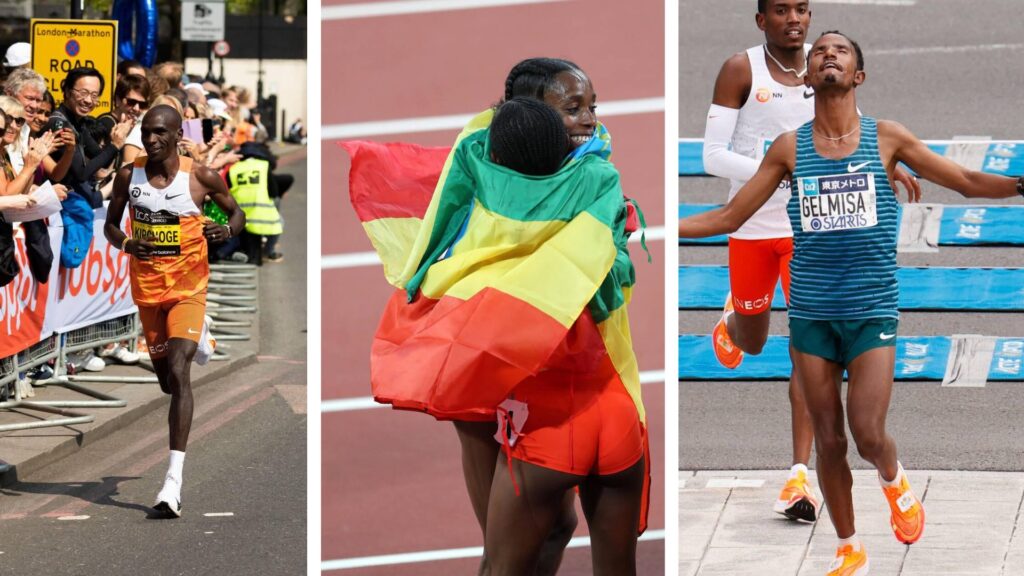
Ethiopia’s Mohamed Esa and Dera Dida produced commanding victories in the elite races, while marathon legend Eliud Kipchoge officially began his ambitious “World Tour” project on African soil for the very first time.
The men’s race belonged to Esa.
The Ethiopian clocked a stunning 2:04:55 to smash the course record and register an African all-comers’ record in Cape Town. It was also the first marathon victory of his career after several near-misses on the global circuit, including runner-up finishes in Tokyo, Boston and Chicago in previous years.
Esa made his decisive move around the 40km mark after a tightly packed lead group had gone through halfway in 1:02:49. He eventually held off compatriot Yihunilign Adane by four seconds in a dramatic finish, while Kenya’s Kalipus Lomwai finished third.
In the women’s race, Ethiopia completed a clean sweep of the podium.
Berlin Marathon runner-up Dera Dida timed her race perfectly, pulling away in the closing stages to win in 2:23:18 ahead of Mestawut Fikir and Waganesh Mekasha Amare. The lead group had remained largely intact until 35km before Dida finally broke clear over the final kilometres.
But beyond the results, much of the attention centred on Kipchoge.
The two-time Olympic champion and former world record holder finished in 2:13:29 as part of a new personal mission — running marathons across all seven continents over the next few years. Cape Town marked the first African stop of that journey and, remarkably, the first competitive marathon Kipchoge has ever run on African soil.
“Africa is where my journey as a runner began,” Kipchoge had said before the race, calling the moment deeply symbolic.
At 41, Kipchoge is no longer chasing world records in the same way he once did. The marathon landscape itself has changed dramatically in recent months, with men’s marathon running entering an astonishing new era after multiple sub-two-hour performances at the London Marathon earlier this year.
Yet Kipchoge’s presence still gives races enormous global visibility.
That matters greatly for Cape Town.
The marathon is currently bidding to become the first African race inducted into the prestigious Abbott World Marathon Majors series — joining events like London, Boston, Berlin and Tokyo. Last year’s edition had been cancelled shortly before the start due to dangerous weather conditions, delaying Cape Town’s evaluation process.
This year’s successful staging, massive participation numbers and elite performances were therefore hugely important for organisers trying to prove Africa can host a marathon at the very highest level.
And if the atmosphere, crowds and quality of racing from this edition are anything to go by, Cape Town’s case is becoming increasingly difficult for the marathon world to ignore.