| Bhubaneswar is done. Now comes the final audition.
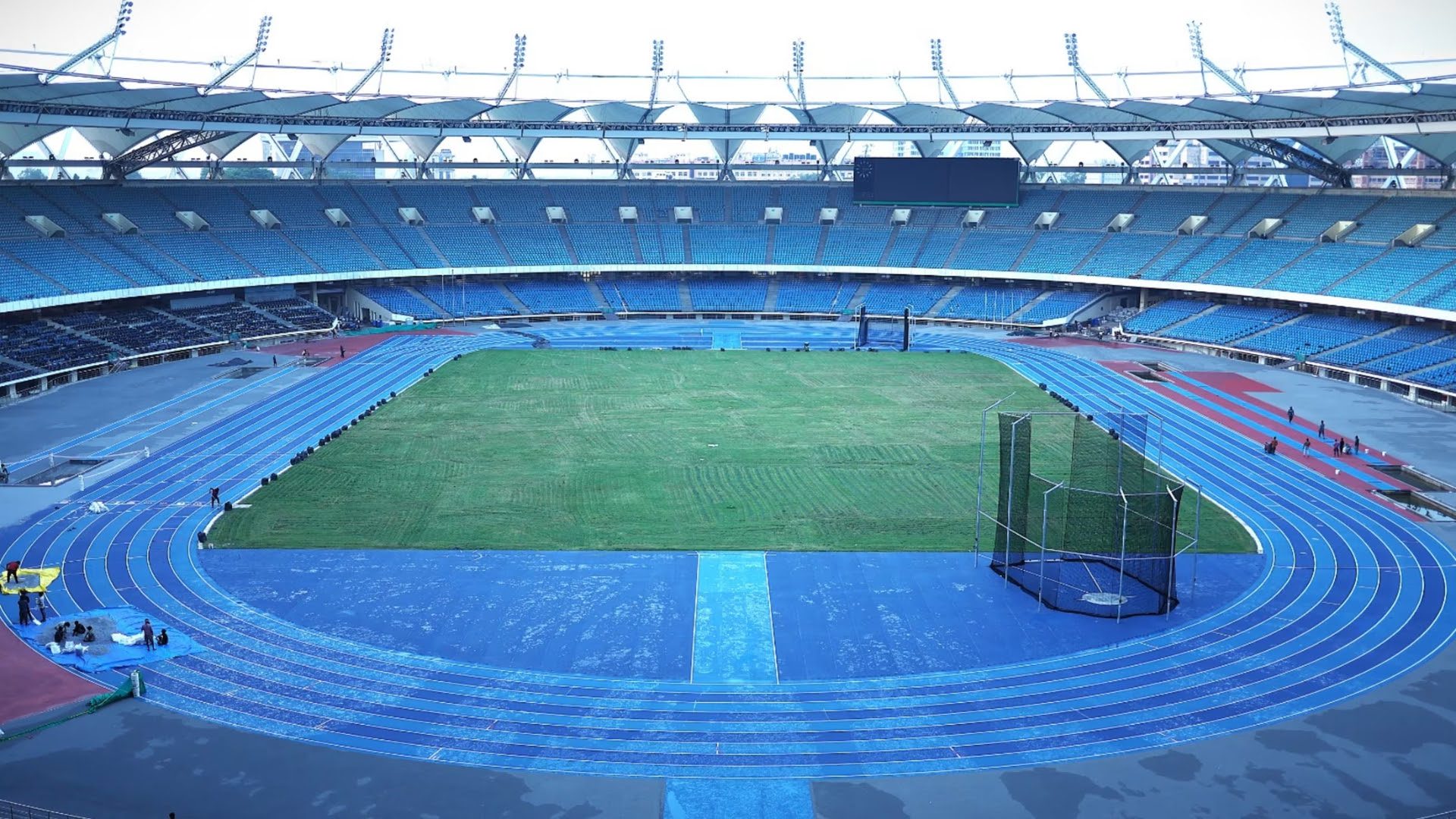
After India’s first-ever World Athletics Continental Tour Silver meet, attention shifts to New Delhi, where the Indian Athletics Series Final will be held on September 10, 2026, at the iconic JLN Stadium.
And this isn’t just another domestic meet.
The competition is mandatory for athletes bound for the Asian Games and will be their final chance to compete before the Athletics Federation of India (AFI) finalises the Indian team for the 2026 Asian Games.
In other words, one last competition before the Asian Games team is locked.
So, Who Gets In?
The Indian Athletics Series Final will be an invitational meet.
Athletes qualify through the national rankings, based on performances during the 2026 season up to the Inter-State Championships.
There will be no heats or qualifying rounds either.
Every event is a direct final.
That should make for a fast, high-pressure evening of athletics.
And There’s Money on the Line
The top six finishers in every event will earn prize money:
1st: ₹1,00,000
2nd: ₹50,000
3rd: ₹25,000
4th: ₹20,000
5th: ₹15,000
6th: ₹10,000
The Indian Athletics Series itself is new this year, replacing the old Indian Grand Prix format.
The big change is its regional structure, designed to give athletes more opportunities to compete without repeatedly travelling across the country.
30 Events. 372 Athletes and Reserves.
The AFI has yet to officially announce details of the Series Final, but NNIS Sports has learned from multiple sources that the programme will feature 30 events: 15 men’s and 15 women’s.
They are:
100m, 200m, 400m, 800m, 1500m, 3000m Steeplechase, 110m Hurdles, 400m Hurdles, High Jump, Pole Vault, Long Jump, Triple Jump, Shot Put, Hammer Throw and Javelin Throw.
Eight athletes have qualified for each event, while the 1500m and 3000m Steeplechase will have 12 athletes each.
Four reserves have also been named for every event except the 1500m, which has two.
Add it all up, and the list contains 372 athletes, including reserves.
One important caveat before getting into the names:
Performances from the Continental Tour Silver meet have not yet been included. The AFI compiled this list before that competition.
MEN
100m
The men’s 100m is headed by Gurindervir Singh’s 10.09s, followed by Animesh Kujur at 10.15s.
Gurindervir Singh: 10.09s
Animesh Kujur: 10.15s
Tamilarasu S: 10.23s
Pranav Gurav: 10.29s
Harjit Singh: 10.32s
Rushiprasad Desai: 10.35s
Vibhaskar Kumar: 10.36s
Lalu Prasad Bhoi: 10.38s
Reserves:
R1. Abhay Singh: 10.41s
R2. Nuzrat: 10.41s
R3. Manav Rajanarayanan: 10.41s
R4. Laukik Anant Melge: 10.43s
200m
Animesh Kujur tops the 200m list with 20.47s.
Animesh Kujur: 20.47s
Jishnu Prasad P K: 20.76s
Vishal T K: 20.80s
Abhay Singh: 20.82s
Dharmveer Choudhary: 20.82s
Tamilarasu S: 20.83s
Dondapati Mruty Jayram: 20.97s
Jay Kumar: 20.98s
Reserves:
R1. Ragul Kumar G: 21.03s
R2. Adesh Garsa: 21.06s
R3. Gokul Pandiyan J: 21.14s
R4. Mohit Kumar: 21.16s
400m
A loaded field, headed by Vishal T K’s 44.98s, with Rajesh Ramesh, Jay Kumar, Manu TS and Amoj Jacob also making the eight.
Vishal T K: 44.98s
Rajesh Ramesh: 45.26s
Jay Kumar: 45.47s
Manu T S: 45.57s
Dharmveer Choudhary: 45.68s
Vikrant Panchal: 45.88s
Amoj Jacob P A: 45.99s
Mohammed Ashfaq: 46.05s
Reserves:
R1. Mijo Chacko Kurian: 46.15s
R2. Astik Pradhan: 46.21s
R3. Setu Mishra: 46.29s
R4. Muhammed Anas Yahya: 46.31s
800m
Mohammed Afsal P: 1:47.00
Pradeep Senthilkumar: 1:47.09
Krishan Kumar: 1:47.23
Mogali Venkatram Reddy: 1:47.46
Prakash Gadade: 1:47.57
Vinod Kumar Banoth: 1:47.66
Satyajeet Pujari: 1:47.68
Aman Kumar: 1:47.75
Reserves:
R1. Prathamesh Amarish Deore: 1:47.79
R2. Anu Kumar: 1:48.21
R3. Salman Farookh: 1:48.23
R4. Shyam Milan Bind: 1:48.27
1500m
Yoonus Shah: 3:37.55
Gulveer Singh: 3:37.87
Rahul Baloda: 3:40.06
Sakir: 3:40.83
Ajay Kumar Saroj: 3:40.92
Ritik Deol: 3:41.53
Shailabh: 3:41.76
Sunil Dawar: 3:42.53
Sonu: 3:43.38
Gambhir Singh: 3:44.00
Arjun Waskale: 3:44.74
Nabeel Sahi M P: 3:44.92
Reserves:
R1. Nirmit Dahiya: 3:44.93
R2. Shivam Sharma: 3:45.02
3000m Steeplechase
Avinash Sable: Performance not provided
Sharuk Khan: 8:47.81
Balkishan: 8:49.33
Shubham Bhandare: 8:49.39
Shubham Depake: 8:53.84
Ranvir Kumar Singh: 8:56.20
Vinayak Pratap Singh: 8:56.32
Sunil Joliya Jinabhai: 8:58.38
Samit Ravindra Tong: 8:59.92
Vikash DALAL: 9:00.76
Dhuladev BABAN: 9:02.92
Ankit RAJESH: 9:03.63
Reserves:
R1. Prince RAJ Mishra: 9:04.26
R2. Gurlal SINGH: 9:04.43
R3. Dharmender: 9:05.46
R4. Jujhar SINGH: 9:05.87
110m Hurdles
Tejas Ashok Shirse: 13.27s
Krishik Manjunath: 13.44s
Manav Rajanarayanan: 13.66s
Madhvendra Singh: 13.82s
Muhammed Lazan VK: 13.83s
Siddhanth Thingalaya: 13.95s
Rathish Pandidurai: 13.96s
Graceson Jeeva A: 13.96s
Reserves:
R1. Tejaswin Shankar: 14.07s
R2. Shahul S: 14.07s
R3. Aravinth Arumugam: 14.20s
R4. Harmanjeet Singh: 14.26s
400m Hurdles
Yashas Palaksha: 49.00s
Santhosh Kumar T: 49.06s
Jabir M: 49.93s
Subhas Das: 50.36s
Murad Sirman: 50.48s
Karna Bag: 50.80s
Vignesh B: 50.86s
Aryan Prajwal Kashyapa: 50.95s
Reserves:
R1. Shakti Singh: 50.98s
R2. Arjun Pradeep: 51.04s
R3. Dhaval Utekar: 51.19s
R4. Amit Kumar: 51.19s
High Jump
This could be one of the events to watch: Sarvesh Kushare 2.31m, Aadarsh Ram 2.27m and Tejaswin Shankar 2.26m.
Sarvesh Anil Kushare: 2.31m
Aadarsh Ram J: 2.27m
Tejaswin Shankar: 2.26m
Basant: 2.21m
Jesse Sandesh: 2.19m
Swadhin Kumar Majhi: 2.18m
Dhairyshil Gayakwad: 2.15m
Sudeep: 2.15m
Reserves:
R1. Aaditya Raghuvanshi: 2.13m
R2. Afroz Ahmed: 2.13m
R3. Gurjeet Singh: 2.12m
R4. Ambriesh K: 2.12m
Pole Vault
Dev Kumar Meena: 5.46m
Kuldeep Kumar: 5.45m
Reegan G: 5.35m
Ramratan: 5.20m
Gowtham M: 5.15m
Kavinraja S: 5.12m
Kamal Loganathan: 5.10m
Siva S: 5.05m
Reserves:
R1. Avneesh Kumar: 5.00m
R2. Anshu Patel: 5.00m
R3. Rambeer Singh Saini: 4.90m
R4. Tanuj Kumar: 4.90m
Long Jump
Sreeshankar M: 8.38m
Shahnavaz Khan: 8.30m
David P: 8.22m
Lokesh Sathyanathan: 8.21m
Jithin Arjunan R C: 8.12m
Sunny Kumar: 7.90m
Mohd Atta Sazid: 7.90m
Purushotham: 7.87m
Reserves:
R1. Amitra Ghosh: 7.85m
R2. Mohammed Muhassin: 7.85m
R3. Arya S: 7.85m
R4. Sarun Payasingh: 7.80m
Triple Jump
Praveen Chithravel: 17.08m
Selva Prabhu T: 17.05m
Abdulla Aboobacker: 16.83m
Karthik Unnikrishnan: 16.80m
Mohanraj J: 16.53m
Gailey Venister D: 16.48m
Mohammed Muhassin: 16.26m
Vishal Bahadur: 16.10m
Reserves:
R1. Jay Shah Pradeep: 15.94m
R2. Pradeep Kumar: 15.83m
R3. Royshan P: 15.75m
R4. Yuvaraj K: 15.71m
Shot Put
Tajinderpal Singh Toor: 21.03m
Karanveer Singh: 20.49m
Samardeep Singh Gill: 20.46m
Sanyam Sanjay: 19.09m
Dhanveer Singh: 18.60m
Aniket: 18.13m
Anurag Singh Kaler: 18.03m
Ravi Kumar: 17.83m
Reserves:
R1. Sahib Singh: 17.79m
R2. Ommkar Prasad Nand: 17.77m
R3. Sri Kumaran S: 17.66m
R4. Atul: 17.65m
Hammer Throw
Damneet Singh: 70.64m
Praveen Kumar: 69.58m
Ashish Jakhar: 68.52m
Mohammad Shahban: 68.28m
Ajay Kumar: 64.93m
Devang: 63.38m
Mukul: 63.37m
Harshit Kumar: 61.90m
Reserves:
R1. Vikrant Ramesh Rainak: 61.81m
R2. Sachin Yadav: 61.79m
R3. Amit Pundir: 61.72m
R4. Naveen Yadav: 61.62m
Javelin Throw
Here’s another blockbuster field.
Neeraj Chopra: 88.05m
Rohit Yadav: 87.58m
Yashvir Singh: 83.72m
Sachin Yadav: 82.32m
Shivam Lohakare: 81.71m
Arshdeep Singh: 80.15m
Kishore Kumar Jena: 77.79m
Anand Singh: 77.68m
Reserves:
R1. Bibin Antony: 77.53m
R2. Vipul Yadav: 76.31m
R3. Parmod: 76.16m
R4. Sahil Silwal: 76.11m
WOMEN
100m
Giridharani R: 11.45s
Harita Bhadra: 11.55s
Sudeshna Shivankar: 11.56s
Sneha S S: 11.57s
Nithya Gandhe: 11.59s
Tamanna: 11.59s
Prakruthi Roopa Rao: 11.65s
Unnathi Aiyappa: 11.66s
Reserves:
R1. Srabani Nanda: 11.67s
R2. Daneshwari A T: 11.68s
R3. Suba Dharsini S: 11.70s
R4. Kusum Thakur: 11.71s
200m
Harita Bhadra: 23.14s
Unnathi Aiyappa: 23.40s
Prakruthi Roopa Rao: 23.58s
Sudeshna Shivankar: 23.90s
Kiran Pahal: 23.90s
Priyanka Sikarwar: 23.91s
Kusum Thakur: 23.94s
Fatema Begum: 23.97s
Reserves:
R1. Nancy: 23.99s
R2. Jyothi Yarraji: 24.00s
R3. Tamanna: 24.06s
R4. Rashdeep Kaur: 24.09s
400m
Vithya Ramraj: 51.96s
Kiran Pahal: 52.89s
Ansa Babu: 52.94s
Rashdeep Kaur: 53.10s
Prachi: 53.23s
Neeru Pathak: 53.23s
Devyaniba Zala: 53.26s
Aishwarya Mishra: 53.30s
Reserves:
R1. Poovamma M R: 53.31s
R2. KM Saloni Nagar: 53.47s
R3. Vijayakumari G K: 53.50s
R4. Priya H Mohan: 53.60s
800m
Pooja: 2:02.42
Gowthami Jayaraman: 2:04.17
Lili Das: 2:04.59
Priscilla Daniel: 2:05.35
|