




The eighth edition of the Khelo India Youth Games (KIYG) will take place across six cities in Telangana. The event will run from December 11 to 22, 2026. Around 8,000 young athletes will compete in this major multi-sport event. 8,000 young athletes are preparing to compete. It will be one of India’s biggest multi-sport events for young talent.
Athletes, parents, and coaches need to understand the eligibility rules. They should also know how the entry process works.Unlike open-entry tournaments, KIYG follows strict age, domicile, and federation-backed qualification rules.
Here is a complete breakdown of the eligibility criteria and selection pathways for KIYG 2026.
1. Age Eligibility: The Under-18 Cutoff
KIYG 2026 is strictly an Under-18 competition. According to the Sports Authority of India (SAI), athletes must be born on or after January 1, 2009, to be eligible to compete.
Because age fraud is strictly policed at the national level, athletes must pass mandatory age verification. Under the latest SAI guidelines, athletes need to provide any two of the following valid documents:
- Aadhaar Card or Passport
- Matriculation (Class 10) Certificate
- Birth Certificate issued by a Municipal Corporation or Gram Panchayat at least five years prior to the Games (on or before January 1, 2021).
2. State & UT Representation Rules
Athletes compete under the banner of their respective States or Union Territories rather than individual academies or clubs. To prove State/UT eligibility, an athlete must submit any one of the following:
- State Domicile Certificate
- Valid Passport
- School Bonafide Certificate or Parents’ Place of Posting/Working Certificate (for central government/defence wards).
Note: Incomplete or mismatched age and domicile paperwork is the most common reason for last-minute disqualification.
3. How Athletes Qualify: The Two Selection Pathways
There is no direct or open registration for individual athletes to sign up for the Khelo India Youth Games. All entries must be routed through authorised bodies—specifically the relevant National Sports Federations (NSFs), the School Games Federation of India (SGFI), or State/UT Sports Departments via the National Sports Repository System (NSRS) portal.
A. The Merit & Federation Route
While SAI has not released a consolidated public rulebook for every single sport for the 2026 edition, standard qualification relies on merit quotas determined by each sport’s NSF.
School Games & Nationals: Selection committees heavily weigh performances from recent National School Games (such as the 2025 edition) and junior national championships.
Team & Relay Quotas: For events like athletics relays and team sports, respective State associations are tasked with conducting trials or nominating their top state squads based on approved quotas.
B. The Wild-Card Entry System (For Underrepresented States)
To ensure nationwide participation, SAI has introduced a dedicated wild-card pathway for 11 States and Union Territories that sent 50 or fewer athletes to the previous edition in Bihar (May 2025).
Eligible States/UTs: Andaman & Nicobar Islands, Arunachal Pradesh, Dadra & Nagar Haveli and Daman & Diu, Ladakh, Lakshadweep, Meghalaya, Mizoram, Nagaland, Puducherry, Sikkim, and Tripura.
How it works: These 11 regions can nominate their top two boys and top two girls across 15 individual sports (including Athletics) via the NSRS portal.
Performance Benchmark: Nominations must be backed by verified results in recognised international, national, state, or district competitions held between 2023 and 2025. A Wild Card Evaluation Committee (WCEC) reviews these credentials before granting final approval.
4. Athletics at KIYG 2026: Events & Venue
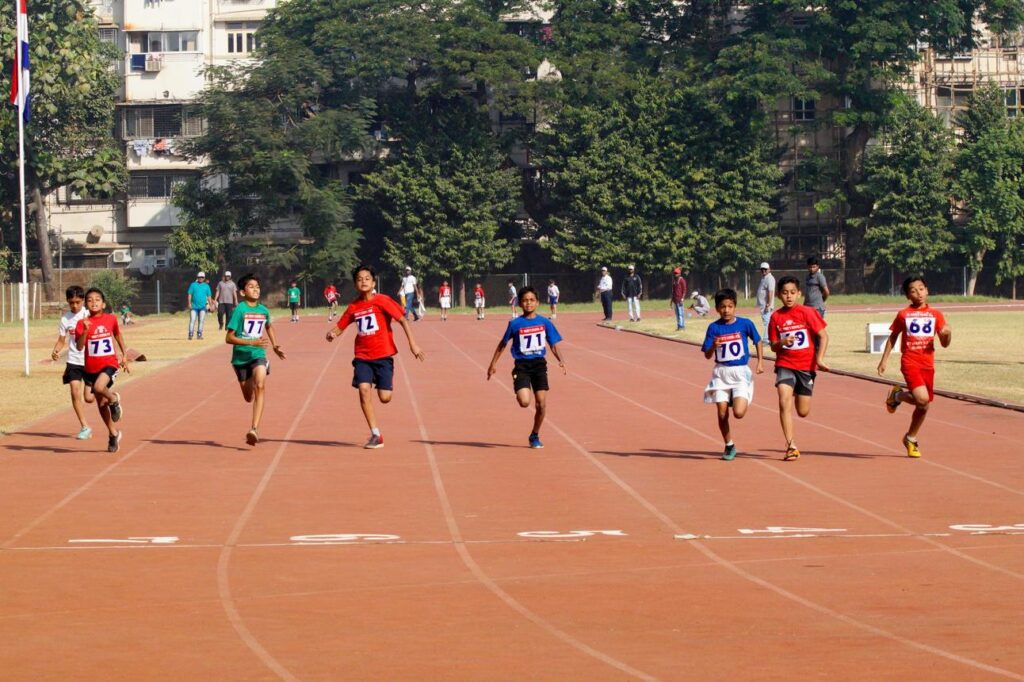
Athletics remains one of the flagship disciplines of the Games, with track and field events scheduled to be hosted at the Jawaharlal Nehru Outdoor Stadium in Hanamkonda.
Athletes competing in the Under-18 track and field programme will vie for medals across 14 individual events per gender (plus relays):
| Event Category | Boys’ Events | Girls’ Events |
|---|---|---|
| Sprints & Middle Distance | 100m, 200m, 400m, 1000m | 100m, 200m, 400m, 1000m |
| Hurdles | 110m Hurdles (0.914m) | 100m Hurdles (0.762m) |
| Jumps | Long Jump, High Jump, Pole Vault | Long Jump, High Jump, Pole Vault |
| Throws | Shot Put (5kg), Discus (1.5kg), Javelin (700g), Hammer (5kg) | Shot Put (3kg), Discus (1kg), Javelin (500g), Hammer (3kg) |
| Endurance & Combined | 5km Race Walk, Heptathlon | 3km Race Walk, Heptathlon |
(Note: Unlike senior athletics where men compete in the 10-event Decathlon, the Under-18 boys’ combined event at KIYG follows the Youth/U-18 standard of an 8-event Octathlon or 7-event Heptathlon as specified in the technical manual).
5. KIYG Participation vs. “Khelo India Athlete” Status
A frequent point of confusion among young athletes is assuming that qualifying for the Youth Games automatically makes them a salaried Khelo India Athlete (KIA). These are two completely separate programmes:
Khelo India Youth Games (KIYG): An annual multi-sport tournament (featuring 27 competitive sports and 2 demonstration sports in 2026 across Hyderabad, Khammam, Karimnagar, Hanamkonda, Mahabubnagar, and Nizamabad) where you represent your State/UT.
Khelo India Athlete (KIA) Scheme: A long-term talent identification and scholarship programme. While scouts watch KIYG closely to spot talent, becoming a KIA—which comes with accredited academy training and an annual out-of-pocket allowance (OPA)—requires separate selection through SAI’s Talent Identification and Development Committee (TIDOC) based on sustained national/international rankings.
Quick Summary for Aspiring Athletes
- Check your DOB: You must be born on or after Jan 1, 2009.
- Keep documents ready: Ensure your Aadhaar/Passport, Class 10 certificate, or pre-2021 Birth Certificate and State Domicile papers are updated.
- Contact your State Association: Do not look for open online sign-up links; reach out to your State sports association or school board to track trial dates and NSRS portal nominations.